Priya runs marketing for a mid-size retail brand in Whitefield. Last quarter she sat through three vendor pitches promising an AI overhaul, and each one left her more confused than before.
She needed a system that understood text, images, and video together, not a chatbot bolted onto her website. That is the real challenge many Bangalore founders face today. An AI Company in Bangalore:
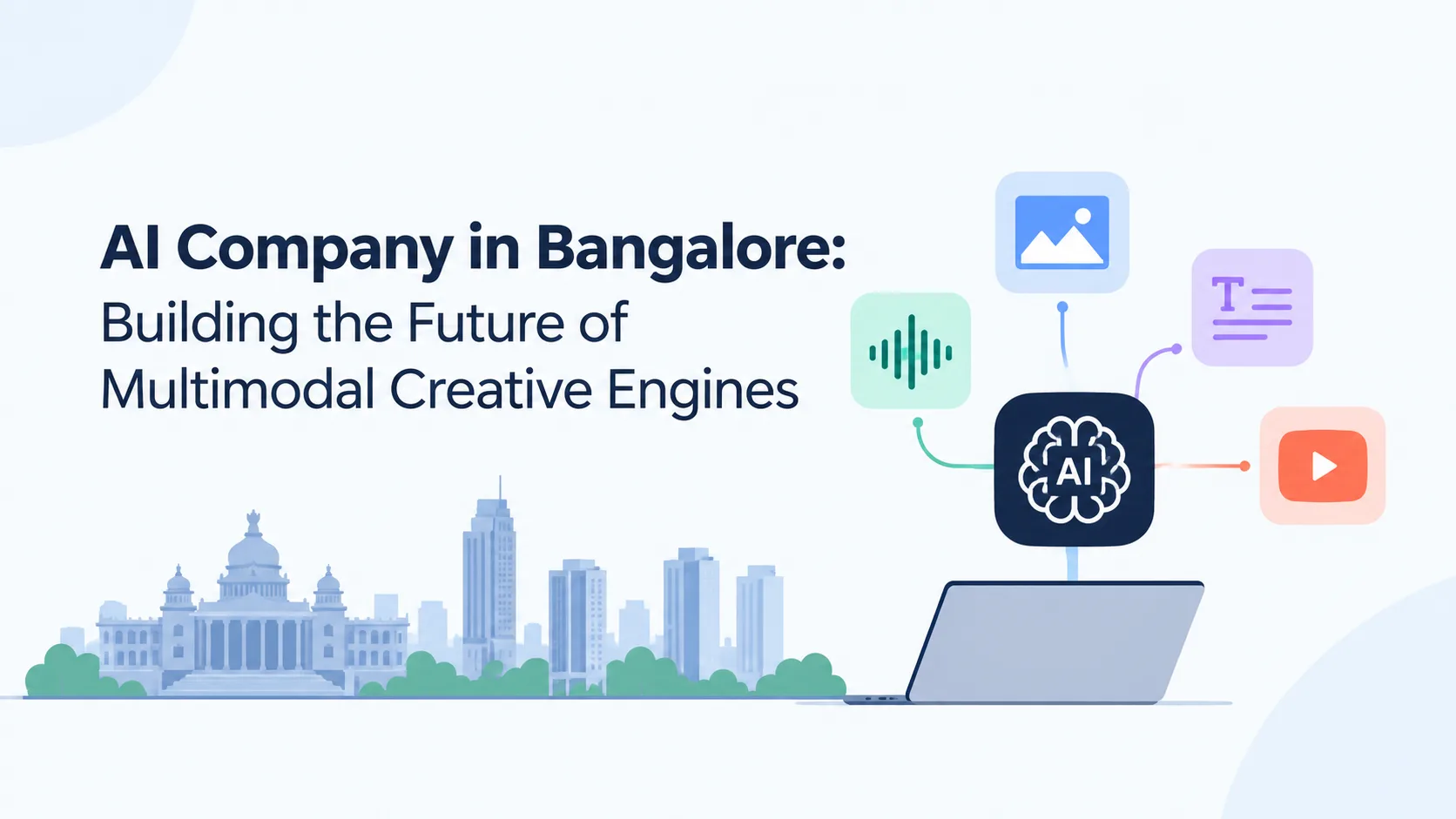
Building the Future of Multimodal Creative Engines is exactly what businesses like hers are searching for: a partner who connects data, creative output, and decision-making into one working engine instead of a stack of disconnected tools.
Key Takeaways
- Multimodal AI blends text, image, and voice data into one workflow, cutting the tool-switching that slows creative teams down.
- A working pilot in weeks matters more than a polished demo; production results are the real test.
- Bangalore's deep engineering talent pool gives local AI partners a real edge in building and scaling these systems fast.
What Is a Multimodal Creative Engine?
A multimodal creative engine reads, writes, and designs using more than one type of data at once. A single prompt can trigger matching copy, visuals,s and even a voice-over draft, rather than three separate tools stitched together by hand.
Why Are Bangalore Businesses Turning to AI Now?
The city's recent WION AI EDU Summit 2026 gathered policymakers, educators, and industry leaders because AI has moved past the experimentation stage. Panels covered predictive AI in operations, creator discovery, and AI as a business co-pilot, showing how quickly the shift from pilot projects to daily workflows is happening across sectors.
What Services Does a Trusted AI Partner Typically Offer?
AI consulting: it maps your business problem to the right model before any code gets written
AI automation: it replaces repetitive manual work with self-improving workflows
Computer vision: it powers quality checks and visual data extraction for retail and manufacturing
Generative AI applications: it builds content pipelines and internal knowledge tools your team can use daily
How Do Multimodal Engines Support Content and Marketing Teams?
They let one workflow produce a script, a matching image,e and a draft voice-over together, so teams stop losing time reassembling output from separate apps. This is where the gap between AI curiosity and AI results actually closes.
What Should You Look for Before Choosing a Partner?
Look for a partner who ships a working prototype in weeks, not months, and explains model choices in plain language your board can question. Rubixe's approach to production-ready AI in Bangalore breaks this down into a four-step model built around discovery, data readiness, pilots,s and adoption, rather than a one-size-fits-all package.
FAQ
What makes an AI system "multimodal"?
It processes more than one kind of input, such as text, images, and audio, within a single workflow instead of separate tools.
Is multimodal AI only for large enterprises?
No, mid-market retail and fintech teams in Bangalore already use it for content and support workflows.
How long does a pilot usually take?
Most focused pilots move from discovery to a working prototype within four to six weeks.
Does this replace human creative teams?
No, it speeds up production work while people still guide strategy, tone, and final decisions.
Conclusion
Priya's team eventually found their answer not in a flash demo but in a working pilot they could test within weeks. That is the real promise of an AI Company in Bangalore: Building the Future of Multimodal Creative Engines, a partner that turns scattered tools into one connected system built around your actual business problem. If your team is still juggling separate apps for copy, images, and data, now is a good time to talk to a partner who has already solved that.