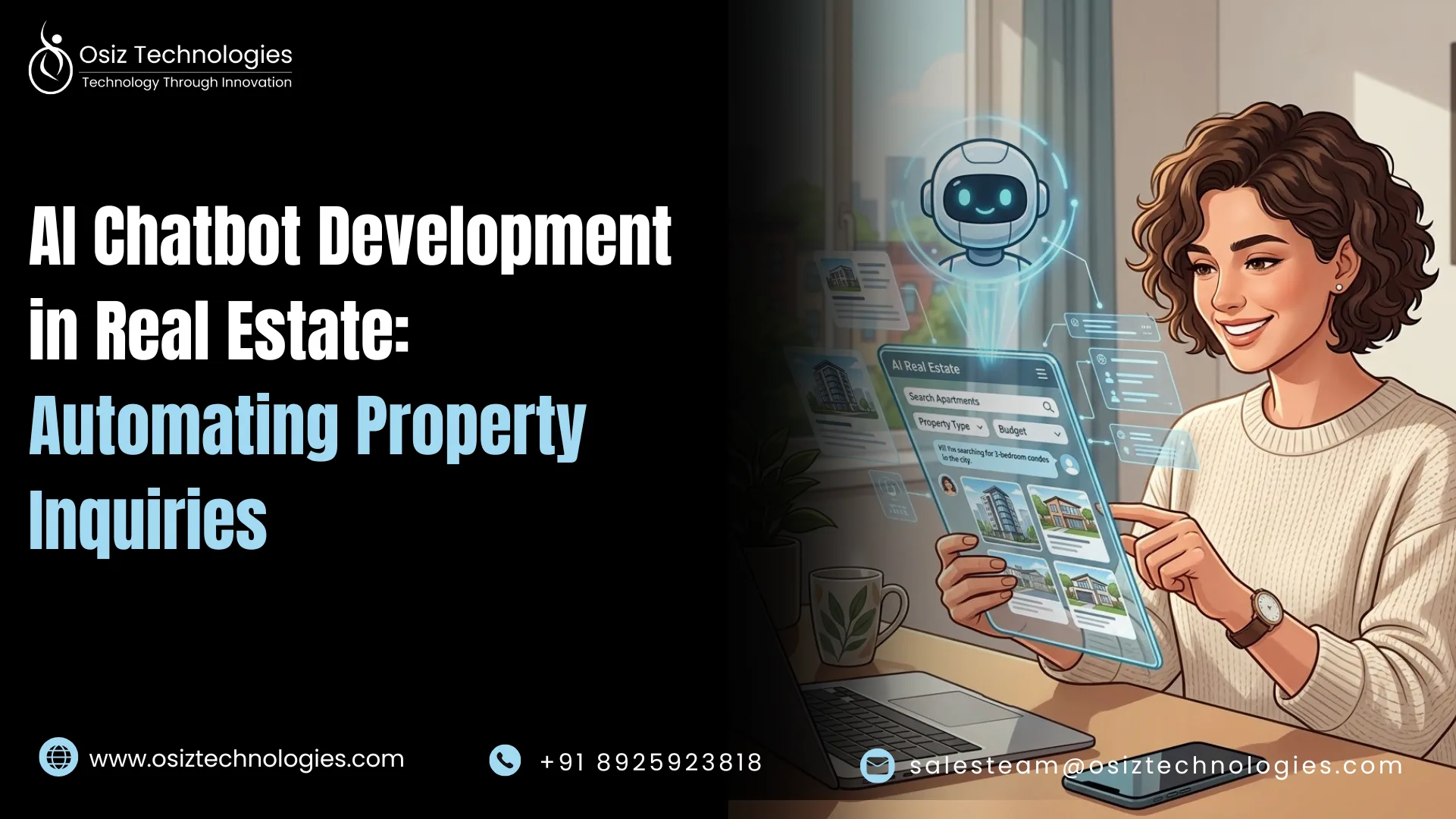
The real estate industry is undergoing a major digital shift, driven by the rapid adoption of artificial intelligence. From property recommendations to virtual tours, technology is reshaping how buyers and sellers interact. Among these innovations, AI Chatbot Development is emerging as a powerful tool for automating property inquiries and improving customer engagement.
Today’s property seekers expect instant responses, personalized experiences, and seamless communication. Traditional methods often struggle to meet these demands, creating gaps in customer satisfaction. This is where AI chatbots step in bridging the gap between real estate businesses and modern buyers by delivering quick, intelligent, and round-the-clock support.
What Is AI Chatbot Development in Real Estate?
AI chatbot development in real estate refers to the creation of intelligent virtual assistants designed to interact with users, answer property-related questions, and guide them through the buying or renting process. These chatbots use technologies like natural language processing (NLP) and machine learning (ML) to understand user intent and provide relevant responses.
Unlike basic chat systems, AI-powered chatbots can handle complex queries, recommend properties based on user preferences, and even schedule site visits. They can be integrated into websites, mobile apps, and messaging platforms, making them easily accessible to potential buyers at any time.
Why Real Estate Businesses Need AI Chatbots
Rising Customer Expectations
Modern customers demand instant communication and personalized service. They expect quick replies to inquiries about pricing, availability, and property details. AI chatbots help businesses meet these expectations by delivering real-time responses without delays.
Limitations of Traditional Inquiry Handling
Manual handling of property inquiries can be time-consuming and inefficient. Sales teams often struggle to respond to multiple queries simultaneously, leading to missed opportunities. AI chatbots eliminate this limitation by handling multiple conversations at once.
Need for Automation & Speed
Speed is critical in real estate, where delays can result in lost leads. AI chatbots automate repetitive tasks such as answering FAQs, capturing user details, and sharing property information, allowing businesses to operate more efficiently.
How AI Chatbots Automate Property Inquiries
Instant Responses to Buyer Queries
AI chatbots provide immediate answers to questions about property listings, pricing, location, and amenities. This instant communication improves user satisfaction and keeps potential buyers engaged.
24/7 Availability
Unlike human agents, chatbots are available around the clock. Whether a user visits a website late at night or during holidays, the chatbot ensures continuous support and uninterrupted service.
Smart Property Recommendations
By analyzing user preferences such as budget, location, and property type, AI chatbots can suggest suitable listings. This personalized approach enhances the overall property search experience.
Lead Qualification & Filtering
AI chatbots can ask targeted questions to understand user intent and qualify leads. This helps sales teams focus on high-potential clients while reducing time spent on unqualified prospects.
Key Use Cases of AI Chatbot Development in Real Estate
Property Search Assistance
Chatbots simplify the property search process by helping users find listings that match their needs. They can filter options based on preferences and provide detailed information instantly.
Appointment Scheduling
AI chatbots can automate the scheduling of property visits by checking agent availability and booking appointments in real time. This reduces back-and-forth communication.
Virtual Tours Guidance
With the rise of virtual property tours, chatbots can guide users through digital walkthroughs, providing insights and answering questions along the way.
Post-Sales Support
Even after a deal is closed, chatbots can assist with documentation, payment updates, and customer support, ensuring a smooth post-sale experience.
Benefits of AI Chatbot Development for Real Estate
Improved Customer Engagement
AI chatbots keep users engaged by offering quick responses and personalized interactions, creating a more interactive experience.
Faster Lead Conversion
By responding instantly and guiding users effectively, chatbots help convert inquiries into actual leads and eventually into customers.
Cost Reduction
Automating customer interactions reduces the need for large support teams, helping businesses save operational costs while maintaining efficiency.
Enhanced User Experience
AI chatbots provide a seamless and convenient experience, making it easier for users to explore properties and make informed decisions.
Challenges in Implementing AI Chatbots
While AI chatbot development offers numerous advantages, it also comes with certain challenges. One of the primary concerns is ensuring accurate understanding of user queries, especially when dealing with complex or ambiguous inputs. Poorly trained chatbots can lead to irrelevant responses, affecting user experience.
Integration with existing systems such as CRM platforms and property databases can also be complex. Additionally, maintaining data privacy and security is crucial, as chatbots often handle sensitive customer information. Businesses must invest in proper development, training, and regular updates to ensure optimal performance.
Conclusion: Transforming Real Estate with AI Chatbots
AI chatbot development is reshaping the real estate industry by making property inquiries faster, smarter, and more efficient. From instant responses to personalized recommendations, chatbots are helping businesses deliver better customer experiences while improving operational efficiency.
As the demand for automation continues to grow, partnering with a reliable AI Chatbot Development Company becomes crucial for real estate businesses looking to stay ahead. The right technology partner can build intelligent solutions tailored to business needs, ensuring long-term growth, improved lead generation, and a competitive edge in the digital real estate landscape.