Finding qualified candidates has always been one of the most important parts of recruitment, but it is also one of the most time-consuming. Recruiters can spend hours searching profiles, reviewing resumes, checking skills, and building lists of potential candidates before they even begin outreach.
As hiring becomes more competitive, many recruiting teams are turning to artificial intelligence to make candidate sourcing faster and more targeted. AI candidate sourcing uses machine learning and other AI capabilities to help recruiters discover, match, and prioritize potential candidates based on the requirements of an open role.
The result is a shift from manually searching for candidates to using technology to identify relevant talent more efficiently.
What Is AI Candidate Sourcing?
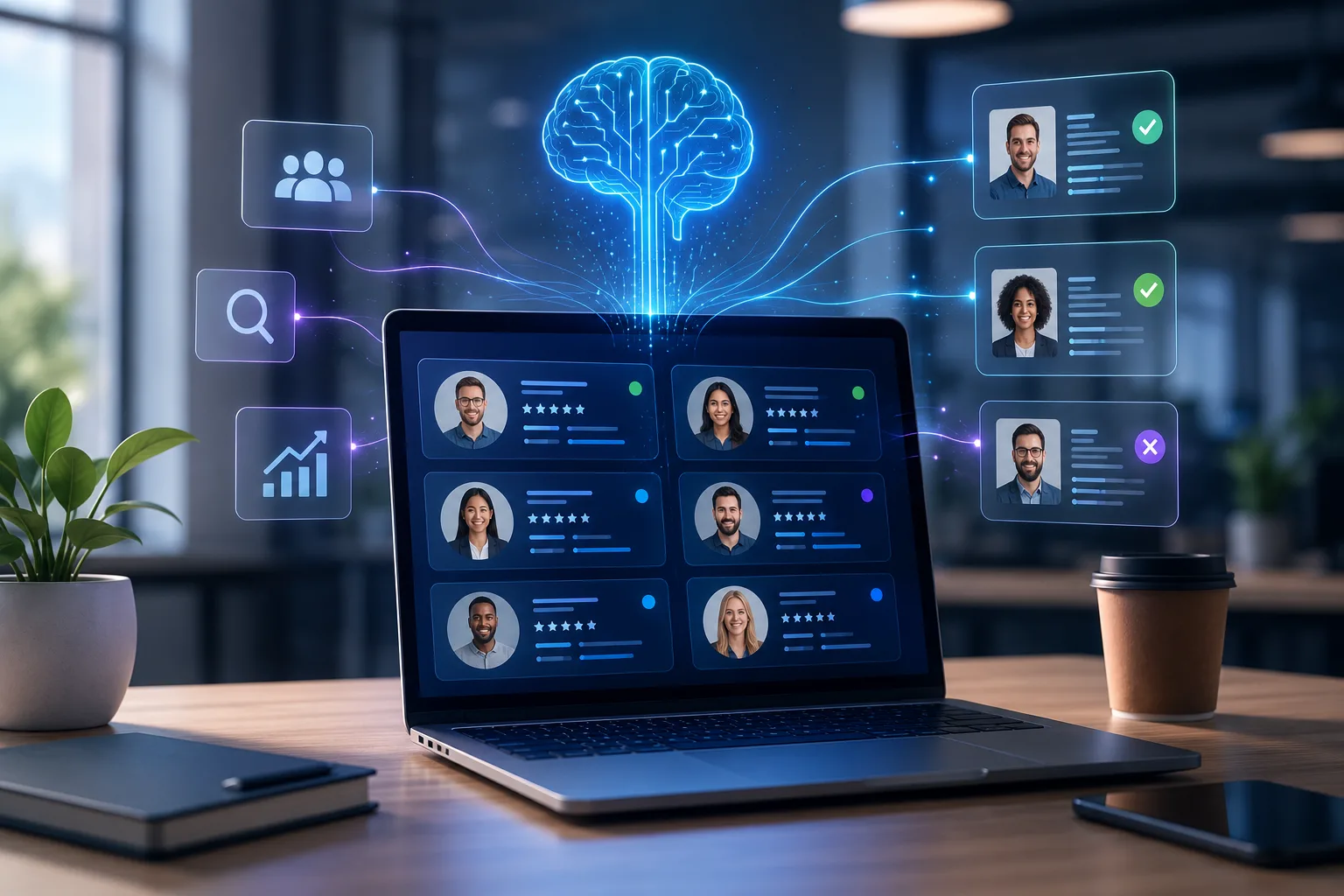
AI candidate sourcing is the use of artificial intelligence to identify potential candidates for open positions. Instead of relying entirely on manual keyword searches, recruiters can use AI to analyze job requirements and candidate information to find relevant matches.
AI-powered sourcing systems can consider factors such as skills, previous experience, job responsibilities, seniority, education, and career progression. This allows recruiters to search for candidates based on the broader requirements of a role rather than relying only on exact words appearing in a resume.
For example, a company looking for a backend developer may require experience with Python, APIs, databases, and cloud infrastructure. AI can help identify candidates whose experience aligns with these requirements even when their profiles use different terminology.
How AI Makes Candidate Sourcing Faster
The biggest advantage of AI sourcing is the amount of manual work it can reduce.
Traditional sourcing often requires recruiters to search multiple platforms, review individual profiles, create shortlists, and compare candidates manually. AI can automate parts of this workflow and surface potentially relevant candidates much faster.
Recruiters can start with a job description, define important requirements, and allow the system to identify candidates who appear to match the role.
This doesn't eliminate the need for recruiters. Instead, it changes where they spend their time. Rather than spending most of the day searching, recruiters can spend more time evaluating candidates and building relationships.
Finding Passive Candidates
One of the most valuable applications of AI candidate sourcing is discovering passive talent.
Many qualified professionals are not actively looking for a new job. They may be happy in their current position but could consider the right opportunity if it offers better responsibilities, career growth, compensation, or working conditions.
Traditional recruiting methods often struggle to reach these candidates because they depend heavily on job applications.
AI-powered sourcing can help recruiters proactively identify people whose skills and experience align with open positions. This allows companies to build talent pipelines instead of waiting for suitable candidates to apply.
Moving Beyond Keyword Matching
Keyword-based sourcing can be useful, but it has significant limitations. A candidate might have the right capabilities but describe their experience differently from the language used in a job description. For example, a company may search for "customer acquisition," while a candidate describes their experience as "growth marketing" or "demand generation."
AI can analyze the context surrounding skills and responsibilities to identify potentially relevant connections. This can help recruiters discover candidates who might be missed by simple Boolean searches or traditional filters.
Prioritizing the Most Relevant Candidates
Finding hundreds of candidates isn't necessarily useful if recruiters still have to manually review every profile.
AI can help prioritize candidates based on predefined requirements and overall relevance. Recruiters can focus first on candidates who appear to have the strongest alignment with the position.
This is especially valuable for high-volume hiring, where reviewing every application or sourced profile manually can create significant bottlenecks. AI-powered ranking can also help recruiters organize large talent pools into manageable groups, making the sourcing process more efficient.
AI and Recruiter Productivity
AI candidate sourcing can have a direct impact on recruiter productivity. When repetitive search and filtering tasks are automated, recruiters can redirect their time toward activities that require human judgment. These include engaging candidates, understanding motivations, communicating with hiring managers, conducting interviews, and building long-term talent relationships.
The value of AI is therefore not simply that it makes sourcing faster. It can help recruiters spend more of their working day on the parts of recruiting where human interaction matters most.
Responsible Use of AI in Candidate Sourcing
Speed should not come at the expense of responsible hiring. Recruiting teams should evaluate AI sourcing systems for accuracy, potential bias, privacy, and transparency. Candidate information should be handled appropriately, and recruiters should understand that AI recommendations are not automatically correct.
Human oversight remains essential. Recruiters should review AI-generated recommendations and ensure that candidates are not unfairly excluded because of incomplete data, unusual career paths, or limitations in the underlying system.
The Future of Candidate Sourcing
AI is changing candidate sourcing from a largely manual search activity into a more intelligent and proactive process.
Modern recruiters can use AI to search broader talent pools, discover passive candidates, understand skills beyond keywords, and prioritize promising profiles faster. This can reduce sourcing bottlenecks and help hiring teams move more quickly from an open role to a qualified shortlist.
The most effective approach isn't to replace recruiters with AI. It's to combine AI's ability to process large amounts of information with a recruiter's ability to understand people.
As hiring technology continues to evolve, recruiters who learn to use AI effectively will be better positioned to find relevant talent faster while spending more time on meaningful candidate engagement.