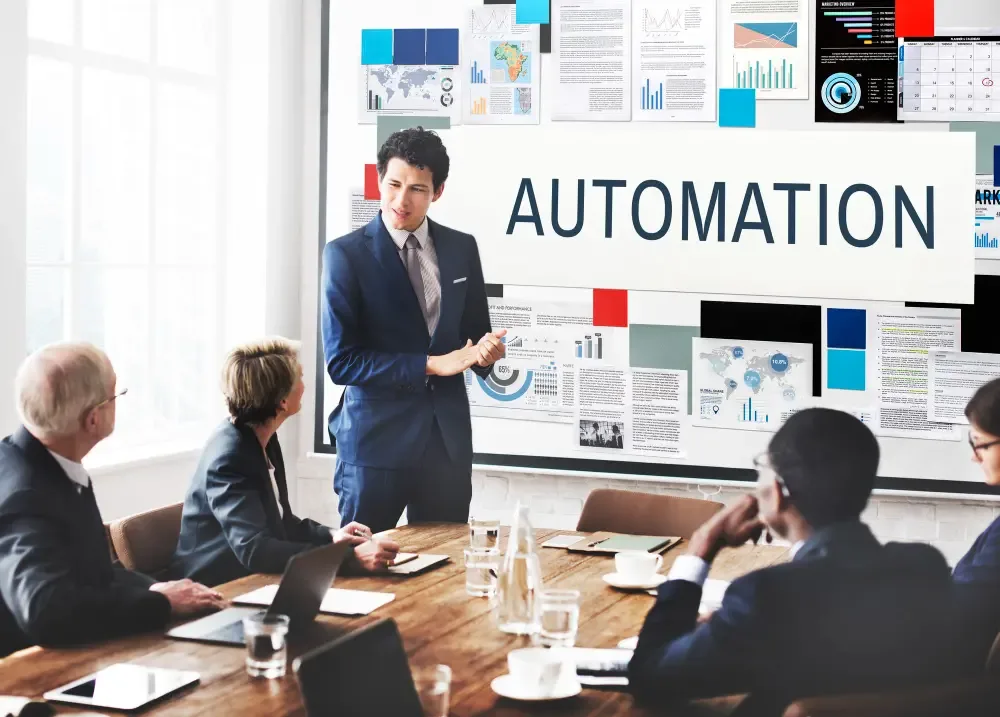
Small businesses often operate with limited staff, tight budgets, and many tasks competing for attention. From answering customer questions to managing leads and scheduling appointments, repetitive work can consume valuable time. AI automation is helping businesses handle these tasks more efficiently while allowing employees to focus on customers, strategy, and growth.
For businesses considering AI automation for small business, the best approach is usually to start with one practical problem and gradually expand automation as the benefits become clear.
What Is AI Automation for Small Businesses?
AI automation combines artificial intelligence with automated workflows to complete tasks that would traditionally require human involvement. Unlike basic automation, which generally follows fixed rules, AI-powered systems can understand information, process natural language, recognize patterns, and respond to changing situations.
For example, a traditional automation may send the same email whenever a form is submitted. An AI-powered system can analyze the customer's message, determine what they need, categorize the lead, generate an appropriate response, and send the information to the relevant team.
Modern small businesses can use AI chatbots, AI agents, voice assistants, and workflow automation to connect different parts of their operations and reduce repetitive manual work.
Why Should Small Businesses Use AI Automation?
The biggest advantage of AI automation is the ability to accomplish more without continuously increasing the workload on employees.
Save time: Businesses can automate repetitive administrative tasks such as data entry, appointment reminders, customer inquiries, and follow-ups.
Reduce operating costs: Automating routine work can reduce the amount of time employees spend on low-value activities and allow businesses to use their resources more effectively.
Improve customer response times: AI systems can respond to common questions immediately, even outside normal business hours.
Improve lead management: AI can capture inquiries, qualify prospects, organize customer information, and trigger follow-up actions.
Support business growth: Automation allows a small team to manage increasing numbers of customers and tasks without creating unnecessary operational complexity.
Common AI Automation Use Cases for Small Businesses
AI automation can be applied to many areas of a business. The best starting point depends on where the company currently loses the most time or opportunities.
Customer Support
AI chatbots can answer frequently asked questions, provide product information, collect customer details, and direct complex requests to employees. Voice-based systems can also manage incoming calls and provide basic assistance.
This is particularly useful for businesses that receive frequent inquiries but do not have enough staff to answer every customer immediately.
Lead Generation and Follow-Up
AI can automatically capture leads from websites and other channels, evaluate their requirements, organize contact information, and initiate follow-up communications. This reduces the risk of leads being forgotten or contacted too late.
Appointment Scheduling
Businesses such as consultants, clinics, agencies, salons, and service providers can automate appointment requests, confirmations, reminders, and rescheduling.
Marketing Automation
AI can support email campaigns, content creation, customer segmentation, personalization, and other marketing activities. Instead of manually handling every interaction, businesses can create automated processes that respond to customer behavior.
Administrative Tasks
Data entry, document processing, notifications, reporting, and repetitive internal communications are other areas where automation can save considerable time.
AI Receptionists and Voice Agents for Small Businesses
Phone calls remain important for many small businesses, particularly those that depend on appointments, consultations, or service inquiries. However, missed calls can mean missed revenue.
An ai phone receptionist for small business can answer incoming calls, respond to common questions, collect caller information, schedule appointments, transfer calls, and take messages. These systems can also operate outside traditional business hours, giving customers another way to interact with a company.
AI voice agents can take this further by handling more complex conversations and connecting with business systems. For example, a voice agent could identify an existing customer, check appointment information, update records, and notify an employee when human assistance is required.
AI Chatbots and AI Agents: What's the Difference?
AI chatbots and AI agents are related but serve different purposes.
An AI chatbot is primarily designed to communicate with users. It can answer questions, provide information, collect details, and guide customers through specific processes.
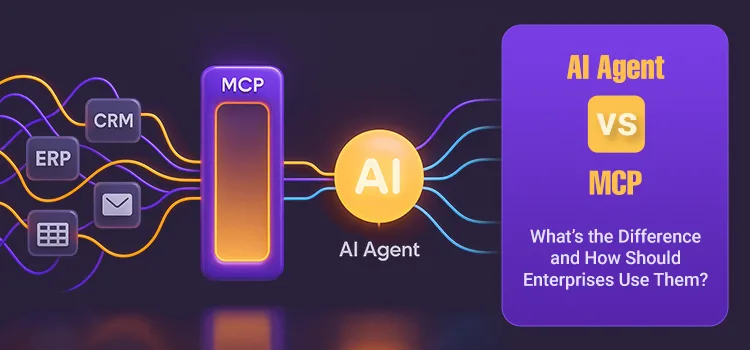
AI agents can be more action-oriented. Instead of simply answering a question, an agent can understand a goal, determine the required steps, interact with external systems, and complete tasks.
For example, a chatbot might answer a question about a product's availability. An AI agent could check inventory, identify the product, create an order, update the CRM, and send confirmation to the customer.
Businesses that require more advanced conversational experiences may consider custom ai chatbot development services when standard chatbot platforms do not provide enough flexibility or integration capabilities.
How AI Workflow Automation Works
AI workflow automation connects different tools and business processes so information can move automatically from one step to another.
A typical workflow follows this structure:
Trigger → AI Processing → Decision → Action → Follow-Up
For example, when a customer submits an inquiry, an AI system can analyze the message, determine the customer's intent, categorize the lead, update the CRM, notify the sales team, and send an initial response.
Solutions for ai workflow automation for businesses can connect customer relationship management systems, email platforms, calendars, databases, communication tools, and other applications.
Platforms such as n8n and Make can also help businesses build automated workflows without developing every integration from scratch.
How to Choose the Right AI Automation for Your Business
Businesses should not automate everything at once. A better approach is to identify processes where automation can produce a measurable improvement.
Start by identifying repetitive tasks that employees perform frequently. Next, determine how much time and money those tasks consume and whether errors or delays are affecting customers.
Then choose the appropriate technology. A business may need a chatbot for customer questions, a voice agent for phone communication, an AI agent for multi-step tasks, or workflow automation for connecting different applications.
Start with one workflow, test it with real scenarios, and measure the results. Once the process works reliably, additional tasks can be automated.
What Does AI Automation Cost for a Small Business?
The cost of AI automation depends heavily on the technology and level of customization required.
A basic chatbot or simple workflow may require a relatively small investment, while advanced AI agents can involve custom development, third-party integrations, voice technology, databases, security requirements, and ongoing maintenance.
Businesses researching ai agent development cost should therefore evaluate the complete project rather than focusing only on the initial development price. The potential return should also be considered, including labor savings, additional leads, faster response times, and improved customer experiences.
How to Get Started With AI Automation
A practical implementation process can follow these steps:
- List repetitive business processes.
- Identify the task consuming the most time.
- Define a measurable goal.
- Choose the appropriate AI technology.
- Build a small pilot workflow.
- Test it with real-world situations.
- Connect it with existing business software.
- Monitor its performance.
- Improve the workflow based on results.
- Expand automation to other areas.
Starting small helps businesses learn what works before making larger investments.
Final Thoughts
AI automation is no longer limited to large enterprises with extensive technology budgets. Small businesses can use AI to improve customer service, manage leads, automate workflows, answer calls, and reduce repetitive administrative work.
The most effective strategy is to begin with a specific business problem rather than adopting AI simply because it is popular. By choosing the right process, setting clear goals, and measuring results, small businesses can gradually build automation systems that save time, improve customer experiences, and support sustainable growth.