Startups move fast. Teams are small, budgets are limited, and customer expectations keep rising. At the same time, businesses are expected to respond instantly, generate leads consistently, and provide support around the clock.
That pressure explains why more founders are searching for the best AI chatbot for small business in 2026.
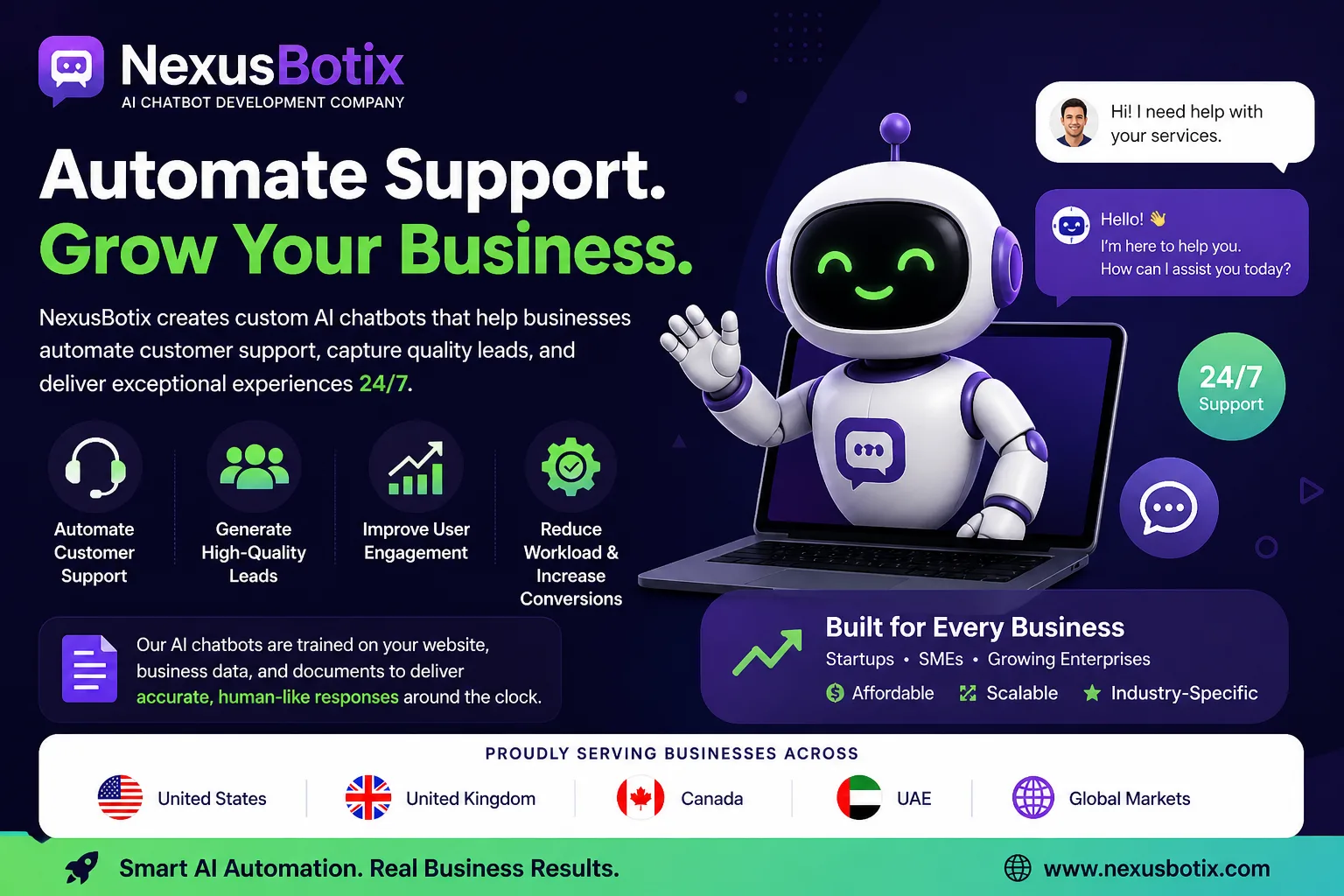
AI chatbots are no longer just support tools for large corporations. They’ve become practical growth solutions for startups across the UK, Canada, UAE, and other English-speaking markets. From handling customer inquiries to qualifying leads automatically, chatbots help smaller companies compete without hiring large teams.
Here are ten reasons why startups are investing in AI chatbot technology faster than ever.
1. AI Chatbots Provide 24/7 Customer Support
Customers don’t only visit websites during business hours.
A startup may receive inquiries late at night, on weekends, or from different time zones. Without automation, those opportunities are often missed.
An AI chatbot can answer common questions instantly, even when your team is offline. This keeps potential customers engaged and improves response times dramatically.
For startups trying to build trust early, quick replies make a major difference.
2. Faster Responses Improve Customer Experience
Research consistently shows that customers prefer businesses that respond quickly.
Waiting hours for an email response often leads people to leave a website and contact competitors instead.
The best AI chatbot for small business can provide immediate assistance for:
- Pricing questions
- Product recommendations
- Booking requests
- Shipping information
- Service inquiries
This creates a smoother customer experience without overwhelming your support team.
3. AI Chatbots Help Startups Generate More Leads
Traffic alone doesn’t grow a business. Converting visitors into leads matters more.
AI chatbots can engage users the moment they land on your website. Instead of waiting for someone to fill out a contact form, the chatbot can start conversations proactively.
For example, a chatbot might ask:
- “What service are you looking for?”
- “Would you like a free consultation?”
- “Can I help you compare plans?”
These small interactions often increase lead conversion rates significantly.
4. They Reduce Operational Costs
Hiring customer support agents can be expensive for startups.
A chatbot can automate repetitive tasks that would normally require multiple employees. This allows startups to operate more efficiently without sacrificing customer service quality.
Tasks commonly automated include:
- FAQ responses
- Appointment scheduling
- Order tracking
- Lead qualification
- Customer onboarding
Many startups use AI chatbots as a cost-effective first layer of support before involving human agents.
5. AI Chatbots Scale With Your Business
One challenge startups face is rapid growth.
As website traffic and customer inquiries increase, support systems can quickly become overloaded.
AI chatbots scale easily. Whether your business handles 20 conversations daily or 2,000, the chatbot can continue operating without delays.
That flexibility is especially useful for fast-growing SaaS companies, online stores, and digital agencies.
6. Personalized Conversations Increase Engagement
Modern AI chatbots are much smarter than older scripted bots.
Today’s systems can understand customer intent, remember context, and provide more natural responses. Some platforms even personalize conversations based on user behavior.
For instance, an online fashion store in the UK may show different recommendations depending on previous browsing activity.
This type of personalization keeps visitors engaged longer and improves conversion opportunities.
7. AI Chatbots Improve Lead Qualification
Not every website visitor is ready to buy.
Instead of wasting time manually filtering inquiries, startups can use AI chatbots to qualify leads automatically.
The chatbot can ask targeted questions such as:
- Company size
- Budget range
- Business goals
- Service requirements
This helps sales teams focus only on serious prospects.
For startups with limited staff, that efficiency matters a lot.
8. Integration With Popular Business Tools
The best AI chatbot for small business integrates with platforms startups already use.
This may include:
- CRM software
- Shopify
- Slack
- Google Calendar
- Email marketing tools
For businesses in the UAE and Canada, WhatsApp automation has become particularly important because many customers prefer messaging over calls or emails.
Strong integrations help startups automate workflows without creating extra manual work.
9. AI Chatbots Support Global Audiences
Many startups now operate internationally from day one.
AI chatbots make it easier to communicate with customers across different regions and time zones. Some platforms also support multilingual conversations, which is valuable for businesses targeting diverse audiences.
A startup in Dubai, for example, may serve both English-speaking and Arabic-speaking customers through the same chatbot system.
This improves accessibility and customer satisfaction.
10. Startups Gain a Competitive Advantage
Customers increasingly expect fast, intelligent support from every business — not just large companies.
Startups that implement AI chatbots early often stand out from competitors still relying on slow manual communication.
A responsive website with automated support creates a stronger first impression and helps build credibility faster.
In competitive industries, that advantage can directly influence conversions and customer retention.
Conclusion
The demand for the best AI chatbot for small business continues to grow because startups need smarter ways to scale without increasing costs.
AI chatbots help businesses provide faster support, generate more leads, automate repetitive tasks, and improve customer engagement — all while keeping operations lean.
For startups in the UK, Canada, UAE, and other English-speaking markets, adopting AI automation is becoming less of a trend and more of a necessity.
Companies that invest in the right chatbot solution today will be better positioned to compete, grow, and serve customers more efficiently in the years ahead.