Tamil Nadu is home to some of India's most remarkable temples, where centuries of religious traditions, royal patronage, craftsmanship, and architectural development remain visible in stone. From towering gopurams and intricately carved pillars to expansive temple corridors and ancient inscriptions, these sacred landmarks offer a glimpse into the region's cultural history.
The state's temple heritage developed under several influential dynasties, including the Pallavas, Cholas, Pandyas, and Nayaks. Each period contributed distinctive architectural features, artistic traditions, and temple-building practices. Many of these structures continue to serve as active places of worship, preserving rituals and festivals that have been observed across generations.
Here are ten prominent temples that represent different aspects of Tamil Nadu's religious and architectural heritage.
1. Meenakshi Amman Temple - Madurai
Located in the heart of Madurai, Meenakshi Amman Temple is one of the most recognized religious landmarks in Tamil Nadu. Dedicated to Goddess Meenakshi and Lord Sundareswarar, the temple holds a significant place in Tamil Shaivite traditions.
The temple complex is particularly known for its towering gopurams, colorful sculptural decorations, extensive corridors, and intricately carved pillars. Its architecture reflects several historical periods, with major contributions from the Nayak rulers, particularly during the 16th and 17th centuries.
The Thousand Pillar Hall is among the most notable features of the complex, displaying detailed stone craftsmanship and sculptural artistry. The temple's large sacred tank, known as the Potramarai Kulam, is another important feature.
The annual Meenakshi Thirukalyanam, celebrated as part of the Chithirai Festival, attracts devotees from different parts of the country. The celebrations represent the divine wedding of Goddess Meenakshi and Lord Sundareswarar and form an important part of Madurai's cultural calendar.
What makes it significant: Its distinctive Dravidian architecture, Nayak-era artistic contributions, and longstanding association with Madurai's religious and cultural identity.
2. Ramanathaswamy Temple – Rameswaram
Ramanathaswamy Temple in Rameswaram is an important pilgrimage destination associated with Lord Shiva. Situated on Pamban Island, the temple is traditionally connected with the Ramayana and holds a special place in Hindu pilgrimage traditions.
One of its most remarkable architectural features is its extensive pillared corridors. The long passageways, decorated with rows of intricately designed pillars, create a distinctive visual experience within the temple complex.
The temple is also known for its 22 sacred wells, traditionally called theerthams. Ritual bathing in these waters forms an important part of the pilgrimage experience for many devotees.
The connection with the Ramayana adds another dimension to the temple's significance. According to religious tradition, Lord Rama worshipped Lord Shiva at this location before returning to Ayodhya after the events of the epic.
Ramanathaswamy Temple is also associated with the Char Dham pilgrimage circuit, making Rameswaram an important destination for devotees travelling from different parts of India.
What makes it significant: Its extensive corridors, sacred theerthams, island location, and association with the Ramayana and traditional pilgrimage routes.
3. Brihadeeswarar Temple – Thanjavur
Brihadeeswarar Temple, popularly known as the Big Temple, is one of the finest examples of Chola-period architecture in South India. Built by Raja Raja Chola I and consecrated around 1010 CE, the temple represents the architectural ambitions and artistic achievements of the Chola dynasty.
Dedicated to Lord Shiva, the temple is recognized for its monumental vimana, which rises prominently above the main sanctum. The scale and precision of its granite construction demonstrate the engineering capabilities of the period.
The complex also contains sculptural panels, inscriptions, subsidiary shrines, and architectural details that provide valuable information about Chola administration, religious patronage, and temple culture.
Brihadeeswarar Temple forms part of the UNESCO-listed Great Living Chola Temples, together with the temples at Gangaikondacholapuram and Darasuram. These monuments were recognized for their exceptional contributions to architecture, sculpture, painting, and bronze casting.
What makes it significant: Its monumental Chola architecture, historical inscriptions, engineering achievements, and recognition as part of a UNESCO World Heritage property.
4. Sri Ranganathaswamy Temple – Srirangam, Trichy
Situated on Srirangam Island near Tiruchirappalli, Sri Ranganathaswamy Temple is one of the most important Vaishnavite pilgrimage centres in India. The presiding deity is Lord Ranganatha, a reclining form of Lord Vishnu.
The temple complex is remarkable for its extensive layout, multiple enclosures, large gateways, and numerous shrines. Its architecture developed over several centuries through the contributions of different South Indian dynasties.
The Rajagopuram, with its impressive height and sculptural detailing, is among the most recognizable features of the complex. The temple's various prakarams contain shrines, mandapams, and spaces associated with religious activities.
Srirangam also holds an important position in the Sri Vaishnavite tradition and is closely associated with the devotional literature of the Alvars.
Vaikunta Ekadasi is one of the major annual celebrations, drawing large numbers of devotees to the temple.
What makes it significant: Its extensive temple layout, Vaishnavite heritage, monumental gateways, and centuries-old religious traditions.
5. Nataraja Temple – Chidambaram
Chidambaram Nataraja Temple is dedicated to Lord Shiva in the form of Nataraja, the cosmic dancer. The temple occupies a distinctive position in South Indian religious and cultural history because of its association with Shiva's Ananda Tandava, or dance of bliss.
The temple's architectural identity includes towering gateways, spacious courtyards, sculptural representations, and intricately designed halls. Its Kanaka Sabha, traditionally known as the Golden Hall, is associated with the principal Nataraja shrine.
Chidambaram is also significant for its association with classical Indian dance traditions. The temple's sculptural representations of dance postures reflect the historical connection between temple worship and performing arts.
The Natyanjali Festival, held around Maha Shivaratri, brings classical dancers to Chidambaram for performances dedicated to Lord Nataraja.
What makes it significant: Its connection with the cosmic dance of Shiva, classical dance heritage, distinctive temple architecture, and longstanding Shaivite traditions.
6. Ekambareswarar Temple – Kanchipuram
Kanchipuram is one of Tamil Nadu's historic temple cities, with a long tradition of religious scholarship and temple architecture. Among its prominent shrines is Ekambareswarar Temple, dedicated to Lord Shiva.
The temple is associated with the Pancha Bhoota Sthalams, a group of five Shiva temples representing the five elements of nature. Ekambareswarar Temple represents the element of earth, known as Prithvi.
One of its most notable architectural features is its towering gopuram, which forms a prominent part of Kanchipuram's historic skyline. The temple complex includes spacious courtyards, pillared halls, and shrines displaying traditional Dravidian architectural elements.
The sacred mango tree within the temple is associated with a traditional legend concerning Goddess Parvati's worship of Lord Shiva. The tree holds religious significance for devotees visiting the shrine.
What makes it significant: Its association with the Pancha Bhoota Sthalams, historic temple architecture, and traditional Shaivite heritage of Kanchipuram.
7. Kapaleeshwarar Temple – Chennai
Located in Mylapore, Kapaleeshwarar Temple is one of Chennai's important religious and architectural landmarks. Dedicated to Lord Shiva and Goddess Karpagambal, the temple represents the longstanding cultural identity of the Mylapore neighbourhood.
The temple is known for its colorful entrance tower, traditional Dravidian design, sculptural decorations, and spacious temple tank. Its gopuram features numerous figures representing deities, mythological characters, and scenes from Hindu traditions.
The temple is closely associated with the religious history of Mylapore and the devotional traditions of Tamil Nadu. Festivals such as Panguni Peruvizha bring the surrounding streets to life through processions, ceremonial events, and traditional celebrations.
Its location within one of Chennai's historic neighbourhoods also makes the temple an important destination for understanding the city's cultural heritage.
What makes it significant: Its traditional Dravidian architecture, connection with Mylapore's history, and continuing role in Chennai's religious life.
8. Arunachaleswarar Temple – Tiruvannamalai
Arunachaleswarar Temple is one of the most important Shiva temples in Tamil Nadu. Situated at the foothills of Annamalai Hill in Tiruvannamalai, the temple is associated with the element of fire in the Pancha Bhoota Sthalams tradition.
The temple's architectural development reflects contributions from different dynasties, including the Cholas, Pandyas, and Vijayanagara rulers. Its extensive complex features multiple gateways, spacious courtyards, pillared halls, and several subsidiary shrines.
The Karthigai Deepam festival is the temple's most prominent annual celebration. During the festival, a massive ceremonial flame is lit atop Annamalai Hill, symbolizing the divine manifestation of Lord Shiva as a column of fire.
The sacred hill itself holds spiritual significance, and devotees traditionally undertake Girivalam, a circumambulation of the hill covering approximately 14 kilometres.
What makes it significant: Its association with the fire element, monumental temple architecture, Karthigai Deepam celebrations, and the sacred Annamalai Hill.
9. Shore Temple – Mahabalipuram
The Shore Temple at Mahabalipuram offers a distinctive architectural experience because of its coastal location overlooking the Bay of Bengal.
Built during the Pallava period, the temple is an important example of early structural stone temple architecture in South India. Unlike some of the larger temple complexes found elsewhere in Tamil Nadu, the Shore Temple is recognized for its compact arrangement of shrines and its position beside the sea.
Its stone structures, pyramidal towers, sculptural details, and weathered surfaces reflect the artistic and architectural practices of the Pallava dynasty.
The Shore Temple forms part of the Group of Monuments at Mahabalipuram, which was inscribed on the UNESCO World Heritage List in 1984.
The surrounding monuments, including rock-cut caves, monolithic rathas, and sculptural reliefs, provide further insight into the artistic achievements of the Pallava period.
What makes it significant: Its coastal setting, Pallava architectural heritage, early structural stone construction, and UNESCO World Heritage recognition.
10. Airavatesvara Temple – Darasuram, Near Kumbakonam
Located at Darasuram near Kumbakonam, Airavatesvara Temple is another outstanding example of Chola architecture. Built by Raja Raja Chola II during the 12th century, the temple is dedicated to Lord Shiva.
Although smaller in scale than Brihadeeswarar Temple in Thanjavur, Airavatesvara Temple is particularly admired for its detailed sculptural work and decorative architectural elements.
One of its distinctive features is the front mandapa, designed with the appearance of a chariot complete with stone wheels. The pillars and surrounding sculptures display the refined craftsmanship associated with the later Chola period.
The temple also contains detailed sculptural representations connected with Shaivite traditions and religious stories.
Along with the Brihadeeswarar Temple at Thanjavur and the temple at Gangaikondacholapuram, Airavatesvara forms part of the UNESCO-listed Great Living Chola Temples.
What makes it significant: Its elaborate Chola-period sculptures, chariot-inspired mandapa, architectural detailing, and UNESCO World Heritage status.
Planning a Temple Tour Across Tamil Nadu
A visit to Tamil Nadu's famous temples can become an enriching journey through the state's history, architecture, and spiritual traditions. Many visitors may want to see more than one temple during their trip, especially when each destination has its own history and significance. Covering Madurai, Rameswaram, Thanjavur, Trichy, Kumbakonam, and Chidambaram in a single itinerary, however, requires careful planning of travel time and overnight stays.
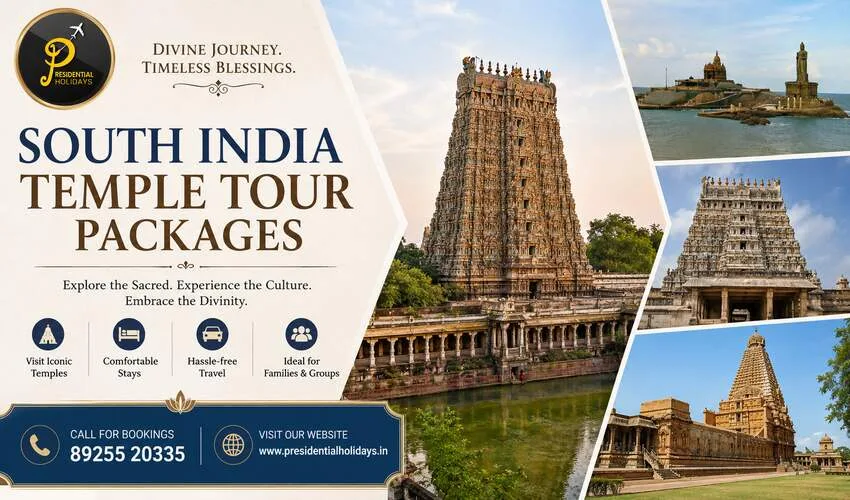
This is where south india temple tour packages can make a multi-destination visit easier to plan. Instead of arranging transportation, accommodation, and sightseeing separately for every temple town, visitors can follow a coordinated itinerary covering several important destinations. Presidential Holidays, a Madurai-based travel company with a hospitality heritage dating back to 1982, organizes South Indian temple tours that connect destinations such as Madurai, Rameswaram, Trichy, Thanjavur, Kumbakonam, and Chidambaram.
Its 8-day South Indian Temple Tour also includes Mahabalipuram and Chennai, bringing several significant temple and heritage destinations into one journey. With accommodation, transportation, meals, and sightseeing included in the itinerary, the tour offers a convenient way to experience Tamil Nadu's diverse temple traditions and architectural heritage.
Frequently Asked Questions
1. Which are the most famous temples in Tamil Nadu?
Some of the most famous temples include Meenakshi Amman Temple in Madurai, Ramanathaswamy Temple in Rameswaram, Brihadeeswarar Temple in Thanjavur, Sri Ranganathaswamy Temple in Srirangam, and Nataraja Temple in Chidambaram.
2. Which Tamil Nadu temples are recognized by UNESCO?
The Great Living Chola Temples, comprising Brihadeeswarar Temple in Thanjavur, Brihadisvara Temple at Gangaikondacholapuram, and Airavatesvara Temple at Darasuram, were inscribed as a UNESCO World Heritage Site in 1987. The Group of Monuments at Mahabalipuram, which includes the Shore Temple, was inscribed in 1984.
3. What is the best way to cover multiple temples in Tamil Nadu?
A road-based itinerary is one way to connect temple destinations across different districts. Routes can be planned around Madurai, Rameswaram, Trichy, Thanjavur, Kumbakonam, Chidambaram, and Chennai, depending on the available travel duration.
4. How many days are required for a Tamil Nadu temple tour?
The duration depends on the number of temples, geographical distances, and time allocated to each destination. An itinerary covering several major temple towns may require approximately 7–10 days, depending on the travel arrangements.
5. What makes Tamil Nadu temples architecturally distinctive?
Tamil Nadu temples are recognized for their Dravidian architectural features, including towering gopurams, vimanas, pillared mandapams, sculptural decorations, sacred tanks, and inscriptions. These elements reflect the contributions of different South Indian dynasties over several centuries.
Conclusion
Tamil Nadu's temples represent much more than individual religious landmarks. Their architecture preserves the craftsmanship of earlier generations, while their festivals, rituals, and devotional traditions continue to shape the cultural identity of surrounding communities.
From the towering gopurams of Madurai to the monumental Chola structures of Thanjavur and the coastal heritage of Mahabalipuram, each temple presents a different chapter in the history of South India.
A journey through these sacred destinations offers a closer understanding of the region's architectural achievements, religious traditions, and enduring cultural heritage.