A guide for science students ready to go beyond the textbook
You spent three years memorising cell cycles, gene expression pathways, and enzyme kinetics. Now comes the real question — what do you actually do with it?
For most life science students in Kerala, the gap between academic knowledge and professional confidence is real. Lectures give you the theory. Labs give you the protocol.
But neither fully prepares you for the moment a hiring manager asks, "What have you actually worked on?"
That gap is exactly what the right internship — and the right training — is built to close.
The FYUGP Shift Changes Everything
Kerala's Four Year Undergraduate Programme has quietly made one of the most practical changes to science education in years. Internships are now a credit-bearing requirement — not optional, not an extra, but a structured part of your academic journey.
A FYUGP internship in Kerala means you are expected to step into a real working environment, apply what you know, and come back with documented experience that counts toward your degree. For life science students, this is not a bureaucratic checkbox. It is a genuine opening.
What Good Internships for Life Science Students Look Like
Not all internships are equal. Some give you a bench to sit at and a protocol to follow. The best ones give you a problem to solve and the tools to solve it.
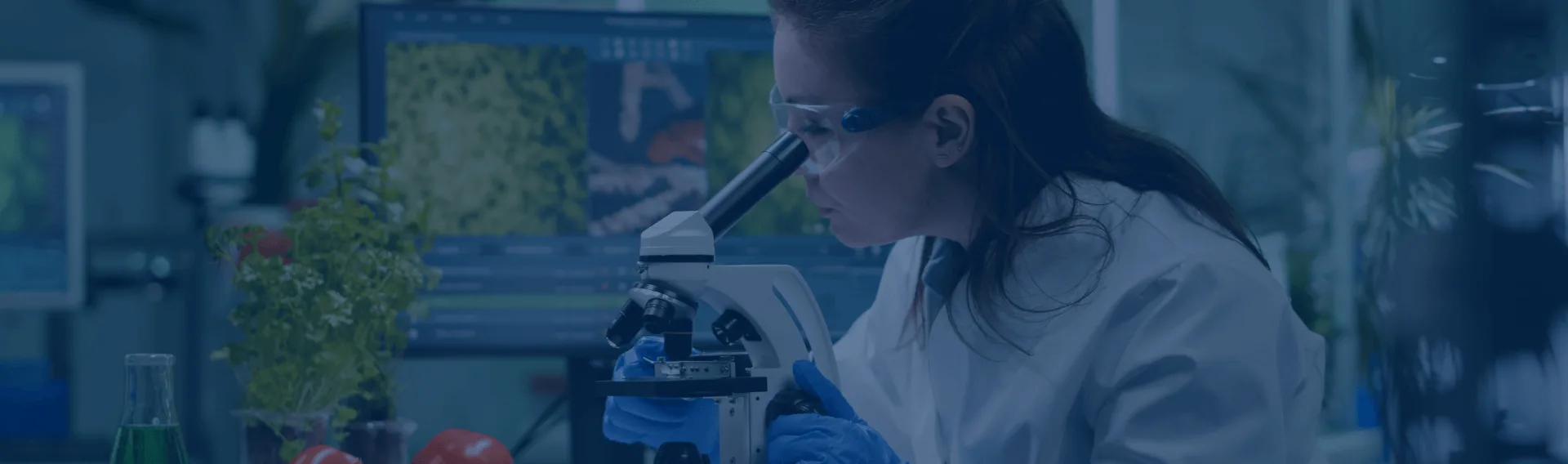
Internships for life science students at the right organisations cover hands-on work in areas like Molecular Diagnostics, Clinical Microbiology, Plant Genomics, and Infectious Disease research. You work with PCR machines, analyse real samples, run gel electrophoresis, and interpret results — not watch someone else do it.
Veta Genomics, a Kerala-based biotechnology company, has built its training programs around exactly this model. Students work on live scientific problems inside actual research environments, guided by professionals who understand both the academic and industry sides of the field.
Why Certificate Courses Still Matter
Your degree tells an employer what you studied. A certificate course in life sciences tells them what you can do.
Structured programs that combine microbiology, biochemistry, genetics, and molecular biology give you something a semester of lectures rarely can — breadth with depth. You learn to use real instruments, perform DNA isolation and microbial cultures, and understand how results translate into actual decisions in a lab or clinical setting.
For postgraduate applications and job interviews, this is the kind of preparation that makes a real difference.
The Right Time to Start Is Now
The life sciences field in India is growing — genomics, diagnostics, biopharma, and healthcare research are all expanding. Kerala, with its strong academic institutions and growing biotech presence, is a good place to be a science student right now.
But opportunity does not wait. The students who stand out after graduation are not always the ones with the highest grades. They are the ones who got into a real lab early, asked good questions, and built experience while their peers were still waiting for the right moment.