Most people still think website designing is about picking colours, arranging layouts, and making a homepage look attractive. And while aesthetics matter, that definition is outdated. Website designing today sits at the intersection of user experience, search visibility, and increasingly — artificial intelligence. If your website was built even two or three years ago without considering these shifts, it may already be working against you.
Design Was Never Just About Looks
A well-designed website has one job: turn visitors into customers. Every layout decision, every button placement, every font choice either moves someone closer to taking action or pushes them away. Research shows that visitors form an opinion about a website within 0.05 seconds of landing on it. Before they read a single word, they've already decided whether your business feels trustworthy.
This is why website designing is a business decision, not just a creative one. A cluttered layout or a confusing navigation menu signals disorganisation. A clean, structured design builds confidence instantly.
Where AI Enters the Picture
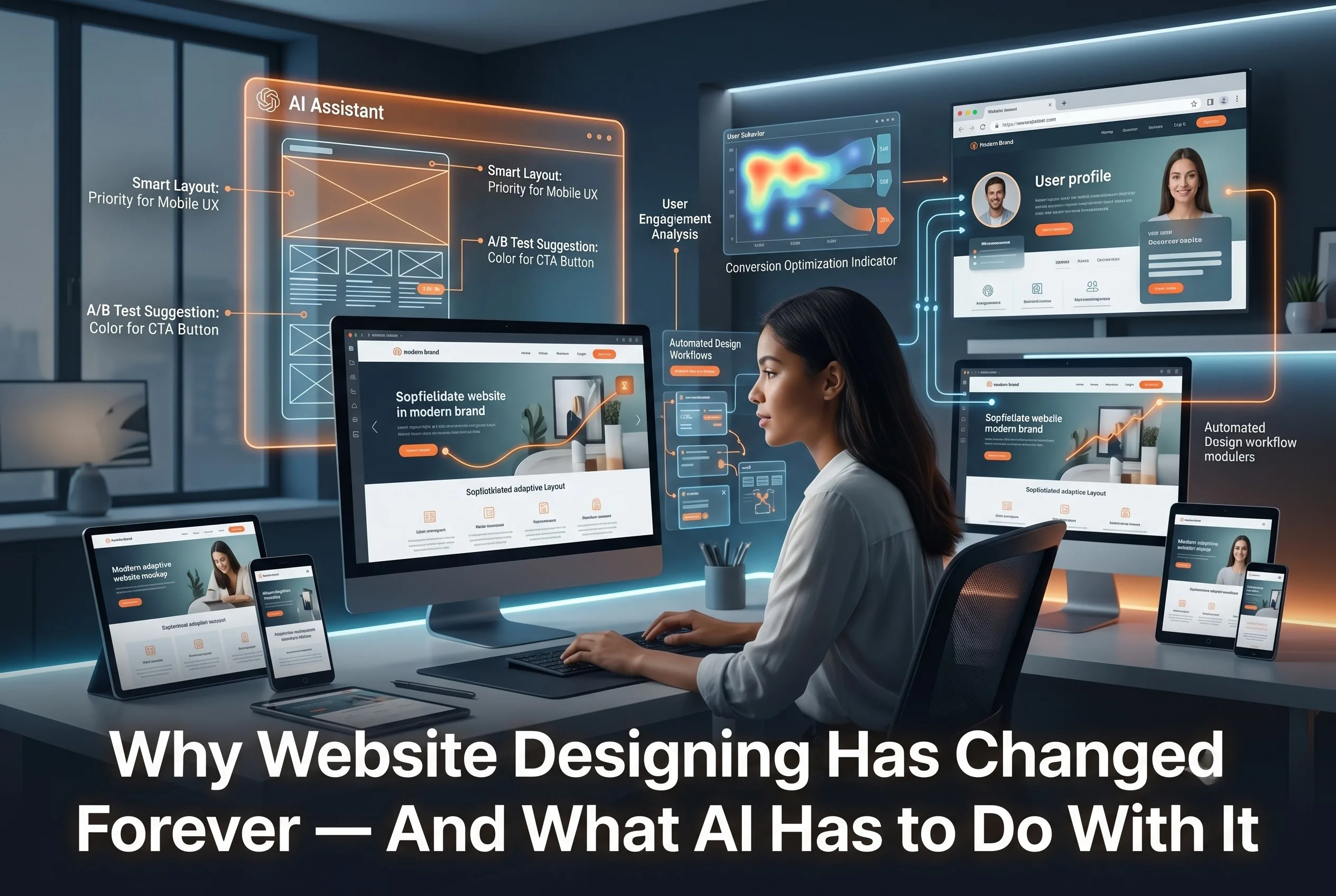
AI has quietly changed what good website designing looks like — both in how websites are built and how they are found.
On the building side, AI tools now assist designers with layout suggestions, content structuring, image generation, and even code. This has made the design process faster. But speed without strategy produces generic websites that look similar to thousands of others. The businesses that stand out are the ones using AI as a tool within a clear design vision, not as a replacement for one.
On the visibility side, the impact is even bigger. AI-powered search engines like Google's AI Overviews and tools like ChatGPT and Perplexity are now answering user queries directly — without the user ever clicking a link. For your website to be referenced in those answers, it needs to be structured in a way that AI can read, understand, and trust. That means clear headings, well-organised content, fast loading speeds, and information that directly answers common questions in your industry.
A website that was designed purely for visual appeal, without this structure, will be invisible to AI search.
Mobile Design Is No Longer Optional
Over 60 percent of web traffic globally now comes from mobile devices. Google indexes the mobile version of your website first — meaning your mobile design directly affects your search rankings, not just your user experience.
Good website designing accounts for this from the beginning. Text that is readable without zooming, buttons that are easy to tap, images that load quickly on a mobile connection — these are not extras. They are fundamentals. A website that looks beautiful on a desktop but breaks on a phone is a conversion problem waiting to happen.
The Three Things Every Business Website Needs Right Now
Beyond aesthetics and mobile responsiveness, there are three things that modern website designing must include:
Speed. A one-second delay in page load time can reduce conversions by up to 7 percent. Design choices directly affect speed — heavy image files, unnecessary animations, and bloated code all slow a website down.
Clear structure. Every page should have a clear purpose and a clear next step for the visitor. If someone lands on your services page and has to hunt for your contact details, you've lost them.
AI-readable content. Structured headings, FAQ sections, and concise answers to common questions make your website easier for both users and AI systems to navigate. This is what gets you referenced in AI-generated search results.
Getting Website Designing Right in 2026
Website designing has never been more important — or more complex. The businesses that treat their website as a living, evolving asset rather than a one-time project are the ones pulling ahead. Whether you are building from scratch or rethinking an existing site, the goal is the same: a website that loads fast, works on every device, answers the right questions, and earns the trust of both visitors and AI systems.
If you are looking for guidance on where to start, teams like Turnihi Tech Solutions work with businesses on exactly this — building websites that are not just visually strong but structurally built for search, AI visibility, and conversion.