
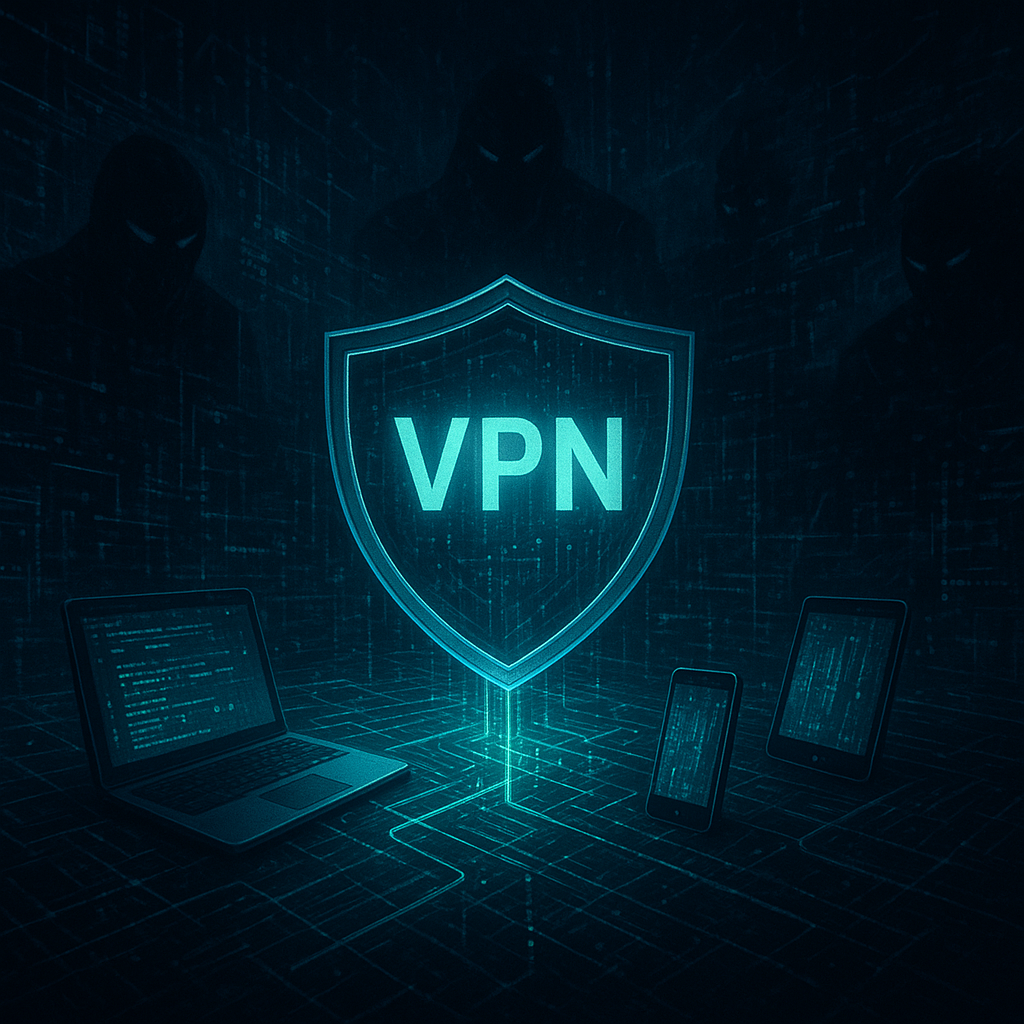
Securing Digital Frontiers: A Glimpse into VPNs' Enduring Relevance
On a cold morning in January 2026, a major multinational corporation suffered a devastating data breach. Hackers exploited a misconfigured network that lacked proper encryption channels, leading to the exposure of sensitive employee and customer data. This incident, reported by cybersecurity firms and covered extensively by Reuters, highlighted an unsettling truth: even as new protective technologies emerge, Virtual Private Networks (VPNs) continue to play an indispensable role in defending digital assets.
VPNs, once considered tools mostly favored by privacy advocates and remote workers, have cemented their position at the forefront of cybersecurity strategies worldwide. Their ability to encrypt internet traffic and mask user IP addresses is no longer a luxury; it is a necessity amid growing cyber threats and surveillance. By 2026, with cyberattacks increasing in sophistication and frequency, organizations and individuals alike depend on VPNs not merely for anonymity but as a critical shield against intrusion.
"VPNs have transitioned from optional privacy tools to foundational elements of enterprise cybersecurity frameworks," notes cybersecurity analyst Maria Chen.
This article explores the VPN landscape as it stands today, tracing its evolution, technological advances, and future trajectory. Drawing on industry data, expert insights, and real-world case studies, we uncover why VPNs remain essential and how they adapt to new challenges in the cybersecurity arena.
From Concealment to Corporate Backbone: The Evolution of VPNs
The concept of VPNs dates back to the late 1990s, initially designed to provide secure remote access by creating encrypted tunnels over the public internet. Early adopters were primarily large corporations seeking to connect remote employees securely to internal networks. Over the decades, VPN technology evolved alongside internet expansion and rising privacy concerns.
By the mid-2010s, the proliferation of mobile devices and cloud services accelerated VPN adoption beyond corporate environments. Consumers turned to VPNs to bypass geo-restrictions and safeguard personal data. Yet, the underlying function remained unchanged: encrypting data and masking network locations.
Throughout the 2020s, cyberattacks grew exponentially both in volume and complexity. According to Statista data, ransomware attacks alone surged by over 250% between 2020 and 2025. This spike underscored vulnerabilities inherent in traditional security models. VPNs, once focused on privacy, increasingly became integral to layered defense architectures.
Technological shifts such as the rise of zero-trust security frameworks have further cemented VPNs’ role. Rather than relying on perimeter defenses alone, zero-trust models require continuous verification of user identity and device security. VPNs facilitate secure connectivity by enforcing encrypted access and isolating network segments from unauthorized users.
"VPNs have adapted from simple privacy tools to dynamic components in complex cybersecurity ecosystems," says Dr. Alan Greene, chief security strategist at CyberSafe Solutions.
Unpacking VPN Technology: Encryption, Protocols, and Performance Metrics
At the heart of VPNs lies encryption—the process of encoding data so only authorized parties can decipher it. In 2026, the most widely deployed VPNs utilize robust encryption standards such as AES-256, widely regarded as virtually unbreakable with current computing capabilities. This level of encryption ensures that data intercepted by malicious actors remains indecipherable.
VPN protocols dictate how data packets travel securely from the user to the destination server. Popular protocols today include WireGuard, OpenVPN, and the newer Quantum-Resistant VPN (QR-VPN) protocols, designed to withstand threats posed by emerging quantum computing. Adoption of QR-VPN protocols is slowly gaining traction among high-security sectors, including government and defense agencies.
Performance, a critical factor for user experience, has improved significantly. Advances in VPN routing algorithms and server infrastructure have reduced latency and increased throughput. Cloud-based VPNs leveraging edge computing now dynamically optimize traffic paths, minimizing delays even for data-intensive applications like 8K video streaming and real-time collaboration platforms.
Despite these advances, challenges remain. VPNs can introduce bottlenecks, and some protocols may be vulnerable to specific side-channel attacks if not properly configured. As such, selecting the appropriate protocol and maintaining up-to-date software are essential best practices.
- Encryption Standards: AES-256 remains dominant; QR-VPN protocols emerging.
- Key Protocols: WireGuard, OpenVPN, IKEv2, and QR-VPN.
- Performance Enhancements: Edge computing, AI-driven routing.
- Security Risks: Misconfigurations, outdated protocols.
- Best Practices: Regular updates, strong authentication integration.
VPNs in 2026: Innovations and Industry Shifts
The VPN landscape in 2026 reflects a blend of technological innovation and shifting market demands. One notable trend is the convergence of VPNs with Secure Access Service Edge (SASE) frameworks. SASE integrates networking and security functions into a unified cloud-delivered service, providing users with secure access regardless of location.
Leading VPN providers have expanded their offerings to include SASE components, such as cloud-based firewalls, threat intelligence, and zero-trust network access (ZTNA). This integration streamlines security operations and reduces complexity for organizations managing hybrid workforces.
Another key development is the rise of AI-powered VPN management tools. These solutions automatically detect anomalous traffic patterns and optimize encryption parameters in real-time, enhancing both security and performance. Industry reports suggest that AI adoption in VPN services has increased by over 40% since 2024, driven by demand for proactive threat mitigation.
Consumer VPNs, meanwhile, have evolved to address privacy regulations worldwide. The introduction of the Global Privacy Shield Act in early 2025 has mandated strict data handling and transparency standards, compelling VPN providers to enhance auditability and user control features.
- SASE Integration: VPNs as part of holistic cloud security.
- AI-Driven Management: Real-time threat detection and optimization.
- Regulatory Compliance: Enhanced privacy features and transparency.
- Quantum Resistance: Early adoption in sensitive sectors.
- Hybrid Models: Combining VPNs with other secure access technologies.
These trends illustrate VPNs' adaptability and growing significance across both enterprise and personal cybersecurity domains.
Expert Perspectives: Assessing the Strategic Value of VPNs
Industry leaders emphasize that VPNs will remain a cornerstone of cybersecurity strategies but caution against viewing them as standalone solutions. Instead, VPNs should be integrated within multi-layered defenses tailored to organizational risk profiles.
Maria Chen, a cybersecurity consultant, highlights that "VPNs provide essential encryption and anonymization, but must be coupled with endpoint security, identity management, and continuous monitoring to be truly effective." She advocates for adopting advanced VPN features such as split tunneling, multi-factor authentication, and adaptive access controls.
Meanwhile, Dr. Alan Greene warns about the risks of complacency. "Not all VPNs are created equal. Organizations must prioritize providers with strong security track records and transparent policies. The recent surge in VPN-targeted attacks underscores the need for rigorous configuration and management." He also points to the importance of educating users on secure VPN usage to prevent accidental data leaks.
"VPNs are not a silver bullet but a vital shield in a layered cybersecurity armor," Greene asserts.
These insights align with emerging research from cybersecurity think tanks, which emphasize the blend of technology, policy, and user behavior as critical to leveraging VPNs effectively.
Looking Ahead: The Future of VPNs in a Connected World
As we look toward the next decade, several factors will shape VPN evolution. The proliferation of Internet of Things (IoT) devices demands scalable VPN solutions capable of securing billions of endpoints with minimal latency. Quantum computing advancements will drive broader adoption of quantum-resistant encryption protocols, safeguarding VPN tunnels against future cryptographic threats.
Moreover, increasing geopolitical tensions and digital sovereignty movements may lead to more region-specific VPN regulations, complicating global VPN service provision. Providers will need to balance compliance with user privacy and operational flexibility.
Users and organizations should prepare by:
- Evaluating VPN providers for compliance with emerging privacy laws.
- Investing in quantum-resistant VPN technologies.
- Integrating VPNs within comprehensive zero-trust security frameworks.
- Training personnel on secure VPN practices to minimize human error.
As highlighted in Behind the VPN Curtain: How Virtual Private Networks Redefined Digital Security, understanding the nuanced capabilities and limitations of VPNs is critical. Additionally, Unlocking VPN Potential: Advanced Strategies Reshaping Cyber Defenses provides tactical insights for organizations seeking to harness VPNs more effectively.
"The VPN of the future will be invisible, intelligent, and adaptive, seamlessly protecting our digital interactions," predicts cybersecurity futurist Elena Torres.
In conclusion, VPNs remain indispensable tools in cybersecurity’s arsenal. Their evolution from simple encryption tunnels to sophisticated components within layered defense mechanisms demonstrates their enduring relevance. In an era marked by relentless cyber threats and privacy challenges, VPNs are not merely optional but essential for securing digital frontiers.