
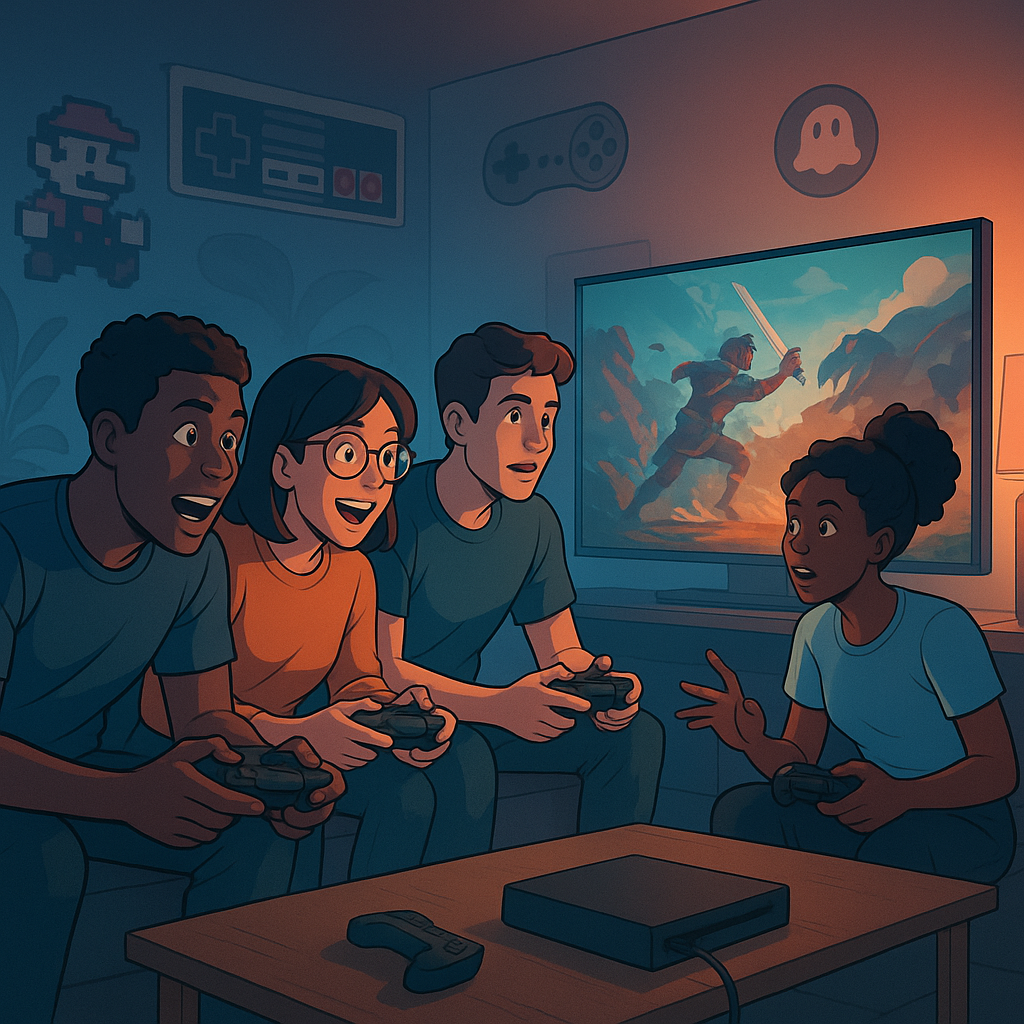
The Digital Revolution That Changed Play Forever
Picture a world where billions connect not just through words or images but through shared virtual adventures that span continents and cultures. Video games have evolved from simple pixelated diversions into complex, immersive universes that captivate a majority of the global population. As of 2026, over 3.5 billion people engage with video games regularly, making gaming the most widespread form of entertainment worldwide, according to industry estimates. This seismic shift in how humans play, communicate, and even learn, signals a cultural transformation as profound as the advent of cinema or the internet.
Consider the bustling virtual marketplaces of games like Skyforge Odyssey or the intricate narratives of Chronicles of Aeon—they are not just games but social ecosystems and storytelling marvels. This immersive quality has led gaming to transcend its original entertainment purpose, becoming a platform for education, social interaction, and even mental health support. The scene is set for a detailed exploration of gaming’s expansive growth, technological leaps, and cultural significance in 2026.
From Pong to Persistent Worlds: The Evolution of Video Games
The journey of video games stretches back to the early 1970s with rudimentary titles like Pong, evolving through decades of innovation to today’s sprawling open worlds and photorealistic graphics. The 1980s and 1990s laid the groundwork with arcade classics and home consoles, while the 2000s popularized online multiplayer gaming and mobile access. By the 2010s, digital distribution and esports began reshaping the industry fundamentally.
Fast forward to the mid-2020s, and gaming is now a multi-trillion-dollar industry, rivaling film and music combined. The rise of cloud gaming platforms and VR/AR integration has made high-fidelity experiences accessible on devices ranging from smartphones to dedicated headsets. Social gaming networks like PlayVerse and cross-platform interoperability have further blurred lines between players and creators, fostering vibrant communities.
This historical context underscores how the medium matured technologically and culturally. With the foundation laid by decades of innovation, 2026’s gaming landscape is the product of relentless refinement, democratization, and an ever-expanding audience.
Analyzing the 2026 Gaming Ecosystem: Data, Trends, and Market Dynamics
The gaming market in 2026 is characterized by diversification and technological sophistication. According to recent industry reports, global video game revenue surpassed $350 billion, driven by a blend of premium titles, free-to-play models, and subscription services. Mobile gaming accounts for approximately 48% of this revenue, reflecting continued smartphone penetration and casual player growth.
Emerging trends include:
- Integration of AI-driven content: Procedural generation and adaptive storytelling tailor experiences to individual players, increasing engagement.
- Cross-reality gaming: Seamless transitions between AR, VR, and traditional formats enhance immersion.
- Esports and streaming: Competitive gaming viewership exceeds 700 million globally, supported by platforms like Twitch and new decentralized streaming networks.
- Social impact games: Titles designed with educational and therapeutic goals are gaining mainstream attention.
In parallel, hardware innovation continues with devices like the NovaX Quantum Console offering unprecedented processing power and AI capabilities. Subscription-based access models, such as those pioneered by major publishers, have also shifted consumer spending patterns from ownership to service-oriented gaming.
Comparing these developments with previous years reveals a clear trajectory toward accessibility, personalization, and social connectivity as key drivers of growth and innovation.
2026 Breakthroughs: AI, Immersive Technologies, and Industry Shifts
The latest advancements in AI and immersive tech are reshaping video games in transformative ways. AI-powered NPCs now exhibit human-like behaviors and emotional responses, creating dynamic narratives that evolve based on player interaction. Hybrid AR/VR platforms enable players to blend virtual elements with their physical environments, fostering new forms of gameplay and social interaction.
TheOmniBuzz’s recent coverage highlights how AI has become integral not only in gameplay but also in development pipelines, accelerating content creation and testing. This reduces production cycles and costs, allowing indie developers to compete alongside industry giants.
Simultaneously, ethical considerations around AI-generated content and data privacy have come to the fore, prompting regulatory discussions worldwide. The industry’s response includes transparency initiatives and player empowerment tools, reflecting a maturing ecosystem.
“AI is no longer just a backend tool; it’s becoming a co-creator in the gaming process, fundamentally changing how stories are told and experienced,” said Dr. Lena Morales, AI specialist in interactive media.
Moreover, the rise of decentralized gaming economies powered by blockchain technologies enables players to own and trade in-game assets with real-world value. This innovation is not without controversy, but it signifies a shift toward player agency and new economic models.
These 2026 developments mark a pivotal moment, blending creativity, technology, and commerce in unprecedented ways.
Voices from the Industry: Perspectives on Gaming’s Cultural and Economic Impact
Industry leaders and cultural commentators alike emphasize how video games have become a central medium for creative expression and social bonding. According to Ubisoft’s Chief Creative Officer, gaming now rivals film and literature in narrative complexity and emotional resonance.
Esports figures highlight the democratizing power of gaming, enabling players from diverse backgrounds to achieve global recognition. Meanwhile, educators point to the medium’s potential in cognitive development and skill acquisition.
“Video games have evolved into a cultural fabric that connects generations, breaks down barriers, and fosters creativity unlike any other medium,” remarked Elena Park, cultural analyst and author.
Economically, gaming supports millions of jobs worldwide, from developers and artists to marketers and event organizers. The ripple effects extend to hardware manufacturing, digital distribution, and advertising sectors.
These multifaceted impacts reflect gaming’s transition from niche hobby to mainstream cultural and economic pillar, a narrative detailed further in our feature on How Video Games Are Rewriting Entertainment and Culture in 2026.
Looking Ahead: What to Expect in Gaming’s Next Chapter
The future of video games promises continued innovation and deeper integration into daily life. Key areas to watch include:
- Advances in AI storytelling: Increasingly personalized and emotionally rich narratives.
- Expanded metaverse ecosystems: Interconnected virtual spaces blending gaming, commerce, and socializing.
- Neurogaming technologies: Interfaces that respond to brain signals, enhancing immersion and accessibility.
- Environmental sustainability: Industry efforts to reduce carbon footprints amid growing digital infrastructure demands.
Players and developers alike will navigate evolving ethical landscapes, balancing innovation with responsibility. The rise of player-generated content and community-driven experiences will continue to democratize creativity and redefine ownership.
For newcomers eager to engage, resources such as How to Get Started with Video Games: A Beginner’s Roadmap to Play and Enjoyment offer comprehensive guidance, reflecting the medium’s broadening appeal and accessibility.
Ultimately, video games in 2026 are not merely entertainment; they are a mirror and catalyst of contemporary culture, technology, and human connection.