
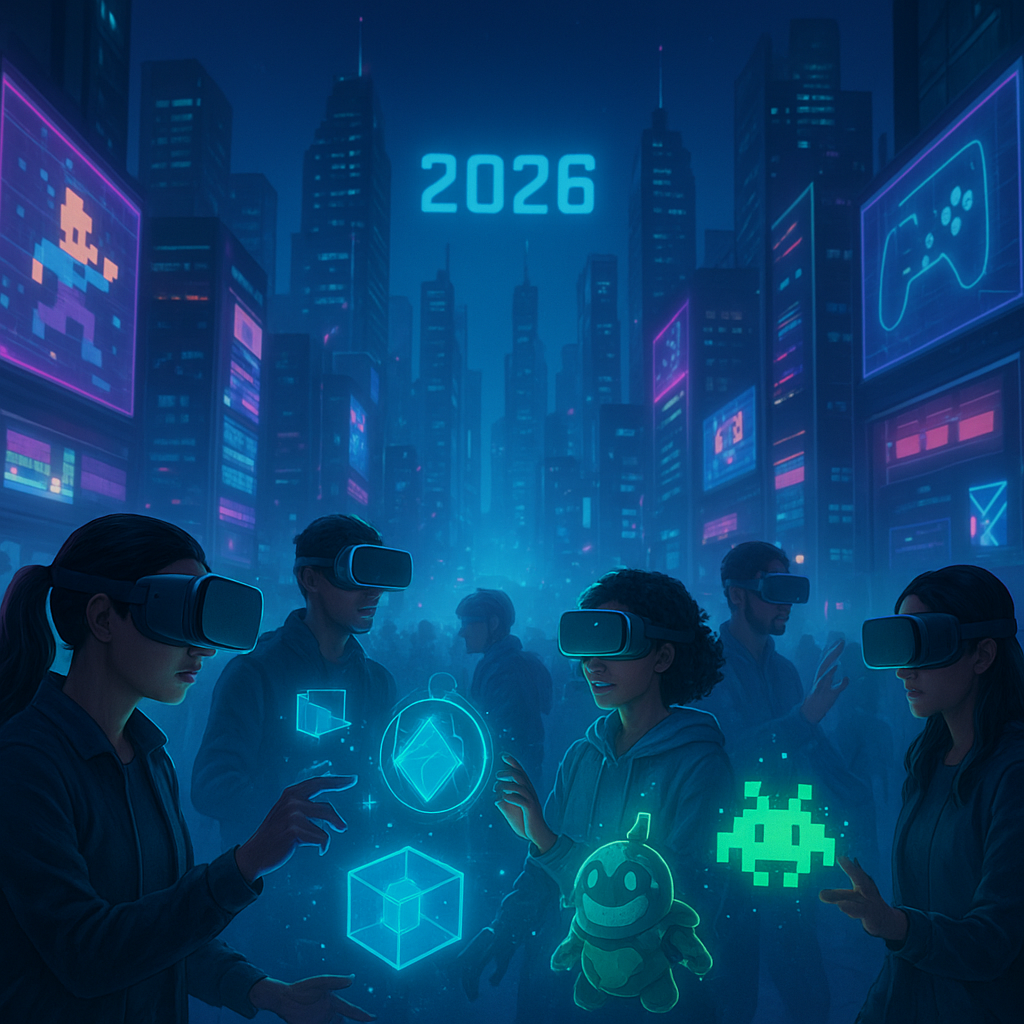
The Digital Playground’s New Dawn: A 2026 Snapshot
In a bustling esports arena in Seoul, a crowd of 20,000 fans cheers as two professional gamers face off in a virtual arena while millions more watch worldwide via live streams. This scene, emblematic of the video game industry’s global reach and cultural significance, underscores a broader reality: video games have transcended mere pastime status to become a dominant cultural and technological force. According to recent industry reports, the global video game market surpassed $250 billion in revenue in 2025, a figure that continues to climb with innovations in AI, immersive technology, and cloud gaming. Beyond economics, games have reshaped social interactions, storytelling, and even education, weaving themselves into the fabric of modern life.
The evolution witnessed in 2026 is not an isolated phenomenon but the culmination of decades of technological advances and shifting cultural attitudes. This article explores the multifaceted world of video games today — their trajectory, current innovations, industry impact, and future direction, providing a comprehensive analysis to understand their ongoing revolution.
Tracing the Journey: From Pixels to Immersive Worlds
Video games have evolved remarkably since their inception in the early 1970s, when titles like Pong introduced simple, pixelated gameplay. The 1990s ushered in the 3D era with games like Super Mario 64 and Doom, expanding the possibilities for interactive storytelling. The 2000s saw the rise of online multiplayer games such as World of Warcraft, which transformed gaming into a social experience connecting millions globally.
By the 2010s, smartphones and app stores democratized access to gaming, bringing casual and indie games into the mainstream. The last decade pushed boundaries further with VR headsets and AR experiences, laying the groundwork for today’s innovations. Increased computing power enabled hyper-realistic graphics and complex AI behaviors, making games more immersive and emotionally engaging.
The sector’s growth is intertwined with advances in hardware, software, and network infrastructure. Industry giants like Sony, Microsoft, and Nintendo have continually pushed console capabilities, while PC gaming evolved with powerful GPUs and customizable rigs. Cloud gaming services such as Xbox Cloud Gaming and PlayStation Now have removed hardware barriers, allowing play on diverse devices. In parallel, game engines like Unreal Engine and Unity have become tools enabling developers to craft increasingly sophisticated worlds and narratives.
This historical perspective reveals that video gaming’s rise is not simply technological but also cultural, as communities, esports, and content creators shape the ecosystem. For a detailed look at how video games have influenced culture and technology, readers can refer to our in-depth piece, The Digital Frontier: How Video Games Are Shaping Culture and Technology.
2026: Innovations Driving the Industry’s Next Chapter
The current year marks a pivotal moment for video games, driven by several converging technologies and market trends. AI integration has moved from procedural content generation to dynamic narrative adaptation and personalized gameplay experiences. Developers now use AI to create NPCs that learn from player behavior, resulting in unpredictable and engaging interactions. Additionally, AI-powered tools streamline game development workflows, reducing production times and costs.
Immersive technologies have advanced significantly. Lightweight, high-resolution AR glasses are replacing bulky VR headsets, allowing seamless blending of digital and physical environments. This shift enhances location-based gaming and social AR experiences, where players interact with virtual objects in real-world settings. Meanwhile, haptic feedback suits and neural interface prototypes are expanding sensory immersion, promising new degrees of physical engagement in gameplay.
Cloud gaming has finally reached mass adoption, buoyed by global 5G and 6G networks. This infrastructure enables low-latency streaming of AAA titles on mobile devices, eroding the traditional console and PC dominance. Subscription models and game-as-a-service offerings continue evolving, with cross-platform ecosystems allowing players to maintain progress across devices.
Market data from Newzoo and industry insiders report that in 2026, mobile gaming accounts for over 50% of global revenue, with cloud and console gaming sharing the remainder. Esports viewership has surpassed 700 million globally, generating billions in sponsorship and media rights deals. Independent developers thrive in this climate, leveraging AI and accessible tools to innovate without massive budgets, a trend we discuss further in How Indie Games Are Reshaping the Gaming Industry’s Future.
Key 2026 Developments in Gaming
- AI-driven adaptive storytelling and NPC behavior
- AR glasses replacing VR headsets for immersive experiences
- Global 5G/6G networks enabling seamless cloud gaming
- Cross-platform play and persistent game worlds
- Growth of esports with new game genres and formats
"The integration of AI and immersive tech is not just enhancing gameplay but fundamentally redefining how players experience and interact with virtual worlds," says Dr. Maria Chen, lead researcher at the Interactive Digital Futures Lab.
Analyzing the Industry’s Economic and Cultural Impact
Video games have become one of the most lucrative entertainment sectors globally, outpacing both film and music revenues combined in recent years. According to Statista data, the global video game market is projected to reach $300 billion by 2028, growing at a compound annual growth rate (CAGR) of around 7%. This growth is driven by increasing penetration in emerging markets, diversification of game genres, and expansion of gaming demographics.
Beyond economics, games influence culture profoundly. They serve as social hubs, creative outlets, and platforms for political and social commentary. The rise of user-generated content and modding communities has democratized creation, while streaming platforms like Twitch and YouTube Gaming have turned players into influencers and celebrities.
Demographically, gaming is more inclusive than ever. Women comprise nearly 48% of gamers, and older adults increasingly engage with casual and story-driven titles. This shift has encouraged developers to create more diverse characters and narratives, reflecting a broader spectrum of human experience.
Esports’ explosive growth exemplifies gaming’s cultural reach. Major tournaments command viewership rivaling traditional sports, with multi-million-dollar prize pools and significant media deals. This sector has also driven technological innovation, from spectator modes to real-time analytics enhancing viewer engagement.
Economic Highlights and Cultural Shifts
- Projected $300B market size by 2028 (Statista)
- 48% of gamers are women, reflecting gender parity trends
- Esports global viewership exceeding 700 million
- User-generated content driving community growth
- Diverse narratives increasing player engagement
"Video games are the new storytelling medium, offering interactivity and emotional depth unmatched by other forms," notes cultural analyst James Rivera.
Expert Insights and Industry Perspectives
Industry veterans and academics agree that 2026 represents a maturation point for video games as a medium and business. According to Dr. Elaine Park, a game studies professor at the University of California, "We are witnessing a convergence where technology, artistry, and community engagement are creating a richer, more socially impactful gaming ecosystem."
Executives at major studios emphasize the importance of balancing innovation with accessibility. "Our goal is to push boundaries while ensuring games remain inviting for newcomers and veterans alike," says Lucas Meyer, CTO at a leading AAA developer. This is echoed by indie developers who appreciate the lowered barriers provided by AI tools and digital distribution.
From a societal viewpoint, concerns about gaming addiction and digital wellbeing have led to industry initiatives promoting responsible play. Governments and organizations increasingly collaborate on guidelines and support frameworks, recognizing games’ power alongside their risks.
Technologists anticipate further breakthroughs in AI-driven content personalization, which could transform how narratives and gameplay evolve uniquely for each player. Meanwhile, immersive hardware improvements aim to reduce motion sickness and increase comfort, broadening the appeal for longer sessions.
For readers interested in how AI and immersive tech are currently shaping games, our recent analysis How AI and Immersive Tech Are Transforming Video Games This May offers a deep dive into these trends.
Looking Ahead: What’s Next for Gaming?
The future of video games promises increased convergence with other media and technologies. We expect tighter integration of games with social platforms, metaverse environments, and AI-driven content creation. Personalized gaming experiences tailored by AI will likely become the norm, offering every player a unique journey.
Hardware evolution will continue, with neural interfaces and brain-computer interaction on the horizon. These technologies could redefine control schemes and sensory immersion, making games more intuitive and emotionally resonant.
On the business front, subscription and cloud-based models will dominate, supported by global network infrastructure expansion. This shift may challenge traditional ownership and monetization paradigms, raising important questions about digital rights and content preservation.
Moreover, gaming’s role in education and training is expanding, with serious games addressing skills development, mental health, and social issues. As the medium matures, expect it to influence policy, culture, and human connection more deeply.
Future Trends to Watch
- AI-driven procedural storytelling and gameplay adaptation
- Neural interface and brain-computer gaming controls
- Metaverse and social integration across platforms
- Expansion of cloud gaming and subscription ecosystems
- Growth of educational and serious games
In sum, video games are no longer confined to entertainment but are integral to culture, technology, and society. Their trajectory is one of continuous innovation and expanding influence, making them a critical subject for understanding the digital age.
For those new to gaming or looking to deepen their engagement, our guide How to Get Started with Video Games: A Beginner’s Roadmap to Play and Enjoyment provides a practical entry point into this dynamic world.