The Shifting Landscape of Higher Education: A Defining Moment
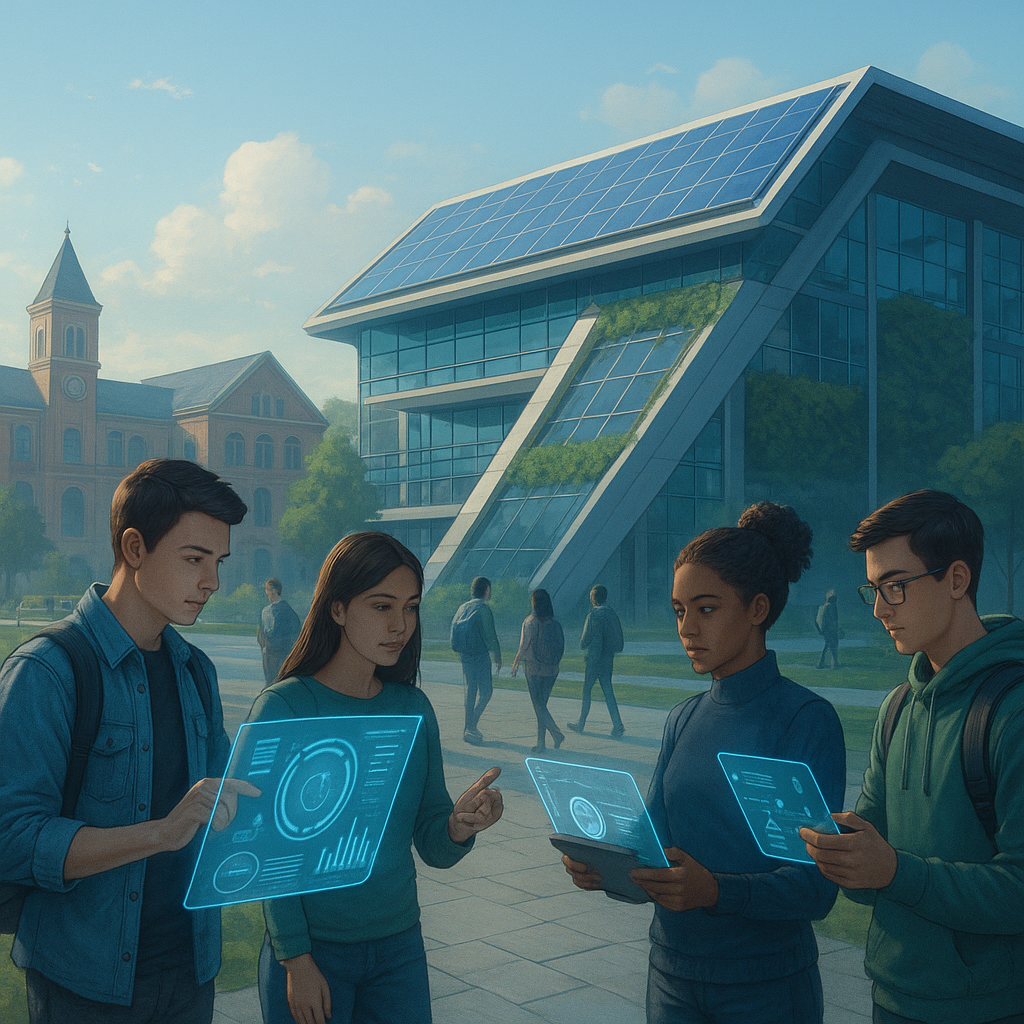
In the spring of 2026, the global university system stands at a crossroads, challenged by rapid technological shifts, changing workforce demands, and evolving student expectations. Consider the scene at a leading U.S. public university: lecture halls once packed with hundreds now host hybrid classrooms where half the students attend remotely. Meanwhile, AI-powered learning platforms tailor coursework in real time, reshaping the professor-student dynamic. These changes are not isolated to one institution but ripple globally, signaling a fundamental transformation in how universities operate and deliver value.
Universities have traditionally served as gatekeepers of knowledge and credentialing, a role now questioned by unprecedented access to information and alternative credential providers. According to the National Center for Education Statistics (NCES), undergraduate enrollment in traditional four-year institutions has declined by 7% since 2020, while non-degree certifications and micro-credentials have surged by 15% annually. This data underscores a broader trend: the university model, once seemingly invulnerable, is under pressure to redefine itself or risk obsolescence.
“The future of universities hinges on their ability to integrate technology and relevance, or face becoming relics of a bygone era,” says Dr. Linda Marquez, a leading expert on higher education reform.
Historical Context: From Ivory Towers to Innovation Hubs
The modern university system traces its roots to medieval Europe, where institutions like the University of Bologna and Oxford pioneered structured curricula and academic freedom. Over centuries, universities evolved into centers of research, civic leadership, and social mobility. The 20th century saw exponential growth in enrollment and diversification of disciplines, driven by industrialization and the knowledge economy.
However, this expansion created rigidity. Universities became large bureaucracies, often criticized for slow adaptation to societal needs. By the early 2000s, rising tuition costs, student debt crises, and questions about graduate employability sparked calls for reform. The digital revolution added further complexity, introducing online learning and open educational resources. Yet, many institutions struggled to integrate these tools effectively, clinging to traditional lecture models and semester structures.
Recent decades have also seen increased emphasis on global rankings and research output, sometimes at the expense of teaching quality and accessibility. This tension has fueled debate about universities’ core mission and their ability to serve diverse student populations in an interconnected world.
Core Analysis: Data and Trends Shaping University Futures
In 2026, multiple datasets illustrate how universities must recalibrate their strategies:
- Enrollment Shifts: The NCES reports a 5% annual decline in full-time undergraduate enrollment since 2022, particularly among traditional 18-22 year-olds. Conversely, adult learners and part-time students are increasing, representing 40% of total enrollments, reflecting the need for lifelong learning opportunities.
- Financial Pressure: Public funding for universities has decreased on average by 12% over the past five years, shifting greater cost burdens to students and families. This has intensified calls for cost-effectiveness and transparency in program offerings.
- Technology Integration: According to EDUCAUSE, 78% of universities now incorporate AI-driven adaptive learning tools, yet only 35% of faculty report feeling adequately trained to use them, indicating a gap in professional development.
- Graduate Outcomes: The U.S. Bureau of Labor Statistics highlights that graduates with traditional degrees face underemployment rates of 23%, while those with hybrid degrees and micro-credentials show improved employment outcomes by 15%.
These data points reveal systemic shifts demanding responses in pedagogy, funding, and institutional mission. Universities that innovate in curriculum design, student engagement, and workforce alignment stand to gain a competitive edge.
“Data-driven adaptation is no longer optional; it’s the lifeline for universities aiming to stay relevant amid evolving societal demands,” emphasizes Professor Alan Chen of Stanford University.
Current Developments in 2026: Innovation and Challenges
In 2026, universities are experimenting with multiple transformative initiatives:
- Modular Degrees and Micro-Credentials: Institutions such as Arizona State University and the University of Toronto have expanded flexible learning pathways, allowing students to stack credentials that align directly with industry needs.
- AI and Immersive Learning: Virtual and augmented reality tools, coupled with AI tutors, are becoming mainstream in STEM and health sciences programs, enhancing experiential learning and student retention.
- Global Partnerships: Universities are forging alliances with tech giants and multinational corporations to co-create curricula, internships, and research projects, bridging academic and industry gaps.
- Financial Accessibility: New models such as income-share agreements (ISAs) and blockchain-based scholarship funds are gaining traction to mitigate student debt burdens.
Despite these advances, challenges remain. Faculty resistance to change, data privacy concerns around AI tools, and inequities in technology access pose significant obstacles. Moreover, the COVID-19 pandemic’s lasting effects continue to influence mental health and learning outcomes, prompting universities to invest more in student support services.
For students navigating these dynamics, resources like Starting University: Practical Steps and Insights for a Successful Launch become invaluable guides through increasingly complex academic landscapes.
Expert Perspectives and Industry Impact
Experts emphasize that universities must balance tradition with innovation to fulfill their societal role. Dr. Marquez notes, “Universities are not just degree mills; they are crucibles of critical thought and cultural development. Preserving these values while embracing change is vital.” Industry leaders concur, viewing universities as essential talent pipelines but urging curricula to be more agile and outcome-focused.
The private sector’s increasing role in shaping educational content and delivery has sparked debate about academic independence. However, collaborations with companies like AWS at Tuskegee University demonstrate positive synergies fostering cutting-edge skills in AI and machine learning, as detailed in our analysis How Tuskegee University and AWS Are Shaping AI and Machine Learning Education.
Universities also impact local economies and innovation ecosystems. Cities with thriving university environments report higher rates of startup formation and research commercialization, according to reports from the Brookings Institution. This underscores the importance of universities not only as educational institutions but also as economic engines.
Future Outlook: What to Watch and How Students Can Adapt
Looking ahead, several trends will define the university experience:
- Personalized Learning Journeys: AI and data analytics will enable universities to customize education paths based on individual strengths, career goals, and learning styles.
- Hybrid and Global Campuses: Physical and virtual campuses will merge, offering seamless access worldwide and fostering diverse, cross-cultural cohorts.
- Expanded Lifelong Learning: Continuous education models will become normative, supported by modular credentials and employer partnerships.
- Focus on Soft Skills and Ethics: As automation advances, universities will emphasize critical thinking, creativity, and ethical decision-making.
For students and educators alike, embracing flexibility and lifelong learning is paramount. The strategies outlined in Mastering University Success: Proven Strategies from Leading Experts offer practical insights for thriving in this evolving context.
“Adaptability is the most valuable skill—universities that foster it will empower generations to come,” concludes Professor Chen.
Universities face a pivotal moment. Those that proactively reinvent themselves by integrating technology, fostering inclusivity, and aligning with real-world demands will not only survive but thrive as vital institutions in the 21st century.