Forging a New Path in AI Education: The Tuskegee-AWS Partnership
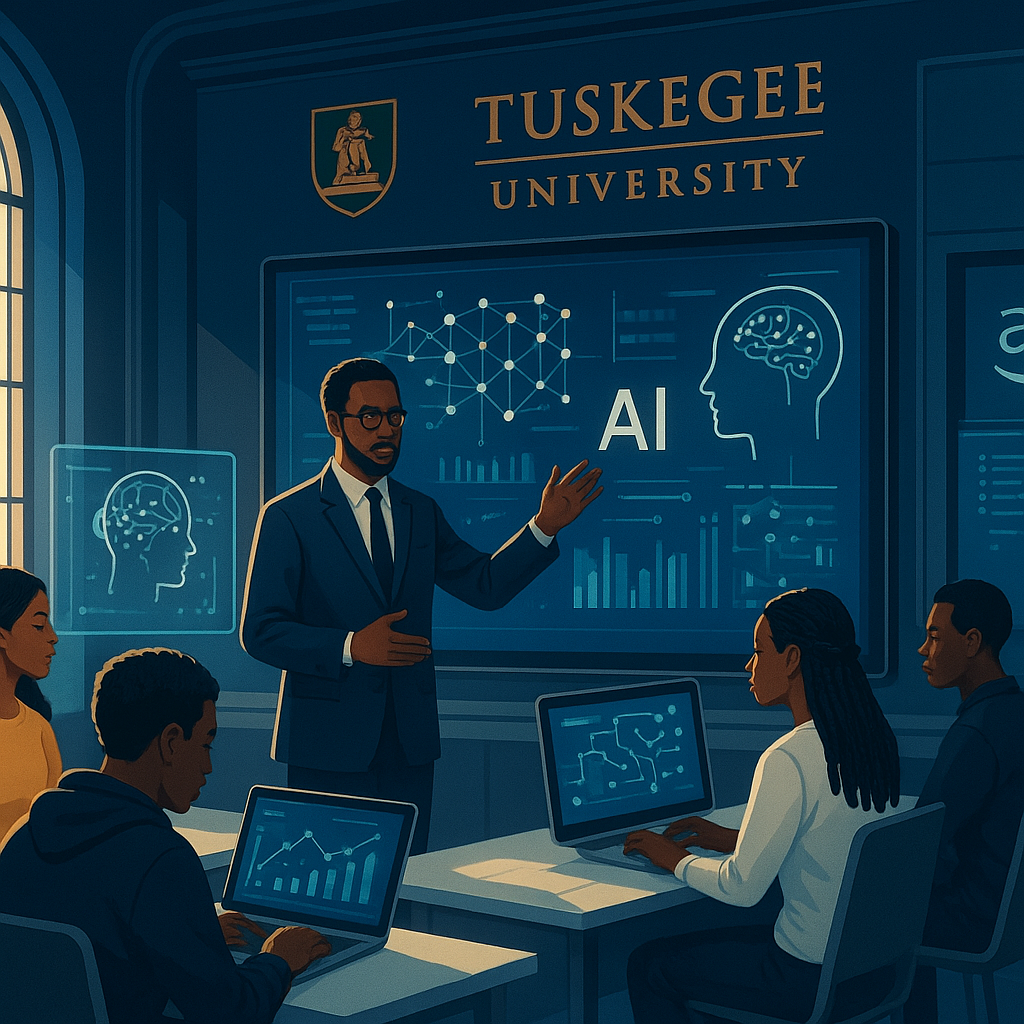
In early 2026, Tuskegee University, a historically Black university with a rich legacy of innovation and leadership, announced a groundbreaking collaboration with Amazon Web Services (AWS) to advance education in artificial intelligence (AI) and machine learning (ML). This partnership marks a significant milestone in democratizing access to cutting-edge AI tools and knowledge for underrepresented communities in technology. Tuskegee, known for its emphasis on STEM and community empowerment, is leveraging AWS's cloud infrastructure and AI expertise to build a pioneering curriculum and research ecosystem that prepares students for the rapidly evolving AI landscape.
The significance of this partnership extends beyond mere curriculum enhancement. It embodies a commitment to closing the diversity gap in AI, providing students with hands-on experience in AI development, and fostering innovation that addresses real-world challenges. This article explores the multifaceted dimensions of this collaboration, its historical context, current developments in 2026, expert perspectives, and what this means for the future of AI education.
"Our collaboration with AWS empowers Tuskegee students to become leaders in AI innovation, ensuring that diverse voices shape the future of technology," said Dr. Marlene Johnson, Dean of Tuskegee's College of Engineering.
Historical Context: From Legacy to Leading AI Education
Tuskegee University’s roots trace back to 1881, founded by Booker T. Washington with a mission to provide education and opportunity to African Americans during an era of systemic exclusion. Over the decades, Tuskegee has evolved into a recognized center for scientific research and technological advancement, producing notable alumni who have significantly impacted agriculture, engineering, and public health.
The AI revolution that gathered pace in the 2010s and 2020s, however, posed a new challenge: how to ensure historically marginalized institutions are not left behind in a field dominated by tech giants and elite universities. AWS's emergence as a leading cloud services provider with expansive AI and ML capabilities opened a door for institutions like Tuskegee to leapfrog traditional barriers.
Prior to this collaboration, Tuskegee had initiated efforts to integrate AI into its curriculum, but lacked the cloud infrastructure and large-scale datasets necessary for advanced research and practical training. AWS’s investment represents a strategic alignment of resources and vision, enabling Tuskegee to join the ranks of global AI education leaders.
This evolution is part of a broader trend where universities are partnering with industry leaders to co-create educational programs and incubate AI startups. As detailed in TheOmniBuzz’s exploration of university transformation, such collaborations are critical for bridging the gap between academia and industry demands in the AI era.
Core Analysis: What the Partnership Entails
At the heart of the Tuskegee-AWS collaboration is a multifaceted program designed to transform AI and ML education through comprehensive curriculum development, cloud-powered research, and workforce training. The partnership’s components include:
- Curriculum Integration: AWS experts co-designed AI and ML courses integrated across engineering, computer science, and data analytics programs. These courses emphasize practical skills like cloud computing, neural networks, natural language processing, and ethical AI development.
- Cloud Infrastructure Access: Tuskegee students and faculty gain privileged access to AWS’s cloud platform, including AI services such as SageMaker, Rekognition, and Comprehend. This enables large-scale experimentation and real-time model deployment.
- Faculty Training and Research Grants: AWS provides ongoing training programs for Tuskegee faculty, equipping them with the latest AI frameworks and techniques. Additionally, research grants support projects addressing community-specific problems like healthcare diagnostics and environmental monitoring.
- Student Fellowships and Internships: The collaboration funds internships at AWS and partner companies, offering students hands-on experience in AI product development and deployment in industry settings.
According to internal data from Tuskegee University, enrollment in AI-related courses has surged by 150% since the program’s inception in late 2025. More impressively, student-led AI projects have generated patents and prototypes that garnered attention from Silicon Valley investors, signaling a vibrant innovation ecosystem.
"This collaboration is not just about technology transfer; it’s about empowering a new generation of AI innovators who reflect the diversity of our society," remarked Dr. Angela Freeman, AWS’s Director of Academic Partnerships.
Current 2026 Developments: Expanding Impact and Innovation
As of spring 2026, the partnership has matured into a dynamic hub for AI education and research at Tuskegee. Several notable developments illustrate this progress:
- Launch of the Tuskegee AI Institute: A dedicated center for AI research and education, the institute houses state-of-the-art labs equipped with AWS cloud-powered supercomputing resources. It serves as a catalyst for interdisciplinary projects spanning agriculture, healthcare, and social sciences.
- Community-Focused AI Applications: Researchers at Tuskegee have developed AI models tailored to address public health disparities in Alabama, including predictive analytics for chronic disease management and AI-driven telemedicine platforms.
- National Recognition and Funding: The U.S. Department of Education and National Science Foundation have awarded Tuskegee additional funding to scale AI education initiatives, citing the AWS partnership as a model for minority-serving institutions.
- Student Success Stories: Graduates from the program have secured roles at leading AI companies and startups, contributing to projects in autonomous systems, AI ethics, and explainable AI, underscoring the program's industry relevance.
These advances reflect a growing recognition that AI education must be inclusive and contextually relevant to solve diverse societal problems. Tuskegee’s model demonstrates how industry-academic partnerships can accelerate this agenda.
For readers interested in the broader implications of these developments, TheOmniBuzz’s analysis in Artificial Intelligence in 2026: Advances, Impact, and Future Directions offers an insightful overview of how AI innovation ecosystems are evolving globally.
Expert Perspectives: Industry and Academic Insights
Leading AI researchers and industry veterans have weighed in on the Tuskegee-AWS collaboration, highlighting its strategic importance in diversifying the AI talent pipeline and catalyzing innovation.
Dr. Kyla Matthews, a noted AI ethicist and professor at Stanford University, emphasized the societal implications: "This partnership exemplifies how targeted investments can empower underrepresented groups in AI, fostering inclusive innovation that benefits everyone."
On the industry side, AWS’s Chief AI Officer, Rajesh Patel, remarked, "Collaborations like this are critical to our mission of democratizing AI. By working with Tuskegee, we help build a workforce that will drive AI’s next frontier."
"Inclusive AI education ensures that technology reflects the values and needs of all communities, not just a select few," noted Dr. Matthews.
The partnership also aligns with a growing corporate trend of embedding social responsibility into AI development. By investing in education at historically Black colleges and universities (HBCUs), companies like Amazon address both talent shortages and equity concerns.
Looking Ahead: What to Watch in AI Education and Collaboration
As 2026 unfolds, several trends will shape the trajectory of the Tuskegee-AWS partnership and similar initiatives:
- Scaling AI Education to More HBCUs: Inspired by Tuskegee’s success, other HBCUs are exploring partnerships with cloud providers to expand AI programs, potentially transforming the demographic makeup of AI professionals.
- Advancements in AI Curriculum Design: The integration of ethical AI, human-AI collaboration, and domain-specific AI applications will become standard, making education more holistic and relevant.
- Public-Private Funding Synergies: Increased joint funding from government agencies and tech companies will fuel innovation hubs and incubators centered around AI research at minority-serving institutions.
- Emergence of AI for Social Good: AI models developed in these academic settings will increasingly focus on addressing healthcare disparities, climate resilience, and educational equity.
For policymakers and educators, the Tuskegee-AWS model offers actionable lessons on leveraging partnerships to build future-ready talent. As AI becomes ubiquitous, ensuring a diverse and skilled workforce is paramount.
Readers interested in the transformative potential of AI and machine learning education may also consult TheOmniBuzz’s How Machine Learning Is Redefining Intelligence and Industry in 2026 and Unlocking Intelligence: How Algorithms, Robotics, and Machine Learning Shape Our Future for broader context.
Case Study: AI-Driven Agricultural Innovation at Tuskegee
One tangible example of the partnership’s impact is the AI-driven agricultural project launched in collaboration with Tuskegee’s College of Agriculture and AWS. The project harnesses machine learning models to optimize crop yields and sustainable farming practices in the rural South.
Using AWS’s cloud AI services, students and faculty developed predictive models analyzing soil composition, weather patterns, and crop health data gathered via drones and IoT sensors. The system provides farmers with actionable insights to reduce water usage and improve pest management.
This initiative not only advances sustainable agriculture but also trains students in applying AI to solve local challenges, exemplifying the synergy between education, research, and community impact.
"Our AI agricultural models demonstrate how technology can revitalize rural economies while preparing students for careers at the intersection of AI and environmental science," said Dr. Marcus LeBlanc, lead researcher.
Such projects underscore the importance of contextualizing AI education within real-world applications, a principle central to Tuskegee’s approach.
Conclusion: Building Inclusive AI Futures
The Tuskegee University and Amazon Web Services collaboration represents a pioneering blueprint for expanding AI education access and fostering innovation at historically underrepresented institutions. By providing state-of-the-art resources, expertise, and real-world application opportunities, this partnership is nurturing a diverse cadre of AI talent equipped to address complex societal challenges.
As AI continues to transform industries and societies, inclusive educational initiatives like this will be essential in shaping ethical, equitable, and impactful AI technologies. The success at Tuskegee signals a broader shift towards collaborative, community-rooted AI education that empowers all voices in the technology conversation.