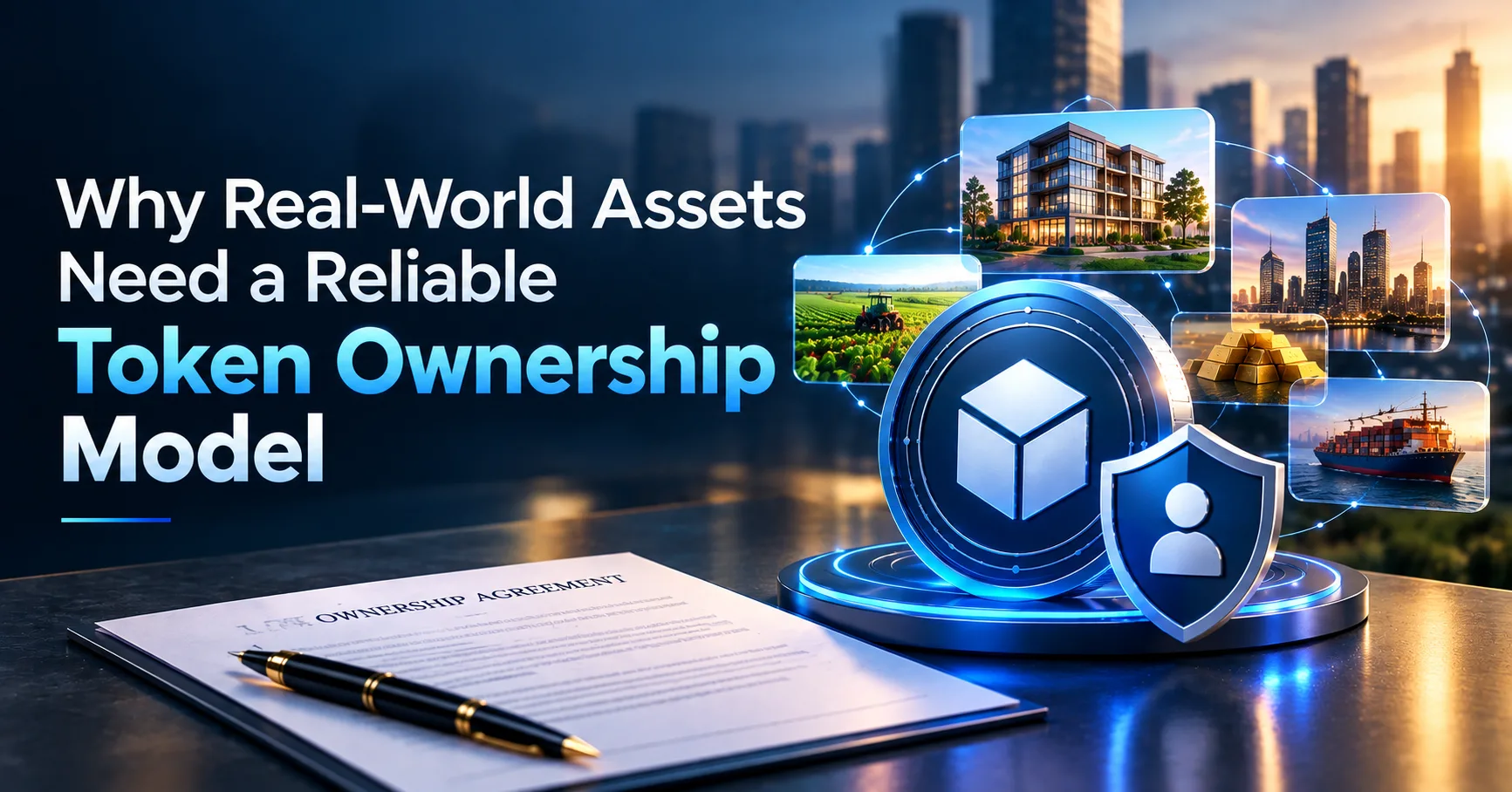
Real-world asset tokenization involves giving a digital form of an asset on a blockchain. This can make particular equity interests more easily tracked, transferred and managed. But having a token does not imply that the token is the means of ownership of something.
A viable ownership model that links the issue of the blockchain token with legal rights and the underlying good is essential to effectively implement tokenized assets. Otherwise, investors can own a digital token without a realistic grasp of the rights they are accruing.
What Is a Token Ownership Model?
A token ownership model is a specification of the meaning of a token and the rights that accrue to whoever owns one. Those rights might be different for each asset and legal construct of the token.
A token may embody direct ownership of an asset, a claim to a part of the asset, an economic interest in an asset, revenue rights, or a contractual claim on an underlying asset. Both these constructions are not identical and each may give rise to varying duties/sentiments of the token holders.
For instance, a token that's tied to a property investment could give an economic interest in the rental income as well as the ownership of the property. Thus the ownership to be clearly decided upon before the investors invest in the tokens.
Blockchain Ownership Is Not Always Legal Ownership
The primary question in asset tokenization is whether asset owners are different from the legal owners.
By using a blockchain, there could be a transparent record indicating the amount of tokens stored in a certain wallet. But that record itself doesn't necessarily prove legal ownership of a physical or financial asset associated with those tokens.
Contracts, the structure of the business, the ownership of the property and acts of custody, along with the laws governing the transactions, can all affect the legal ownership.
That's not just an Infrastructure requirement for tokenization. The digital record must collaborate with the legal framework to ensure that investors are aware of what the tokens represent.
Connecting the Token to the Underlying Asset
There must be a clear relationship between the digital token and the asset in the real world to achieve a reliable ownership model.
This agreement can come in the form of a legal contract, asset documentation, custody arrangements, ownership entities, and procedures for verification. These can form the basis for how the asset is held, and what rights are given to token ownership.
If the commercial property is represented in tokens for instance, it is necessary to have a particular framework that clarifies what sorts of rights each token gives the proprietor, who is the legitimate owner of the property, and how devotees will take part in it.
If the blockchain record does not have a defined structure, the blockchain record may stand alone from what is actually legal.
Why Ownership Rules Should Be Defined Before Issuance
Ownership rules should be agreed ahead of the creation of tokens and their allocation. Investors should familiarize themselves with what they're buying, and what rights they have when they buy a token.
Ambiguous structure can cause issues to arise with disputes, transfers, regulatory purposes, valuation and redemption of investors.
Yet businesses developing tokenization platforms must also take into account the legal and operational setting as well as the technical capability. A white label tokenization service provider can supply the technology to create and deal with the tokens, but the ownership structure must be clearly outlined.
Except where legal rights are not clearly established, the blockchain is unable to fill the void.
How Token Transfers Affect Ownership
Token transfers create another important consideration. The transfer of a token from one wallet to another can involve the transfer of the rights of ownership.
But all the tokenized assets don't necessarily qualify for free transfer. Restrictions relating to investors, jurisdiction, regulations and/or contractual terms may apply to certain assets.
A good ownership model should help to establish the rules and what constitutes a valid ownership transfer.
Further the standards can also be integrated in the wider framework where applicable, such as compliance checks, lists of eligible investors, and transfer restrictions.
The Role of Smart Contracts
Smart contracts can automate a number of aspects of token ownership management. They can record transfers, predefine restrictions, manage and control interaction between the participants and manage distributions.
This can help to make ownership processes more efficient, transparent and effective.
Smart contracts are not a legal contract, however. A smart contract can perform code, but it can't decide if a token is a legally valid form of ownership.
There, the law must meshes with the technical formulation.
What Happens When the Underlying Asset Changes?
Ownership of the assets in the real world can evolve over time, and tokens of the ownership model should reflect that.
A real estate can be refinanced or sold. A person can invest in an investment product and see it expire. An asset can gain or lose value or ownership. The events can change the rights associated with the related tokens.
In such scenarios, a good structure will set clear guidelines as to what should occur. The redemption process, exchange of tokens or receipt of the proceeds may apply depending upon the initial agreement.
Lifecycle Planning is a key asset in tokenized asset ownership.
Why Reliable Ownership Models Build Investor Confidence
Investors must be able to see clearly before entering a tokenised asset market. They should know the what, who, how, and when of what they are getting or selling, and what rights they have and how they are allowed to transfer them.
Clearing up the ownership structure and associated digital token to asset relationship should help clear up some uncertainty.
This transparency can be especially critical as tokenized assets venture further into other domains like real estate, private credit, securities, commodities and other financial or physical assets.
Final Thoughts
A tokenized asset is not just a blockchain digital asset token. It is useful only when there is some linkage between the order, the contemplated rights it embodies and the intended underlying asset.
Ownership is the means by which meaningfulness can be added to the transparent, efficient recordkeeping that can be brought by blockchain technology.
Finally, to be successful the asset tokenization arrangement should be designed so that ownership is digital, legal rights are digital, asset management is digital, and real world events link it together throughout the asset's lifecycle.