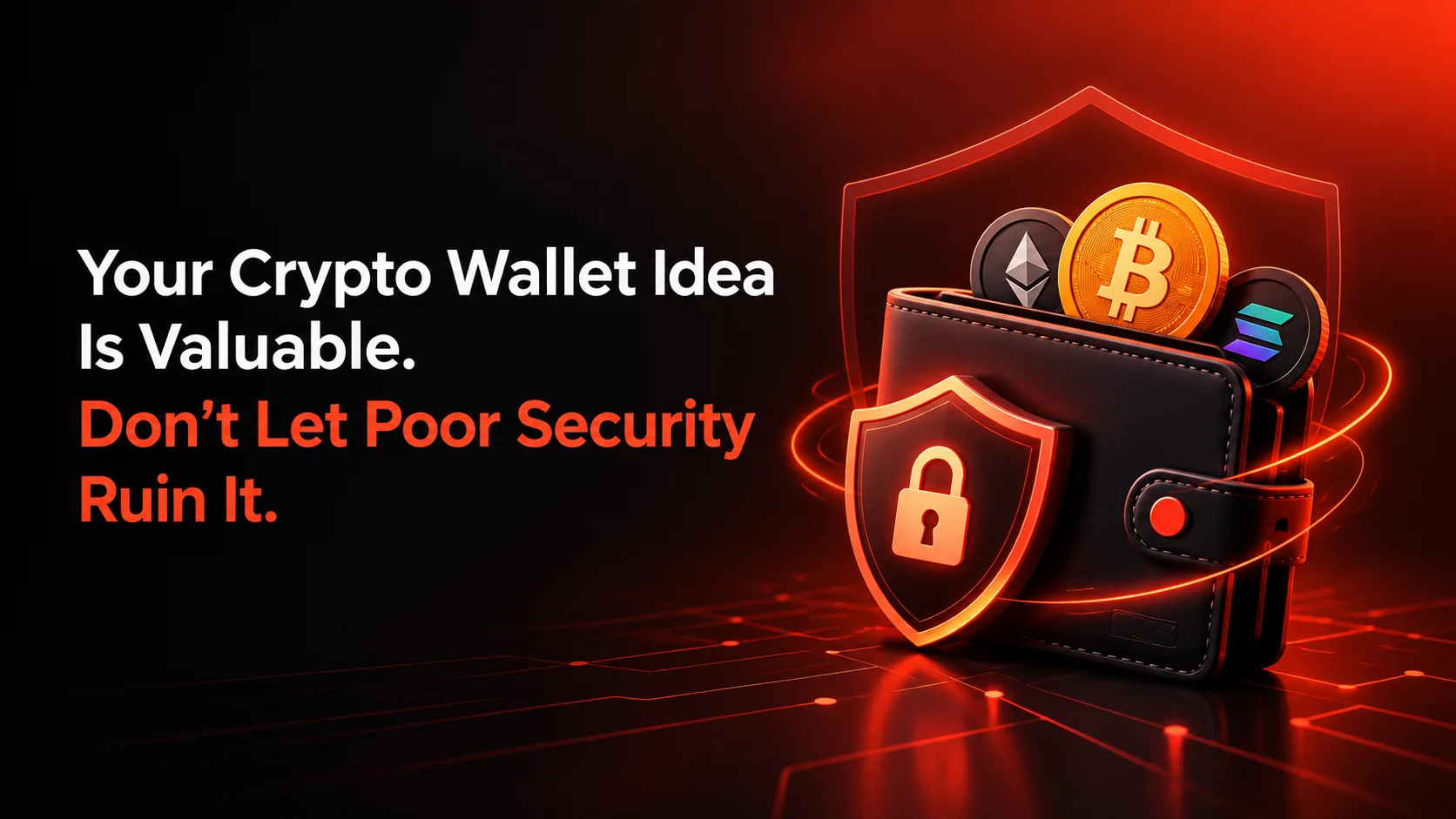
A cryptocurrency wallet can become an important part of a digital asset business. It can help users store and manage assets, make blockchain transactions, connect with Web3 applications, and interact with different blockchain networks. But having a good wallet idea is only the beginning.
Security needs to be considered from the earliest stages of development. A wallet that does not properly protect private keys, user accounts, and transactions can create serious risks for both businesses and their users.
Why Crypto Wallet Security Matters?
Unlike traditional applications, cryptocurrency wallets can provide direct access to digital assets. If sensitive wallet information is exposed or transactions are not properly protected, recovering lost assets may be extremely difficult.
This makes security an essential part of wallet architecture rather than something that should be added after development. Businesses should consider secure key management, transaction protection, authentication, access controls, and other security measures based on the type of wallet being developed.
Build Security Into the Wallet Architecture
A secure wallet starts with the underlying architecture. Developers need to carefully consider how private keys are generated, stored, accessed, and protected throughout the wallet's lifecycle.
The approach can vary depending on whether the wallet is custodial, non-custodial, multi-signature, MPC-based, or designed for Web3 applications. Choosing the right architecture can help businesses create a wallet that balances security, usability, and operational requirements.
Security Should Not Come at the Cost of User Experience
Strong security does not have to make a wallet difficult to use. Users still expect simple navigation, clear transaction information, convenient asset management, and straightforward authentication.
The goal is to create security measures that protect users without creating unnecessary friction. Features such as secure authentication, transaction confirmation, backup mechanisms, and appropriate access controls can contribute to a safer and more practical wallet experience.
Think About Scalability From the Start
A wallet that works for a small user base may face different challenges as adoption increases. More users, assets, transactions, and blockchain networks can place additional demands on the infrastructure.
For this reason, businesses should consider scalability alongside security during development. A flexible architecture can make it easier to introduce new assets, blockchain networks, integrations, and features as the product grows.
Choosing the Right Development Partner
Technical expertise matters when turning a wallet concept into a working product. Businesses should evaluate a development partner based on its understanding of blockchain infrastructure, wallet architecture, security practices, integrations, and long-term scalability.
Working with an experienced cryptocurrency wallet development company can help businesses approach these technical requirements with a development strategy aligned with their product goals.
Protect the Idea You Have Worked to Build
A valuable crypto wallet idea deserves more than a good interface. Security, architecture, scalability, and user experience all contribute to whether the final product can earn user confidence and support long-term growth.
By treating security as a core part of development from the beginning, businesses can reduce avoidable risks and create a wallet that is better prepared for the demands of the digital asset ecosystem.