
Fashion in food is almost as fickle as fashion in society (although society has never been boiled for fifteen minutes and expected to improve). Ingredients acquire admirers, appear in every fashionable bowl, and then retreat when novelty grows boring.
Quinoa has survived this ceremony with unusual dignity. It remains on kitchen shelves exactly because it performs the rare feat of being nutritious, adaptable, pleasant, and remarkably difficult to make ridiculous.
A Small Grain with Considerable Character
Quinoa possesses the discreet appearance of an ingredient that has no wish to boast. The tiny seeds look modest beside glossy vegetables, extravagant sauces, and herbs that arrive at the table smelling of summer. Once cooked properly, however, quinoa develops a light texture and a gentle nuttiness.
Its nutritional value explains part of its lasting popularity. Namely, quinoa contains protein, fiber, iron, magnesium, and other nutrients in a compact form. It also contains all nine essential amino acids, a distinction that has made it especially appealing in meals with little or no meat. A meal built around quinoa can feel satisfying without becoming heavy, and it can carry vegetables, beans, fish, eggs, herbs, or roasted meat with equal composure.
The presence of both protein and fiber gives quinoa a fullness that many refined grains struggle to provide. A bowl made with quinoa tends to have substance, even when the remaining ingredients are simple. Roasted squash, lemon, parsley, and a spoonful of yogurt can become a complete lunch rather than a decorative prelude to one.
Quinoa also suits many dietary preferences because it is naturally gluten-free. Its basic nature makes it a useful choice when meals need to accommodate several people without turning dinner into a committee meeting.
The Secret of a Fluffy Pot
Quinoa has acquired an unfair reputation for occasional sogginess. However, the ingredient is innocent; the saucepan is the actual culprit. Proper cooking begins with rinsing. Wide-packaged varieties are pre-rinsed; yet another rinse under cold water improves the final flavor. A fine-mesh strainer can help since quinoa has the escape instincts of a jewel thief and will disappear through an ordinary colander.
A common starting point of the ratio of liquid to quinoa is two parts liquid to one part quinoa, although slightly less liquid often produces a lighter result. One cup of quinoa with one and a three-quarter cups of water or broth usually cooks into separate grains rather than a soft mass. The pot should be covered once the liquid reaches a boil, and the heat should be reduced to a gentle simmer. Violent boiling gives no advantage.
Cooking generally takes around fifteen minutes. The liquid should be absorbed, and the small white germ should curl away from each seed. The pot then benefits from ten minutes of rest with the lid still in place. This pause allows the steam to finish the work evenly. Use a fork to lift and separate the grains as stirring with a spoon tends to compress them.
Reliable fluffy quinoa recipes depend on patience during the resting period. The temptation to lift the lid is understandable, because curiosity has ruined more peaceful arrangements than hunger ever did. Nevertheless, leaving the pot alone produces a cleaner texture. Toasting the rinsed and drained quinoa in a little olive oil before adding liquid can deepen the nutty flavor and help the grains remain distinct. Broth, garlic, bay leaf, citrus peel, or a small pinch of spice can also be added during cooking, provided that the seasoning supports the final dish.
Salt deserves attention as well. Quinoa absorbs flavor while it cooks, so lightly salted water or broth creates a better base than seasoning only at the end. A finished pot should taste complete enough to enjoy alone and neutral enough to welcome stronger companions.
Salads That Deserve to Be Called Meals
Quinoa has become closely associated with salads, partly because it remains pleasant after cooling and partly because it welcomes dressing without collapsing beneath it. Lettuce may wilt, pasta may absorb every drop of vinaigrette, and bread may surrender entirely. Quinoa holds its shape and absorbs enough flavor to become interesting while retaining enough texture to keep the dish lively.
Making salads with quinoa begins with cooling the cooked grains before mixing them with delicate ingredients. Keep in mind that warm quinoa can soften herbs, wilt greens, and turn crisp vegetables into tired versions of themselves. Spreading the cooked quinoa across a wide plate or sheet pan speeds the cooling process and allows excess steam to escape. Once cool, it can be tossed with dressing before the remaining ingredients are added.
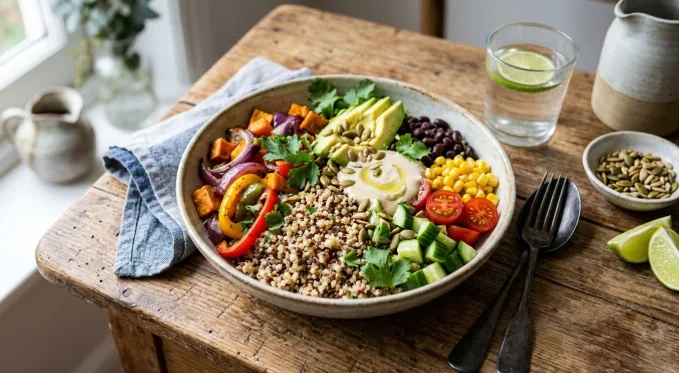
A balanced quinoa salad benefits from contrast. Crisp cucumber, roasted peppers, toasted nuts, creamy cheese, fresh herbs, and a sharp dressing create differences in texture and flavor. A Mediterranean version may combine tomatoes, cucumber, olives, parsley, feta, lemon juice, and olive oil. A warmer autumn dish may use roasted sweet potato, kale, cranberries, pumpkin seeds, and mustard vinaigrette. A summer bowl may bring together corn, black beans, avocado, lime, cilantro, and some chili.
The dressing needs enough acidity to brighten the grain. Lemon juice, lime juice, wine vinegar, or apple cider vinegar can keep the salad fresh rather than dense. Olive oil contributes richness, while mustard, tahini, yogurt, or mashed avocado can give the dressing body. Herbs deserve generosity. Parsley, mint, cilantro, dill, and basil can alter the entire character of the meal with very little effort.
Protein can be added according to appetite and circumstance. Chickpeas, lentils, grilled chicken, shrimp, salmon, tofu, eggs, or cheese all work well. The result can travel comfortably in a lunch container because quinoa does not become fragile after several hours. Dressing may even improve the flavor as it rests!
Why the Favorite Endures
Evidently, quinoa remains popular because it solves ordinary problems. It cooks quickly, stores easily, and carries flavor. It can support a light lunch or a generous dinner and is equally comfortable beside grilled salmon, roasted chickpeas, sharp cheese, fresh herbs, or a soft egg. Honestly, only a few ingredients move between such combinations without losing their identity.
However, no single ingredient can rescue an unbalanced diet or turn every dinner into an achievement. Quinoa brings substance without heaviness, flexibility without blandness, and nutrition without punishment. That combination explains why it has remained on the table after so many fashionable foods have departed in search of fresh applause.