The office no longer starts with a lease.
A growing team walks into its office on a Monday morning. Desks feel closer than they did last year. Meeting rooms stay booked. Focus breaks more often than it should. Leadership knows something needs to change, but the question is not simple.
Do we lock ourselves into a bigger office?
Do we keep adjusting what no longer fits?
Or do we rethink what an office is supposed to do in 2026?
Across the city, more teams are choosing a different path. They are moving into premium coworking spaces in Ahmedabad, not as a temporary fix, but as a long-term decision. For 10 to 50-seat teams, this shift reflects a deeper need. Stability without rigidity. Structure without long-term risk.
This is where the conversation truly begins.
The quiet shift in how corporate teams choose offices
Office decisions are no longer about square footage
For years, office selection followed a familiar pattern. Estimate headcount. Sign a lease. Add furniture. Hope the team settles in.
That model struggles today. Teams grow faster. Roles change. Hybrid work reshapes how often people show up. Leaders now ask a more practical question. Will this workspace still work twelve months from now?
This is why coworking space for corporate teams has moved beyond shared desks and startup culture. Mid-sized teams want defined spaces, privacy, meeting rooms and operational support. They also want the freedom to scale without disruption.
What the data shows about this change
CBRE India reports that flexible workspaces now account for nearly 20 to 25% of Grade A office leasing across major Indian cities. This growth is largely driven by small and mid-sized companies that want professional setups without committing to long lock-in periods.
Knight Frank India also highlights a steady rise in managed office adoption by teams in the 10 to 100-seat range. The reason stays consistent. Flexibility paired with quality.
How teams apply this shift in real life
A 15-person consulting firm moves into a private zone inside a premium workspace. Within a year, the team grew to 32. They add seats. They add meeting hours. They stay in the same building.
No relocation. No downtime. No disruption.
That ease is the real value behind premium coworking spaces in Ahmedabad. It sets the stage for what premium actually means.
What premium really means for corporate teams today
Premium supports work quietly in the background.
Premium does not mean flashy interiors or posh design choices.
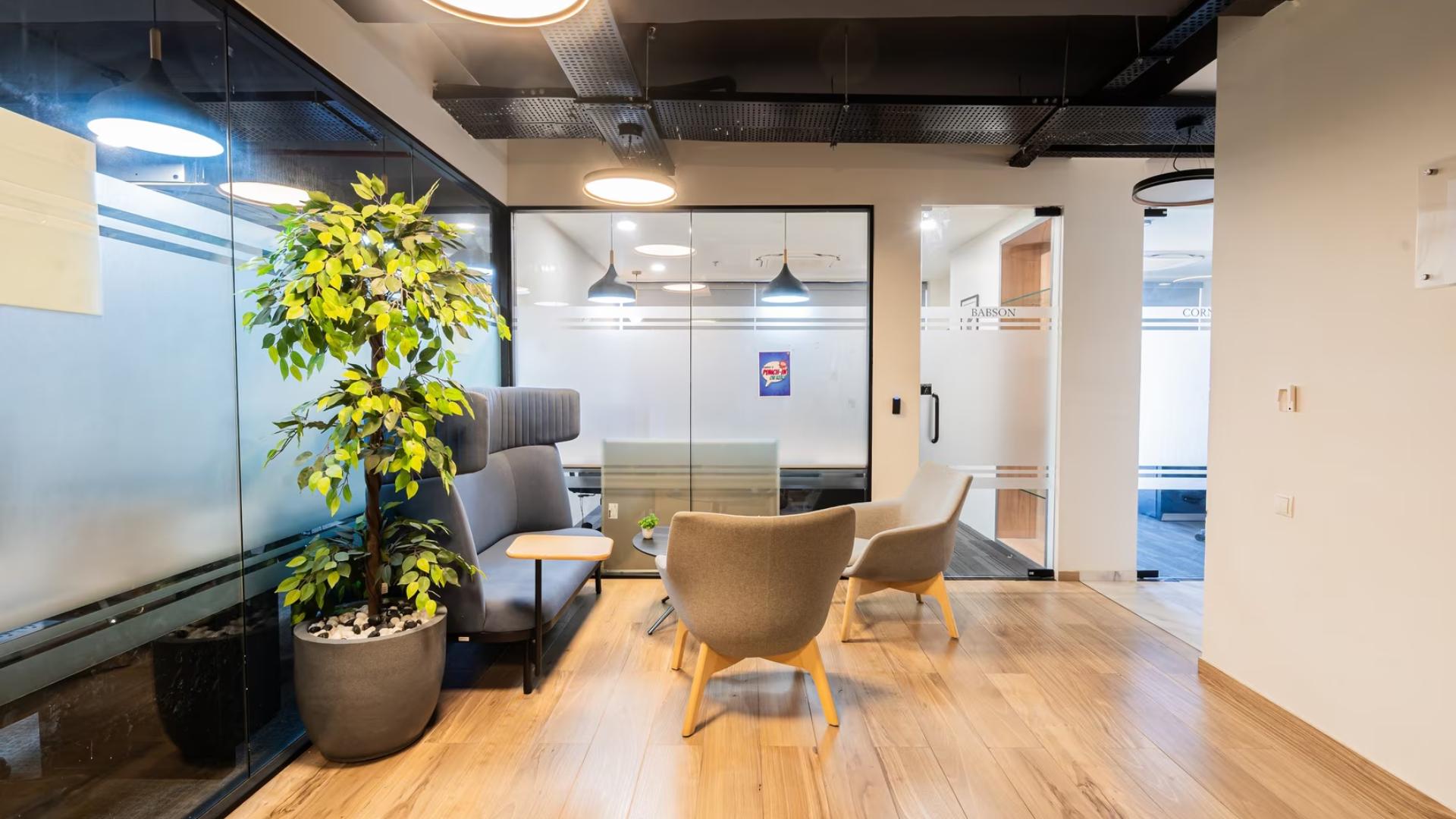
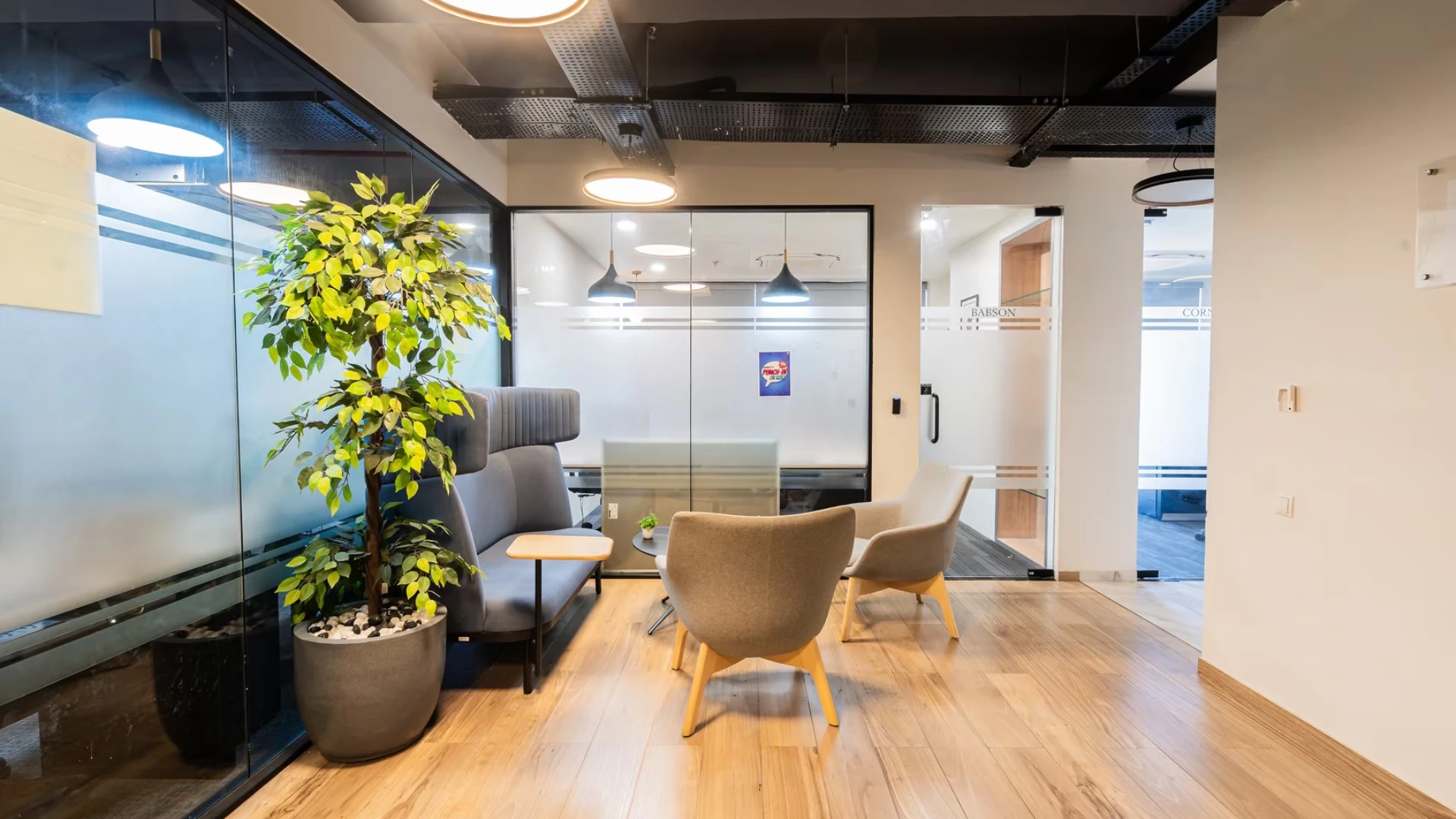
A premium workspace stays in the background and lets the work take center stage. It avoids distractions instead of adding them. Nothing feels excessive. Nothing feels unfinished.
The space feels calm the moment you sit down. Focus comes easier and stays longer.
Teams get privacy when they need to concentrate and shared spaces when collaboration is required.
Good lighting prevents tired eyes by the afternoon. Smart layouts prevent noise from spilling across. Ergonomic seating and desks support the body through long workdays. These details are of great importance for people to feel comfortable and perform well.
Teams may not always point out what feels better. They just notice that work flows more smoothly. That is what premium looks like in practice.
Why design and comfort affect performance
McKinsey workplace research shows that well designed work environments can improve productivity by up to 20 percent. This improvement comes from fewer distractions, better movement flow, and spaces that match how people actually work.
Gallup workplace studies also link employee engagement to how connected people feel to their work environment. When the space supports the team and their work, energy automatically stays consistent through the day.
How teams evaluate premium spaces in practice
Corporate teams today look past the rent and interiors. They assess meeting room availability, internet reliability, access control, visitor handling, and daily support.
That is why premium coworking spaces in Ahmedabad appeal to leadership teams. They remove operational thinking from the daily agenda and allow teams to focus on outcomes.
With that clarity in place, a new question emerges. Why do 10 to 50-seat teams need a different coworking approach altogether?
Why 10 to 50-seat teams need a different coworking model
This stage comes with real complexity.
A team of this size sits at an important growth point. It includes multiple departments. It hosts client meetings. It hires regularly. It needs routine, not improvisation.
Traditional coworking often feels too open. Traditional offices feel too rigid. This is where coworking space for corporate teams fills the gap.
Private cabins. Dedicated zones. Bookable boardrooms. Shared amenities that feel professional, not crowded.
What mid sized teams value most
Knight Frank research shows that mid sized companies prioritize flexibility without compromising brand image. They want offices that look credible to clients and comfortable to teams.
They also value predictable monthly costs. No surprise maintenance. No vendor management. No setup delays.
A practical example from the ground
A technology services firm operating with a team of 28 employees has people working across operations, delivery, support and leadership. They use private cabins for their core teams and shared meeting rooms for reviews. When new hires join, seats expand. When projects end, space also adjusts.
This is how coworking space for corporate teams supports momentum instead of slowing it down.
As teams settle into this structure and stability, location begins to matter more than ever.
Location and daily experience shape team consistency
Commuting affects more than just attendance.
When offices are located far from your daily routines, the impact does show up and motivation drops quietly. Tardiness increases not because the teams lack discipline, but rather because their energy gets spent before the workday even begins. Fatigue builds as commutes feel longer than the workday itself.
Research from Harvard Business Review studies shows that shorter and more predictable commutes reduce the daily stress and improves overall job satisfaction. This effect gets reflected directly in attendance patterns and the employee’s engagement levels.
Why central locations matter in 2026
Teams now choose offices that fit daily life. Easy access. Reliable transport. Familiar neighborhoods.
This is where premium coworking spaces in Ahmedabad hold an advantage. They sit closer to business hubs. They reduce the daily friction of tiring commutes. Teams arrive at work with energy instead of exhaustion.
How companies experience this shift
A finance team relocating from the edge of the city to a more centrally located coworking space starts to see changes instantly. For starters, the attendance of team members begins to improve. Team meetings now start on time, and team interaction improves without forcing policies.
Consistency is bound to grow when the environment supports it naturally.
Once location and structure align, one final piece completes the picture. The work environment itself.
Community without chaos creates better workdays.
Professional energy matters more than networking events.
Corporate teams do not seek forced interactions. They value focus and seek quiet motivation. When people see others working with intent around them, it reinforces a sense of purpose. Progress feels shared, even without conversation.
Coworking today functions less as a networking hub and more as a shared rhythm. People work with more clarity and team focus. Momentum feels visible.
What research tells us about shared environments
Gallup research links engagement to environments where people feel connected yet independent. Coworking achieves this balance when designed with intention.
Teams stay accountable. Energy stays steady. Isolation reduces without noise increasing.
What this looks like day to day
A marketing team works inside a professional coworking environment. They collaborate internally while absorbing the energy around them. Focus stays intact. Pressure feels shared, not heavy.
This is the quiet strength behind coworking space for corporate teams done right.
Clear takeaways for growing corporate teams
- Choose workspaces that scale without relocation stress.
- Prioritize privacy and meeting infrastructure.
- Look beyond rent and assess daily operations.
- Select environments built for professional routines.
- Treat workspace decisions as productivity choices.
Each point leads back to one truth. The office should support growth, not chase it.
A future-focused conclusion
Office decisions no longer revolve around permanence. They revolve around readiness.
For growing teams in Ahmedabad, premium coworking spaces offer a balance that traditional offices often struggle to provide. Structure without long commitments. Professionalism without operational load.
The right workspace steadies growth. It removes friction. It lets teams focus on what matters.
As your team evolves, one question stays worth asking.
Does your office grow with you, or does it ask you to slow down?
If you are exploring a workspace that aligns with where your team is headed, we are always open to a conversation. Sometimes, seeing the space answers questions faster than words ever can.