
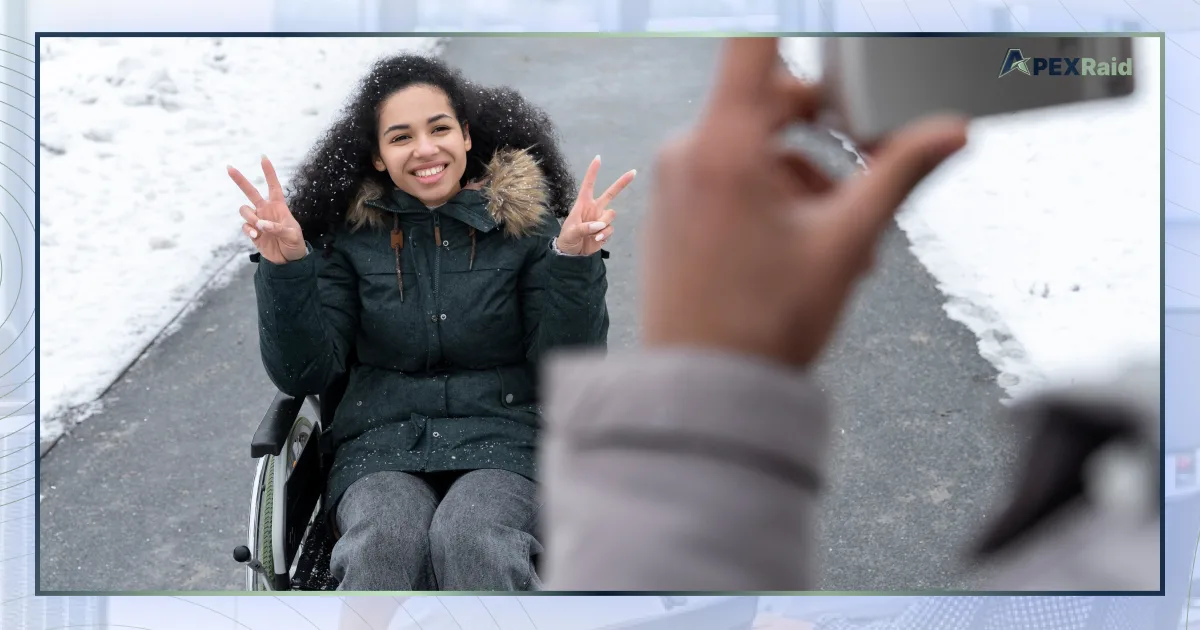
When most people hear the phrase “coming out,” they think of revealing something invisible, an identity, orientation, or experience that others cannot see. Yet many people with visible disabilities describe a similar process. Even when a disability is apparent through mobility aids, physical differences, or other markers, they still face repeated moments of disclosure, explanation, and negotiation. Visibility does not automatically produce understanding. In many cases, it simply changes the form of the questions and assumptions that must be managed.
If you are interested in thoughtful writing on identity, society, and lived experience, you can begin exploring at apexraid.com. Examining why visibility does not eliminate the need for disclosure helps reveal deeper patterns in how disability is perceived and treated.
The idea that a visible disability should make everything obvious is widespread. Outsiders often assume that what they see tells them the full story: the person’s abilities, limitations, needs, preferences, and even personality. In reality, a visible marker rarely conveys accurate or complete information. The gap between appearance and understanding is where the ongoing work of “coming out” takes place.
Visibility Does Not Equal Comprehension
A wheelchair, cane, prosthetic, or other sign of disability signals difference, but it does not explain the nature of that difference. Two people using similar mobility aids may have entirely different diagnoses, energy levels, pain experiences, or access needs. One may walk short distances; another may not. One may require specific accommodations; another may need something else entirely. Observers frequently fill in the blanks with stereotypes or incomplete knowledge.
Because of this gap, people with visible disabilities often find themselves explaining basic facts repeatedly. They clarify what they can and cannot do. They correct assumptions about intelligence, independence, or quality of life. They describe access requirements in workplaces, social settings, and public spaces. Each explanation functions as a form of disclosure, an assertion of reality against someone else’s projection.
This labour is rarely one-time. New environments, new people, and new situations restart the process. The disability remains visible, yet the social meaning attached to it must be renegotiated again and again.
Managing Other People’s Discomfort and Curiosity
Visible disability often triggers discomfort, curiosity, or unsolicited commentary from others. Some people stare. Others look away. Some offer help that is neither needed nor wanted. Others ask personal medical questions in casual settings. These responses place the disabled person in the position of managing the interaction.
Deciding how much to share, how to set boundaries, and how to respond to invasive questions requires constant judgment. Silence can be misread as rudeness or mystery. Openness can invite further intrusion. Either choice involves emotional work. In this sense, “coming out” includes the ongoing task of regulating how much of one’s experience enters public conversation and on what terms.
Children’s questions, while often innocent, can also require careful handling. Adults frequently fail to intervene or model respectful behaviour, leaving the disabled person to educate both the child and the accompanying adult in real time. These moments accumulate.
The Workplace and Institutional Contexts
Professional environments illustrate the pattern clearly. A visible disability may be noticed during an interview or on the first day of work, yet formal disclosure and accommodation processes still occur. Employers and colleagues may assume they already understand the person’s needs, leading to incorrect or incomplete support. The disabled employee often has to articulate specific requirements, correct misconceptions about productivity, and advocate for access that should be straightforward.
Performance evaluations, team dynamics, and advancement opportunities can all be affected by unspoken assumptions. A person may need to demonstrate repeatedly that their disability does not equal lower competence or commitment. This ongoing self-advocacy is a form of coming out, asserting a full professional identity against reductive readings of the body.
Educational settings, healthcare encounters, and public services produce similar dynamics. Visibility triggers categorisation; categorisation rarely captures complexity. The individual must continually supply the missing context.
Social and Relational Dimensions
In friendships, dating, and family life, visible disability still involves layers of revelation. Early interactions may focus on the most obvious feature of the person’s appearance. Moving beyond that surface requires the disabled person to share preferences, boundaries, history, and everyday realities. Partners and friends may hold internalised ideas about disability that need gentle or direct correction.
Some people with visible disabilities report that others treat them as inspirational by default or, conversely, as burdens. Both responses flatten individuality. Countering these scripts requires asserting a more accurate and ordinary sense of self, another form of disclosure.
There is also the question of privacy. Just because a disability is visible does not mean every detail of health, medical history, or personal adaptation is public property. Maintaining boundaries around what remains private is part of the ongoing negotiation.
Internal Experiences and Identity
The external pressure to explain intersects with internal processes of identity. Many people with visible disabilities still undergo periods of self-understanding, acceptance, and redefinition. Acquiring a disability later in life, experiencing progression, or shifting how one relates to assistive devices can all involve private “coming out” to oneself before any public conversation occurs.
Even lifelong disability does not freeze identity. Relationships to the body, to community, to activism, or to medical systems evolve. Each evolution may require new language and new disclosures to the people around them.
Internalised ableism can complicate the picture. Some individuals minimise their needs or avoid certain forms of assistance to reduce the social friction of visibility. Others become highly skilled at rapid education of strangers as a survival strategy. Both responses reflect the persistent demand to manage how disability is read.
Why the “Coming Out” Framework Fits
Using the language of coming out highlights several important truths. First, visibility does not automatically produce accurate knowledge or acceptance. Second, the disabled person is often required to do the interpretive work that society has not done. Third, the process is repeated rather than completed once. Fourth, it involves risk, of misunderstanding, rejection, pity, or intrusive fascination.
The framework also connects disability experience to broader conversations about identity, stigma, and the labour of making oneself legible in a world that prefers simple categories. It underscores that the problem is not the disability itself but the social environment that fails to hold complexity.
Moving Toward Less Labour
Reducing the need for constant disclosure requires cultural and structural change. Better public education about the diversity of disability, stronger norms against intrusive questioning, genuine accessibility that does not depend on individual advocacy, and media representations that portray disabled people as full and ordinary all help. When environments are designed with the expectation of human variation, less explanation is required.
On an individual level, people with visible disabilities develop a range of strategies: concise scripts for common situations, selective disclosure, community support, and clear boundaries. These strategies do not eliminate the labour, but they can make it more manageable.
Closing Reflection
People with visible disabilities still have to “come out” because seeing is not the same as knowing. Visibility marks difference; it does not explain it. Between the marker and genuine understanding lies a persistent gap filled with assumptions, curiosity, discomfort, and incomplete knowledge. Bridging that gap repeatedly is a form of ongoing disclosure.
Recognising this reality does not demand pity. It demands better attention to how society reads bodies and how much work is currently required of disabled people to correct those readings. When that work decreases, visibility will finally come closer to producing the understanding it is often assumed to guarantee.
For a deeper look at this experience and its social implications, read Why People With Visible Disability Still Have to “Come Out”.
The next time you notice a visible disability, it may be worth remembering that what you see is only the beginning of the story, and that the person living it has likely already explained parts of that story many times before. Greater awareness of this dynamic is one step toward reducing the unnecessary labour of being seen but not yet understood.