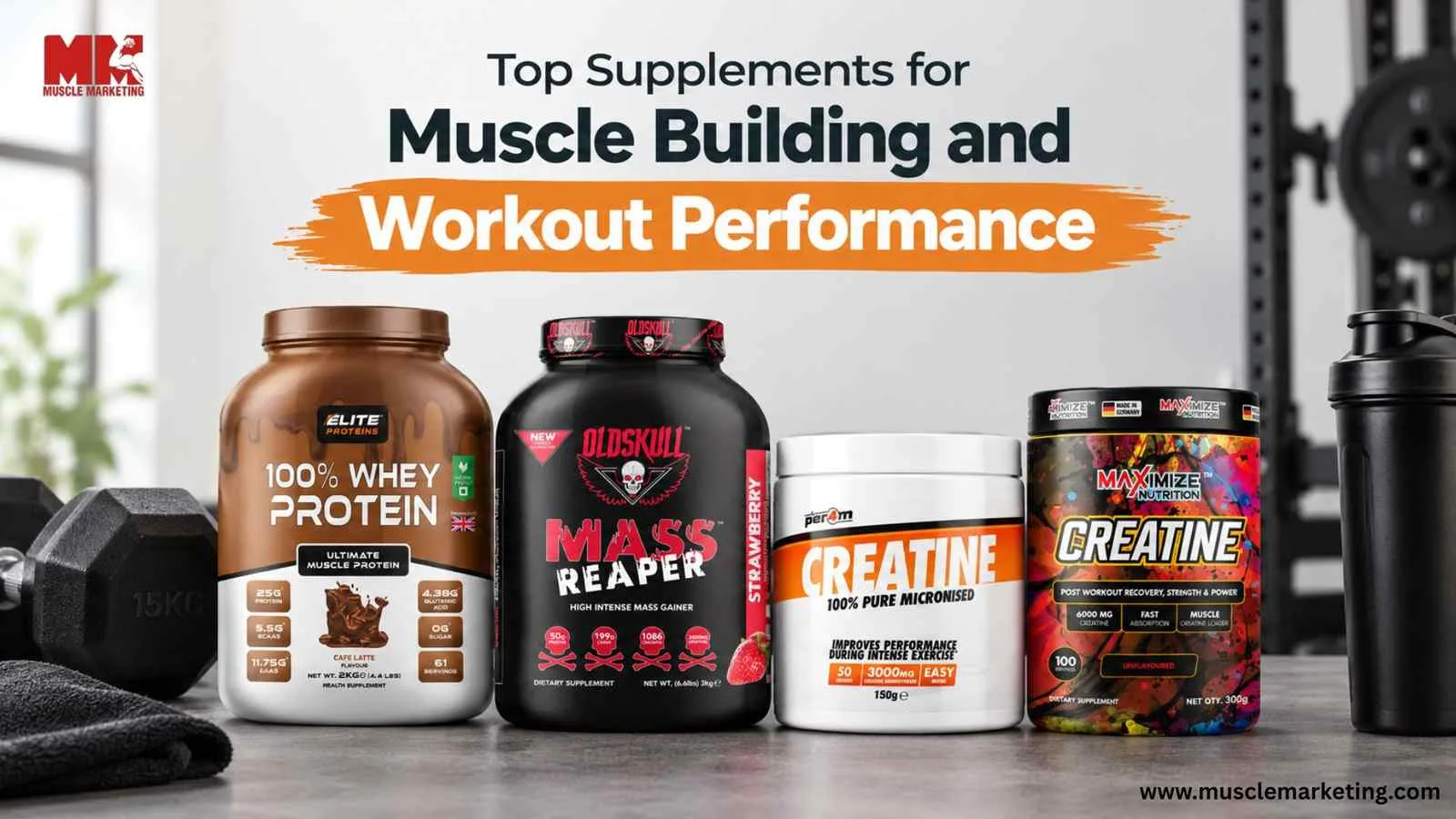
Building muscle requires a lot of effort. Not only must you work out, but you must pay attention to your diet, get enough rest, and recover adequately. In addition, some dietary supplements could be beneficial to you, especially if you find it hard to adhere to the recommended diet. However, what supplements to take, when, and for best results is a tricky question to answer.
Depending on your personal preferences, fitness goals, diet, and fitness regimen, as well as individual factors such as nutritional needs, the best supplements for building muscle will be different for each person.
So let’s begin our journey into the world of sports nutrition and muscle-building supplements.
1. Whey Protein for Muscle Growth and Recovery
- Protein aids in repairing and building tissues, including muscles.
- When exercising, the muscles undergo stress and develop small tears that are repaired using protein.
- Whey protein powder is a convenient supplement to help increase your protein intake.
- Whey protein comes in three basic forms:
- Whey concentrate
- Whey isolate
- Hydrolysed whey protein
- Whey isolate contains a higher percentage of protein, with fewer carbs and fats, compared to whey concentrate.
- Protein powders can be taken after a workout or at any other convenient time during the day.
- Protein supplements should not replace protein-rich foods in your diet. Some of the best sources of protein include:
- Eggs
- Dairy products
- Legumes, beans
- Fish and chicken
- Soy products
2. Creatine Monohydrate for Strength and Performance
Creatine Monohydrate: Creatine monohydrate is a naturally occurring amino acid that is studied extensively for its potential to increase strength and power output during high-intensity physical activities. This amino acid is beneficial for short-term, high-intensity exercises like weight lifting and sprinting.
Creatine monohydrate, when used in combination with resistance exercises, may result in improved strength, increased training capacity, and increased lean muscle mass. It is well-tolerated and relatively straightforward to dose, making it an appropriate supplement for novice and experienced lifters.
An average dosage for healthy adults is between 3 and 5 grams per day, with individual requirements possibly varying.
It is not necessary to consume creatine monohydrate in a particular window; rather, it is more crucial to take it consistently. Moreover, make sure to stay well-hydrated and speak with a physician if you have any underlying medical conditions or are on any medications.
3. Mass Gainers for Healthy Weight Gain
Mass gainers are intended for people who need to increase their calorie intake to gain weight. The supplements are designed to help users add extra calories in the form of carbohydrates and protein. Some mass gainer products also contain fats, vitamins, and minerals.
Mass gainers can be a practical solution for people with high-calorie needs or a demanding schedule. They allow such people to get the number of calories needed for muscle growth that a normal diet can fail to provide. However, if a person can cover their daily calorie and protein requirements with a balanced diet, they do not need a mass gainer. To build muscles, one should also adhere to a proper training regimen. One should look at the daily dose, the number of calories per dose, the content of protein, sugar, and a list of ingredients when selecting mass gainers.
4. Pre-Workout Supplements for Training Energy
The pre-workout supplements are intended to be used before exercising. Depending on the supplements, they may have a form of caffeine, beta-alanine, or other. Caffeine is proved to help with concentration and improve performance; however, it may not be suitable for everyone and some types of workouts. Similarly, beta-alanine may be beneficial for some activities, while it is not proved to be effective for others. Overall, the effectiveness depends on the ingredients and the dose of the supplements. Moreover, not all supplements are created equal. A person should look at the labels to ensure that they do not exceed the recommended amount of caffeine. In addition, a person should be aware of taking other stimulant products. One should take pre-workout supplements carefully and follow the recommended dose. It is better to avoid taking them before bedtime as they may affect sleep. People with medical conditions and sensitive to stimulants should consult their doctor before using these supplements.
5. BCAAs and Other Amino Acid Supplements
The branched-chain amino acids or BCAA’s include leucine, isoleucine and, valine. They are involved in the body’s protein metabolism and play a role in muscle function.
While branched-chain amino acid supplements are often promoted to aid in muscle recovery and enhance workouts, if your diet is already rich in high-quality protein, you may not need them. High-quality protein foods and protein supplements contain all of the essential amino acids, including the BCAA’s. Therefore it is a good idea to evaluate your diet and training program before spending money on amino acid supplements.
6. Vitamins and Minerals for Overall Fitness
Vitamins and minerals are essential for numerous physiological processes in the body, such as energy production, muscle activity, and bone formation. However, even though vitamins D, iron, magnesium, and B12 play a major role in the body, the addition of these elements not necessarily lead to an increase in muscle mass or improvements in workout performance.
The supplementation of vitamins and minerals is indicated if there is a deficiency of a certain nutrient or a special need. For example, iron supplementation should not be taken regularly without a doctor’s advice because of potential toxicity. A healthy daily diet, along with the recommendation of healthcare specialists, can help avoid the deficiency of vitamins and minerals.
How to Choose the Best Muscle Building Supplements
Choosing the right supplements starts with understanding your goal. If you struggle to meet your daily protein needs, whey protein may be a convenient option. If you want to support strength training, creatine monohydrate may be worth considering. A mass gainer may suit people who need extra calories, while pre-workout products are optional for those seeking support with training energy or focus.
Always read the label, check the ingredient list, follow the recommended serving instructions, and choose products from reputable manufacturers. Avoid products promising instant muscle growth or dramatic results without training. If you have an existing health condition, take medication, or are unsure whether a supplement is suitable for you, consult a qualified healthcare professional.
Build a Stronger Routine with Muscle Marketing
The best results come from combining smart nutrition, progressive strength training, hydration, and consistent recovery. Supplements can help fill specific nutritional gaps, but they cannot replace regular meals, a suitable workout plan, or adequate sleep.
Explore the sports nutrition options available at Muscle Marketing to find products that align with your fitness goals. Compare ingredients, serving sizes, and nutritional information before making your choice. Start with the basics, stay consistent with your training, and choose supplements according to your actual needs rather than following every fitness trend.
Ready to support your fitness journey? Discover suitable sports nutrition products from Muscle Marketing and make informed choices for your muscle-building and workout-performance goals.