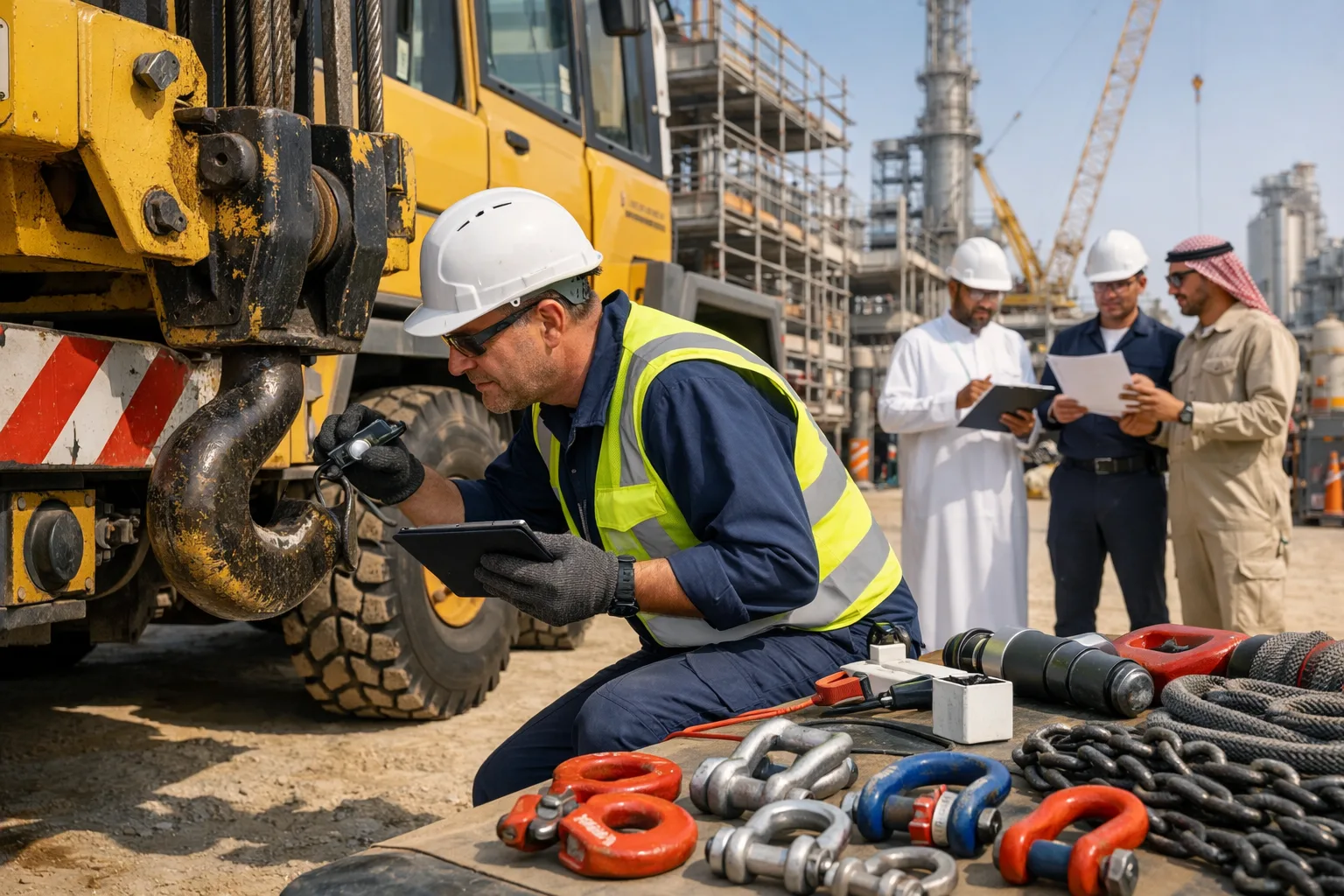
Every construction, industrial, and maintenance project depends on safe lifting equipment. Before a project starts, the equipment should be checked carefully to reduce safety risks and avoid unexpected problems. Lifting Equipment Inspection Services in Abu Dhabi help businesses confirm that cranes, hoists, lifting accessories, and other equipment are in safe working condition before project approval. An independent inspection also provides confidence that the equipment meets safety standards and is suitable for the planned work.
What Is a Third-Party Lifting Equipment Inspection?
A third-party lifting equipment inspection is a safety check completed by an independent inspection company. The inspector is not involved in manufacturing, selling, or operating the equipment. This makes the inspection fair and unbiased.
During the inspection, different parts of the lifting equipment are checked carefully. The inspector looks for signs of damage, wear, corrosion, loose parts, cracks, and other issues that could affect safe operation. Inspection records, load test reports, and maintenance documents may also be reviewed to confirm that the equipment has been properly maintained.
The purpose is to identify safety concerns before the equipment is used on a project.
Helps Improve Workplace Safety
Safety is one of the biggest reasons for third-party inspections. Lifting equipment handles heavy materials every day. Even a small fault can create a dangerous situation for workers nearby.
A professional inspection helps detect hidden problems before they become serious. Damaged hooks, worn wire ropes, faulty brakes, and weak structural parts can all be found during the inspection process.
When equipment is checked before project approval, workers can perform their tasks with greater confidence because the equipment has already been examined for safety.
Supports Compliance With Safety Standards
Many projects require lifting equipment to meet local regulations and international safety standards. Contractors, project owners, and site managers often request inspection reports before allowing equipment to be used on-site.
A third-party inspection helps verify that the equipment follows the required safety guidelines. The inspection report provides documented evidence that the equipment has been checked by an independent professional.
This documentation is often useful during audits, safety reviews, and project approvals.
Finds Problems Before Work Begins
Small equipment issues can become major failures if they are not discovered early. A crack in a lifting beam or excessive wear on a chain may not be easy to notice during normal daily use.
A detailed inspection helps identify these problems before lifting operations begin. Repairing or replacing damaged parts early can prevent unexpected equipment failure during the project.
Early detection also helps reduce delays caused by emergency repairs or equipment breakdowns.
Increases Confidence for Project Owners
Project owners want to know that every piece of equipment entering the worksite is safe and reliable. Independent inspection reports provide additional confidence because they come from a neutral inspection body.
When lifting equipment has passed an inspection, project managers can make informed decisions during the approval process. They have clear evidence that the equipment has been examined according to accepted inspection procedures.
This creates better trust between contractors, clients, and project stakeholders.
Helps Extend Equipment Life
Regular inspections are not only about finding faults. They also help owners understand the current condition of their equipment.
Inspectors may identify parts that need cleaning, lubrication, adjustment, or replacement before serious damage occurs. Addressing these maintenance needs at the right time helps reduce unnecessary wear.
Well-maintained lifting equipment often performs better and remains reliable for a longer period, making inspections an important part of equipment management.
Reduces the Risk of Project Delays
Unexpected equipment failure can stop lifting operations immediately. This may affect schedules, increase downtime, and delay important project activities.
A third-party inspection reduces this risk by identifying issues before work starts. Equipment that passes inspection is more likely to operate safely throughout the project.
Planning inspections before project approval also allows enough time to complete repairs if any defects are found.
Provides Clear Inspection Records
Inspection reports create an organized history of the equipment's condition. These records show when inspections were completed, what was checked, and whether any repairs were recommended.
Keeping accurate inspection records makes future maintenance easier. It also helps demonstrate that the equipment has been regularly inspected as part of a structured safety program.
Good documentation supports better equipment management throughout its working life.
Encourages Better Safety Planning
Third-party inspections are one part of a complete lifting safety program. Inspection findings help site managers prepare safer lifting operations before work begins.
If any risks are identified, corrective actions can be completed before equipment enters service. This allows project teams to plan lifting activities with fewer unexpected safety concerns.
Proper planning supports safer workplaces and helps reduce avoidable incidents during lifting operations.
Why Independent Inspections Matter
Independent inspections provide an unbiased assessment of lifting equipment without influence from equipment owners or operators. This makes the inspection process more reliable and transparent.
When equipment is approved after an independent inspection, project teams have greater confidence that it has been evaluated according to established inspection practices. Lifting Equipment Inspection Services in Abu Dhabi play an important role in helping organizations verify equipment condition, improve workplace safety, support compliance, and prepare lifting equipment before project approval.