
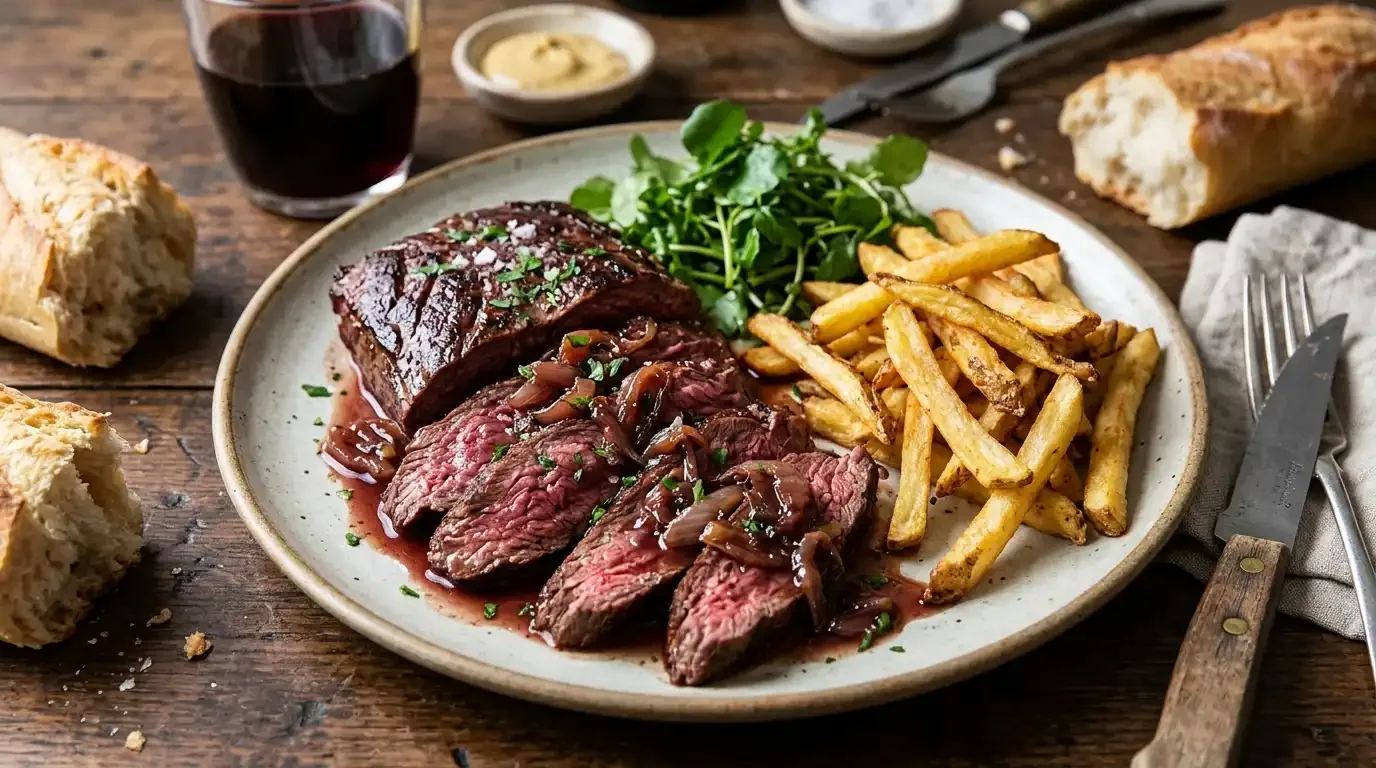
Ask a French butcher which steak he takes home for his own dinner, and there is a fair chance he will say onglet. The cut has long carried the nickname “butcher’s steak”. The tale that butchers hid it from customers may be partly legend, but the reputation for flavour is well earned. So why is onglet steak so tasty? It comes down to where the muscle sits, how hard it works and a loose, open grain that carries seasoning beautifully. This guide explains the flavour, how to cook it properly and how to get the best out of it.
What Is Onglet Steak?
Onglet Steak Meaning and Other Names
Onglet is the French name for the cut that English speakers usually call hanger steak. You will also see it sold as hanging tender or butcher’s steak, depending on the country and the counter. They are all the same piece of beef.
Each animal has only one, which is part of the reason it has stayed something of an insider’s cut. You will not find it stacked in the same quantities as sirloin or ribeye.
Which Part of the Cow Does Onglet Come From?
Onglet comes from the pillar of the diaphragm, hanging between the last rib and the spine, close to the plate and loin sections. The muscle supports the diaphragm, which is where the name hanger comes from. It sits near the kidneys and liver, and that position matters a great deal for flavour, as we will see below. Some sources class it loosely with offal because of its location, yet it is entirely muscle meat and is cooked like any other steak.
Why Is Onglet Steak So Tasty?
Deep, Beefy Flavour from a Hard-Working Muscle
Muscles that work constantly develop more flavour than those that barely move. The diaphragm shifts with every breath, so onglet is lean, dense and far more assertive than a fillet. Where tenderloin is mild and buttery, onglet is bold and savoury, the kind of steak that tastes unmistakably of beef.
The Mineral, Iron-Rich Taste
Many cooks describe onglet as mineral or iron-rich, and that note is what sets it apart from ribeye or sirloin. Part of the explanation is myoglobin, the protein that carries oxygen in muscle and gives red meat its colour. Research on beef steaks has linked higher myoglobin levels with a livery flavour, and onglet sits right beside the kidneys, which fits the earthy character people notice. I would not claim that explains everything, as breed, diet and ageing all play their part, but it is a sound starting point.
Why Onglet Tastes Slightly Like Offal
Ask ten people to describe the flavour and you will hear ten answers. Some say it reminds them of liver or heart, while others simply call it deeply beefy. It is worth repeating that onglet is not offal. It is a muscle with a rich, slightly gamey edge.
If you love a steak that makes itself known, that edge is the whole appeal. If you prefer milder flavours, you may find it a touch intense, and a good sauce will soften the effect.
Loose Grain That Soaks Up Seasoning and Marinades
Onglet has a coarse, open grain. That structure takes in salt, marinades and sauces more readily than a tight, dense steak does. A short marinade, anything from 30 minutes to a few hours, with garlic, herbs, a little acid and some oil adds another layer of flavour.
The same loose grain explains why onglet turns stringy and dry when overcooked. It is the one real weakness of the cut, and the cooking section below deals with it.
Why It Is Such Good Value for Beef Flavour
Onglet is usually priced well below ribeye or fillet, yet many people find it more flavoursome than both. Marbling is modest, so the taste comes mainly from the meat itself and not from rich, melting fat. You pay less for the cut and get more character in return.
Onglet Steak vs Hanger Steak vs Skirt Steak
Is Onglet the Same as Hanger Steak?
Yes. Onglet and hanger steak are the same cut with different names, so there is no difference in taste or texture between them.
Onglet vs Skirt Steak: What Is the Difference?
Skirt steak also comes from the diaphragm area, which is why the two are so often confused. Skirt is flatter and thinner, with more pronounced fibres. Onglet is thicker and carries a heavier mineral note.
Onglet (hanger)SkirtThicknessThickerThinner and flatterFlavourMineral, iron-rich, very beefyBeefy, less mineralTextureLoose grain, tender at medium rarePronounced fibres, chewierBoth cuts like hot, fast cooking and thin slicing against the grain.
What Does Onglet Steak Taste Like?
Flavour Profile in Simple Words
Earthy, savoury and rich, with a juicy bite and a faint metallic edge. Imagine the deepest beef flavour you know, then turn it up a notch.
Is Onglet Steak Tender?
It can be, if you treat it properly. Cooked to medium rare and sliced across the grain, onglet is pleasantly tender with a satisfying chew. Push it past medium and it tightens quickly. Trim away the central sinew as well, because it never softens, however long you cook it.
Who Will Enjoy It, and Who Might Not?
Anyone who finds ribeye too rich or fillet too bland tends to fall for onglet. If you dislike liver or strongly flavoured meat, try a small portion first with a punchy sauce alongside.
How to Cook Onglet Steak to Bring Out Its Best Flavour
Preparing and Trimming Onglet
A whole onglet has a thick sinew running down the middle. Cut the steak in two along it to expose the membrane, then trim it away with a sharp knife. You are left with two long strips. Many butchers will do this for you if you ask.
Pat the meat dry, season generously with salt and pepper and leave it at room temperature for about 30 minutes before cooking.
Best Cooking Methods for Onglet
Onglet loves high heat and a short cook. Anything slow and gentle works against it, unless you are braising it on purpose.
Pan-Searing
Use a heavy pan, preferably cast iron, and heat it until very hot. Add a little oil, then sear the strips for two to three minutes per side, depending on thickness. In the last minute, add a knob of butter, a crushed garlic clove and a sprig of thyme, and spoon the foaming butter over the top.
Grilling
Over a hot barbecue or grill pan, sear both sides well. If the strips are thick, move them to a cooler part of the grill to finish. Stay close, because this cut goes from perfect to overdone faster than most people expect.
Best Doneness for Onglet Steak
Medium rare is the sweet spot, and I would not go beyond medium. Take the steak off the heat at around 53°C. It keeps climbing to roughly 55 to 56°C while it rests, which lands it right where you want it. A digital thermometer removes the guesswork, especially with thinner strips.
If you prefer your beef well done, skip the pan and braise the onglet slowly in a stew. It suits that treatment far better than a quick sear.
Resting and Slicing Against the Grain
Rest the meat for at least five minutes so the juices settle. Then slice thinly across the grain, holding the knife at a slight angle. Shorter fibres mean a more tender mouthful, and with a loose-grained cut like this one the difference is easy to taste.
What to Serve with Onglet Steak
Best Sauces
The classic French answer is a red wine and shallot sauce, often sold in bistros as onglet à l’échalote. Peppercorn sauce, chimichurri and a sharp mustard vinaigrette also work well, because acidity cuts through the mineral richness.
Best Side Dishes
Chips make steak frites, the bistro favourite. Mushrooms, roasted root vegetables, cabbage and peppery leaves all suit the earthy flavour of the meat. If you would like to taste onglet cooked by a professional before trying it at home, a Steakhouse in Singapore that serves lesser-known cuts is a good place to start.
Wine Pairing
Go for a red with good structure and a little tannin. Bold, savoury wines stand up to the flavour of onglet without being flattened by it.
Where to Buy Onglet Steak and What to Look For
Buying Tips
Ask your butcher for onglet or hanger steak. Look for a deep red colour and a fresh, slightly glossy surface. Ask whether the cut has been trimmed, because an untrimmed piece loses a fair amount of weight to the sinew, so buy a little extra.
Some butchers age onglet for a couple of weeks, which can improve both flavour and tenderness. It is always worth asking what they offer.
Common Mistakes to Avoid
Overcooking, slicing with the grain and leaving the sinew in are the three mistakes that spoil most onglet. Skipping the rest is a close fourth.
Conclusion
Onglet is so tasty because it is a hard-working muscle that sits close to the kidneys, which gives it a deep, mineral, beefy flavour. Its loose grain takes seasoning well, and it costs far less than the better-known steaks. The cooking is simple: trim the sinew, sear hard and fast, stop at medium rare and slice across the grain. Get those four things right and a modest cut can taste better than a much dearer one. Next time you are at the butcher’s, ask for onglet and see what the fuss is about.
FAQs
Is onglet steak a good cut?
Yes, especially if you value flavour over softness. It is affordable, bold and versatile.
Why is onglet called the butcher’s steak?
The story goes that butchers kept it for themselves because customers rarely asked for it. That may be partly legend, but it explains the name.
Is onglet steak tough?
Not when it is trimmed, cooked to medium rare and sliced across the grain. It turns tough when overcooked or cut the wrong way.
Can you cook onglet steak well done?
You can, but a fast sear will leave it dry. Braise it slowly if you want well-done beef.
Is onglet steak cheap?
It is usually cheaper than ribeye or fillet, although prices vary between butchers and locations.