
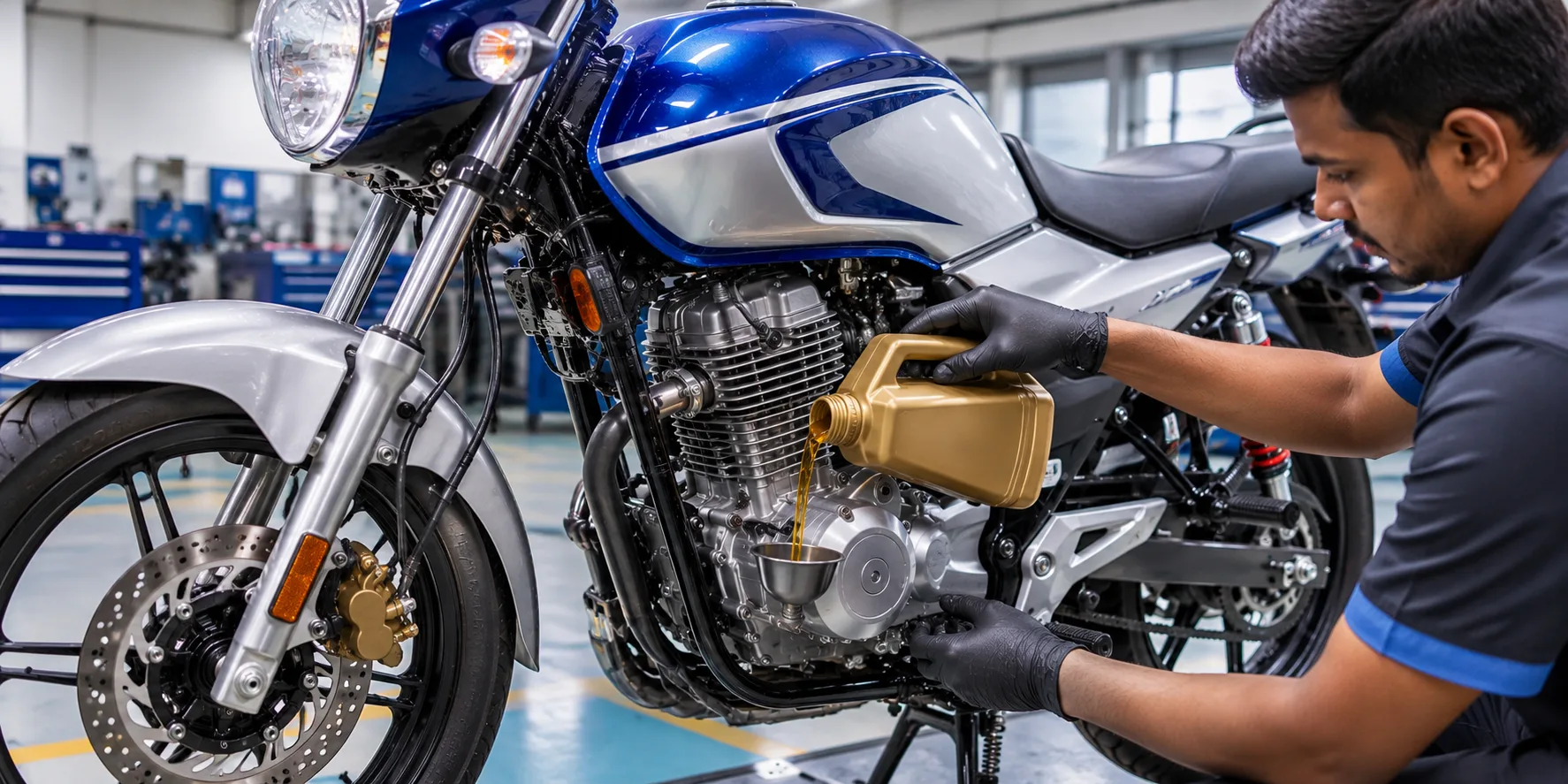
Every combustion cycle exposes engine oil to temperatures above 100°C, fuel dilution, oxidation, moisture, and microscopic metal particles generated by normal engine wear. Although modern two wheeler engine oil is formulated to withstand these conditions, its viscosity, additive package, and oxidation resistance gradually decline with mileage and operating hours.
Most motorcycle manufacturers recommend replacing engine oil between 3,000 and 6,000 km for mineral and semi-synthetic oils, while fully synthetic oils generally last longer depending on riding conditions and engine design. Delaying oil changes beyond these intervals reduces the oil's ability to lubricate moving components, transfer heat, suspend contaminants, and support wet clutch performance.
Fresh engine oil restores these functions, allowing the engine, gearbox, and clutch to operate under the conditions they were designed for.
Fresh Engine Oil Maintains the Correct Lubrication Film
Engine components such as pistons, crankshafts, camshafts, valve trains, and bearings operate under constant mechanical load. Engine oil forms a thin hydrodynamic film that separates these moving surfaces and prevents direct metal-to-metal contact.
As oil ages, oxidation and shear gradually reduce its viscosity stability. The lubricating film becomes weaker, particularly during cold starts, heavy acceleration, and high-temperature riding conditions. Fresh oil restores the required film strength and reduces mechanical wear throughout the engine.
It Controls Engine Temperature More Effectively
Engine oil contributes significantly to heat management.
While the cooling system removes heat from the cylinder and cylinder head, engine oil continuously absorbs heat from pistons, crankshafts, camshafts, and transmission components before carrying it to cooler engine surfaces.
Fresh oil maintains consistent flow through narrow oil galleries and transfers heat efficiently. Old oil thickens, oxidises, and loses its ability to circulate as effectively, allowing operating temperatures to increase under continuous riding conditions.
Fresh Additives Keep the Engine Cleaner
Modern two wheeler engine oil contains detergent, dispersant, anti-wear, antioxidant, and corrosion-inhibiting additives.
These additives perform specific functions:
- Detergents reduce varnish and deposit formation.
- Dispersants suspend soot and contaminants until the oil is replaced.
- Anti-wear additives protect heavily loaded engine components.
- Antioxidants slow oil degradation at high temperatures.
As these additives become depleted, sludge formation increases and contaminants circulate more freely inside the lubrication system. Replacing the oil restores the additive package and improves engine cleanliness.
It Improves Wet Clutch and Gearbox Performance
Most motorcycles use a shared lubrication system where the same oil lubricates the engine, gearbox, and wet clutch.
As engine oil deteriorates, its friction characteristics begin to change. Riders may notice harder gear shifts, inconsistent clutch engagement, or increased clutch drag during low-speed riding.
It Helps Maintain Fuel Efficiency and Engine Response
Higher friction inside the engine increases the energy required to rotate internal components.
Fresh engine oil reduces internal friction by maintaining proper viscosity and stable lubrication under different operating temperatures. Lower mechanical resistance allows the engine to transfer more power to the transmission instead of overcoming internal losses.
While engine oil alone does not dramatically improve fuel economy, maintaining the correct oil condition helps preserve the engine efficiency intended by the manufacturer.
When Should You Replace Two Wheeler Engine Oil?
Oil replacement intervals depend on the oil type, engine design, and riding conditions.
As a general guideline:
Engine oil typeTypical replacement interval*Mineral oil2,500–3,000 kmSemi-synthetic oil4,000–5,000 kmFully synthetic oil6,000–8,000 km*Always follow the motorcycle manufacturer's recommended service schedule if it differs from these general ranges.
Bottom Line
Don't judge engine oil by its level or colour alone. As the oil ages, it loses viscosity stability, additive performance, and its ability to protect critical engine components. Replacing two wheeler engine oil on schedule keeps the lubrication system working as intended and helps maintain engine performance over the long term.