
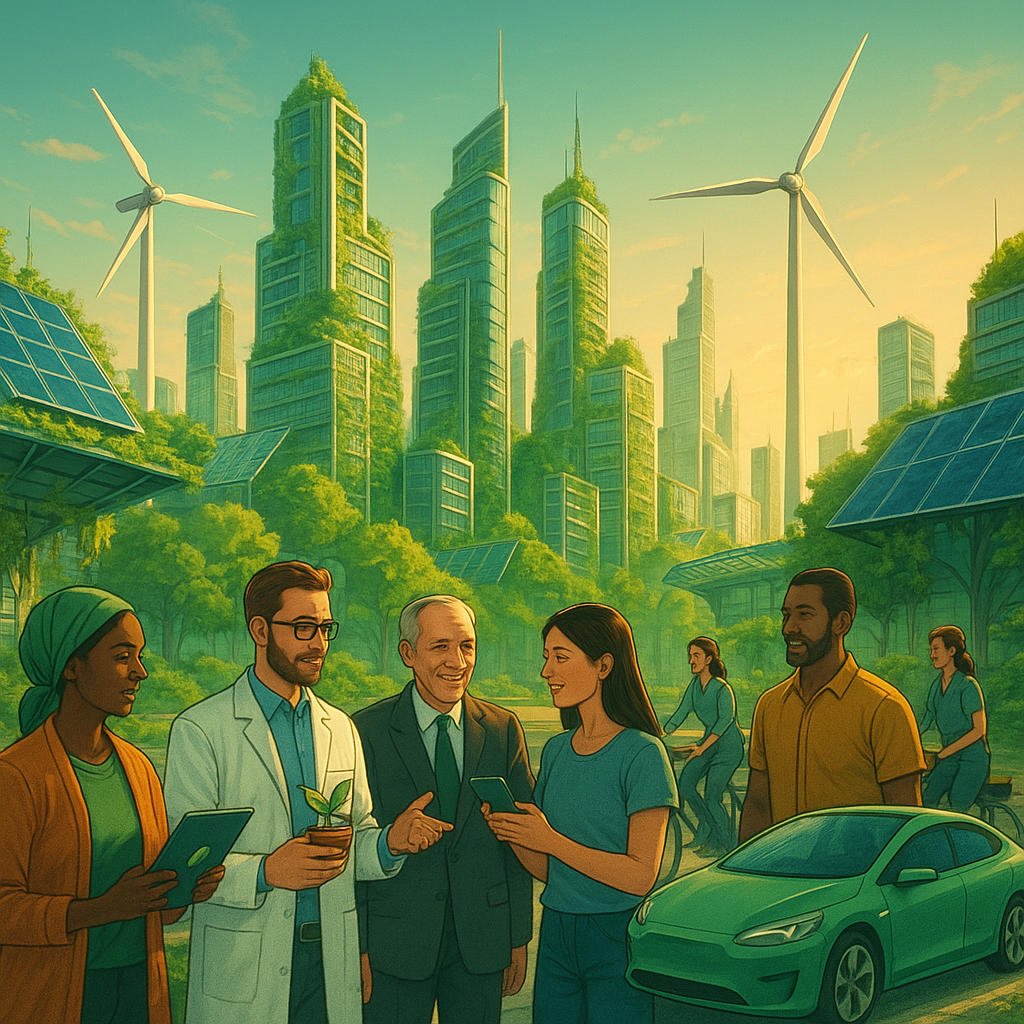
Opening Scene: A Planet at the Crossroads
Imagine a bustling cityscape in 2026 where solar panels glisten atop skyscrapers, electric drones silently deliver packages through clean air, and entire neighborhoods are powered by renewable microgrids. This vision is no longer futuristic speculation but an emerging reality driven by green technology. According to the International Energy Agency, global investment in green technology surpassed $1.2 trillion in 2025, marking a pivotal moment in humanity’s response to climate change and resource depletion. Yet, despite this progress, the planet remains at a crossroads. The urgency to innovate and deploy sustainable solutions has never been greater.
The stakes are high: the latest UN climate report warns that global warming must be limited to 1.5°C to avoid catastrophic environmental consequences. Green tech isn’t just an industry trend; it’s a necessity for survival. This comprehensive guide unpacks the evolution, current state, and future trajectory of green technology, providing an expert lens through which to understand its transformative potential.
Tracing the Roots: How Green Tech Emerged
The concept of green technology dates back several decades but truly gained momentum in the early 21st century amid rising environmental awareness and energy crises. The 1970s oil shocks spurred initial interest in renewable energy, but it wasn’t until the 1990s and early 2000s that significant breakthroughs accelerated adoption. Governments began incentivizing solar and wind power, while electric vehicle prototypes transitioned into commercial models.
Fast forward to the 2010s, and the advent of battery storage, smart grids, and cleaner manufacturing processes began to reshape industrial landscapes. Policy frameworks such as the Paris Agreement in 2015 galvanized global cooperation, pushing countries to commit to carbon neutrality. Simultaneously, the tech sector embraced sustainability, integrating AI and IoT to optimize energy efficiency and reduce waste.
By 2026, green technology has become a cross-sector ecosystem encompassing energy production, transportation, agriculture, waste management, and beyond. This evolution reflects a deeper understanding that sustainability requires systemic change, not isolated fixes.
Breaking Down the Core: Technologies Driving the Green Revolution
The green tech landscape is vast and multifaceted. At its core are several key technologies that have matured into commercially viable and scalable solutions.
- Renewable Energy Sources: Solar photovoltaic (PV) and onshore/offshore wind continue to dominate new capacity installations. Innovations in perovskite solar cells have boosted efficiency rates above 30%, while floating offshore wind farms harness untapped energy from deep seas.
- Energy Storage and Management: Solid-state batteries and flow batteries have revolutionized grid storage, addressing intermittency issues inherent in renewables. Smart grid technologies leverage AI to balance supply and demand dynamically, reducing energy waste.
- Electric and Hydrogen Mobility: Electric vehicle sales surged past 40 million units globally by 2025, supported by rapid expansion of ultra-fast charging networks. Hydrogen fuel cells have found niche applications in heavy transport and shipping, where electrification faces challenges.
- Carbon Capture and Utilization: Advances in direct air capture (DAC) and bioenergy with carbon capture and storage (BECCS) are being integrated into industrial processes, aiming to reverse emissions trends.
- Green Building and Materials: Innovations in sustainable construction materials, such as carbon-negative concrete and recycled composites, are reducing embodied carbon footprints. Smart building systems optimize energy consumption through sensors and automation.
“Green technology is not a single solution but a synergy of innovations that together redefine how we live and work sustainably,” says Dr. Elena Morales, a leading environmental engineer.
2026 and Beyond: Key Developments Shaping the Green Tech Landscape
The past year has brought significant advancements and scaling of green technologies, marking 2026 as a critical inflection point.
Renewable energy now accounts for over 45% of global electricity generation, a milestone accelerated by record-low costs and supportive policies. In the transportation sector, battery improvements have extended EV ranges beyond 600 miles on a single charge, reducing range anxiety and boosting consumer adoption. Moreover, green hydrogen projects received unprecedented funding, including multibillion-dollar initiatives in the Middle East and Europe aiming for large-scale production by 2030.
Notably, AI integration has enhanced predictive maintenance in renewable infrastructure, increasing uptime and reducing costs. Urban areas are experimenting with smart microgrids that enable peer-to-peer energy trading, empowering consumers and decentralizing power systems.
Emerging trends also include circular economy principles embedded into technology design, aiming to minimize waste and maximize resource reuse. The convergence of sustainability with digital transformation creates new business models centered on transparency and accountability.
“2026 is witnessing a paradigm shift where sustainability is embedded into technology innovation cycles, not an afterthought,” notes industry analyst Raj Patel.
Impact and Insights: How Green Tech Is Reshaping Industries and Society
Green technology’s influence extends far beyond environmental benefits. Its ripple effects are transforming economies, labor markets, and geopolitics.
Economically, green tech sectors are among the fastest-growing worldwide, generating millions of jobs across manufacturing, installation, software development, and research. Countries investing heavily in green infrastructure are gaining competitive advantages, attracting capital and talent.
Socially, sustainable technologies contribute to improved health outcomes by reducing air and water pollution. Energy access in underserved regions has improved through decentralized solar and battery systems, fostering equity and development.
On the geopolitical front, the transition to renewables and critical minerals reshapes global power dynamics. Nations rich in lithium, cobalt, and rare earth elements are becoming strategic players. Additionally, green tech reduces dependencies on fossil fuel imports, enhancing energy security.
However, challenges remain. Supply chain sustainability, recycling of batteries, and the ethical sourcing of materials require ongoing vigilance. The technology also demands robust policy frameworks and cross-sector collaboration to scale effectively.
For a broader perspective on sustainability trends, see Rethinking Sustainability: What 2026 Reveals About Our Green Future and how innovation continues to disrupt traditional paradigms.
Looking Forward: What to Watch in Green Tech’s Next Chapter
The trajectory of green technology suggests accelerating innovation and integration into daily life. Key developments to monitor include:
- Advanced Materials: Breakthroughs in bio-inspired and nanomaterials could unlock lighter, stronger, and more sustainable products.
- Energy Sector Decarbonization: Expansion of green hydrogen and next-gen nuclear technologies such as small modular reactors (SMRs) will be pivotal in hard-to-electrify industries.
- AI and Automation: Enhanced AI algorithms will further optimize energy systems and resource management, reducing human error and increasing efficiency.
- Policy Evolution: Governments are expected to implement stricter carbon pricing and incentivize circular economy initiatives to drive systemic change.
- Consumer Behavior: Increased awareness and demand for transparency will pressure companies to adopt sustainable practices or face reputational risks.
Engagement with these trends will be crucial for businesses, policymakers, and consumers alike. To understand how technology is transforming related sectors, explore insights from How Green Tech Is Transforming Sustainability Beyond the Buzz.
Real-World Impact: Case Studies That Illuminate Green Tech Success
Several pioneering projects illustrate green technology’s tangible benefits.
- Denmark’s Energy Island: This ambitious offshore platform integrates wind, solar, and hydrogen production, aiming to supply clean power to millions while serving as a global hub for green tech innovation.
- Tesla’s Gigafactory Expansion: In 2025, Tesla inaugurated its latest facility focusing on solid-state battery production, significantly reducing manufacturing emissions and costs.
- Singapore’s Smart Urban Farming: Combining vertical farming with AI-driven resource optimization, Singapore has drastically cut food miles and water use, enhancing urban sustainability.
- Norway’s Carbon Capture Deployment: Norway’s industrial cluster employs DAC technology at scale, capturing millions of tons of CO2 annually and converting it into building materials.
These examples demonstrate how coordinated efforts across technology, policy, and business models can accelerate the transition to a sustainable future.
As the global community seeks scalable solutions, lessons from these initiatives highlight the importance of innovation ecosystems and international collaboration.