ESG reporting is becoming an important part of how businesses communicate sustainability performance, risk readiness, and long-term responsibility. In the UAE, this is relevant as companies face growing expectations from investors, customers, procurement teams, regulators, and supply chain partners. ESG reporting is no longer only about publishing a sustainability document. It is about showing measurable progress, reliable data, and clear accountability.
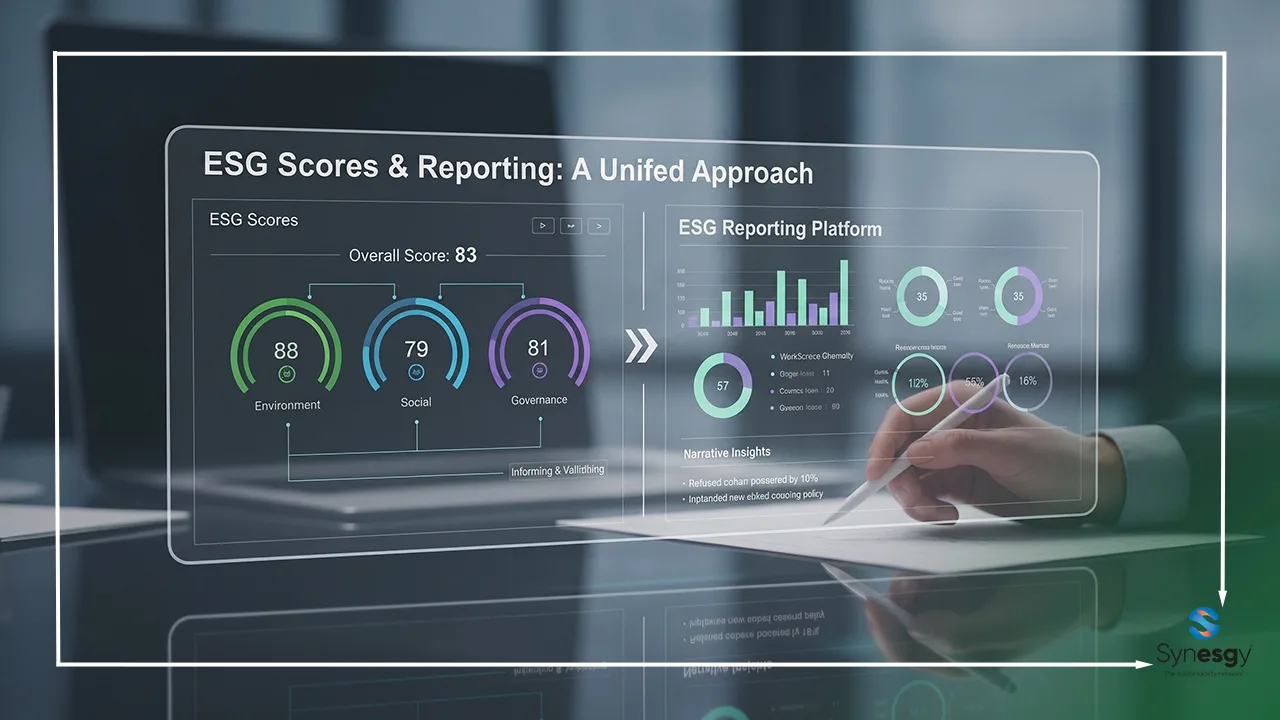
This is where ESG scores and ESG reporting should work together. ESG reporting explains what a company is doing across environmental, social, and governance areas, while an ESG score measures how well those actions are being performed. When combined, they help businesses move from broad sustainability statements to structured, evidence-based communication. For companies looking for ESG reporting services UAE, understanding this connection is essential.
What Is an ESG Score?
An ESG score is a structured measurement of a company’s performance across environmental, social, and governance factors. It may assess areas such as energy use, emissions, labour practices, workplace safety, governance policies, compliance, supplier management, and ethical business conduct.
The purpose of an ESG score is to simplify complex sustainability data into a measurable format. It helps a company understand where it stands, where it performs well, and where improvement is needed. However, an ESG score alone does not explain everything. A score may show performance, but it may not explain the actions, risks, or improvements behind the result. This is why ESG reporting is important.
What Is ESG Reporting?
ESG reporting is the process of collecting, organising, and communicating a company’s environmental, social, and governance performance. It usually includes policies, initiatives, targets, performance metrics, risks, progress updates, and future commitments.
A strong ESG report helps stakeholders understand what a company has achieved and how it manages sustainability-related risks and opportunities. In the UAE, ESG reporting is gaining importance as more companies are expected to demonstrate transparency and align with investor, buyer, and supply chain expectations.
Why ESG Scores and ESG Reporting Should Work Together
Many companies treat ESG scores and ESG reports as separate activities. They may complete an ESG assessment to receive a score, then prepare a report later using different information. This can create gaps, duplication, and inconsistencies.
When ESG scoring and ESG reporting are disconnected, the report may lack measurable proof, and the score may lack explanation. Different departments may submit different data, or supplier ESG assessments may not align with internal reporting. Over time, this can reduce stakeholder confidence.
When both work together, the company gets a clearer ESG system. The score provides measurement. The report provides context. The assessment highlights gaps. The reporting process communicates progress. Together, they create a more complete picture of ESG performance.
ESG Scores Make Reporting More Measurable
One of the biggest challenges in ESG reporting is data quality. Many businesses take positive sustainability actions but struggle to measure their impact. For example, a company may improve employee safety, introduce supplier screening, or monitor energy use. Without structured measurement, it becomes difficult to show whether these actions are creating meaningful progress.
An ESG score helps solve this by creating a performance baseline. Once the baseline is available, companies can track progress over time and compare performance across ESG areas. This makes ESG reporting more credible because it is supported by measurable data, not only descriptions.
For organisations exploring ESG reporting services UAE, this is an important factor. Effective reporting should not only present sustainability information. It should help the company understand performance, identify gaps, and report progress with confidence.
ESG Reporting Gives Meaning to ESG Scores
While ESG scores are useful, they can be misunderstood if they are not explained properly. A score may show strong governance but weak environmental data collection. Without a report, stakeholders may not understand why the score appears that way or what the company is doing to improve.
ESG reporting adds depth to the score. It explains the company’s policies, actions, challenges, and plans. It also shows whether the business has a realistic improvement roadmap.
For example, if a manufacturing company receives a moderate ESG score because emissions data is incomplete, the ESG report can explain how the company plans to improve tracking. If a supplier scores low in labour practices, the report can outline corrective actions. This makes the ESG story more transparent and reliable.
Better ESG Reports Start with Better ESG Assessment
A strong ESG report starts before the writing process. It begins with assessment. A structured ESG assessment helps companies collect relevant data, identify missing information, understand risk areas, and compare performance across ESG categories.
By using ESG scores as part of the reporting process, companies can create more focused reports. Instead of making broad sustainability claims, they can highlight the areas that matter most to their operations, stakeholders, and supply chains.
Why This Matters for Supply Chains
ESG reporting now extends beyond internal operations. Companies are increasingly expected to understand the ESG performance of their suppliers, especially in sustainable procurement, international trade, export markets, and large supply chains.
A company may have strong internal ESG practices, but weak supplier performance can still create risk. ESG scores help businesses assess suppliers in a structured way. ESG reporting then explains how those supplier risks are being monitored and managed.
Conclusion
ESG scores and ESG reporting are strongest when they work together. ESG scores provide measurable insights, while ESG reporting explains the context, actions, and progress behind those numbers. Together, they help companies improve transparency, build trust, and communicate sustainability performance more clearly.
For UAE businesses, this combined approach is becoming increasingly important. As ESG expectations grow across investors, buyers, regulators, and supply chains, companies need reliable data, measurable indicators, and clear reporting.
Synesgy helps businesses assess ESG performance, identify gaps, and build a stronger foundation for credible ESG reporting. For organisations exploring ESG reporting services UAE, combining ESG scores with structured reporting is one of the most effective ways to move forward.