
Sustainability reporting is no longer limited to publishing a yearly document. Businesses are expected to collect reliable environmental, social, and governance data, explain their most significant impacts, and demonstrate how performance is managed over time. For organisations following GRI Global Reporting, this requires coordination across departments, business units, suppliers, and data owners.
The GRI Standards are structured around Universal, Sector, and Topic Standards. They help organisations report their impacts on the economy, environment, and people, including human rights. However, the reporting process can become difficult when data is scattered across spreadsheets, emails, systems, and supplier documents.
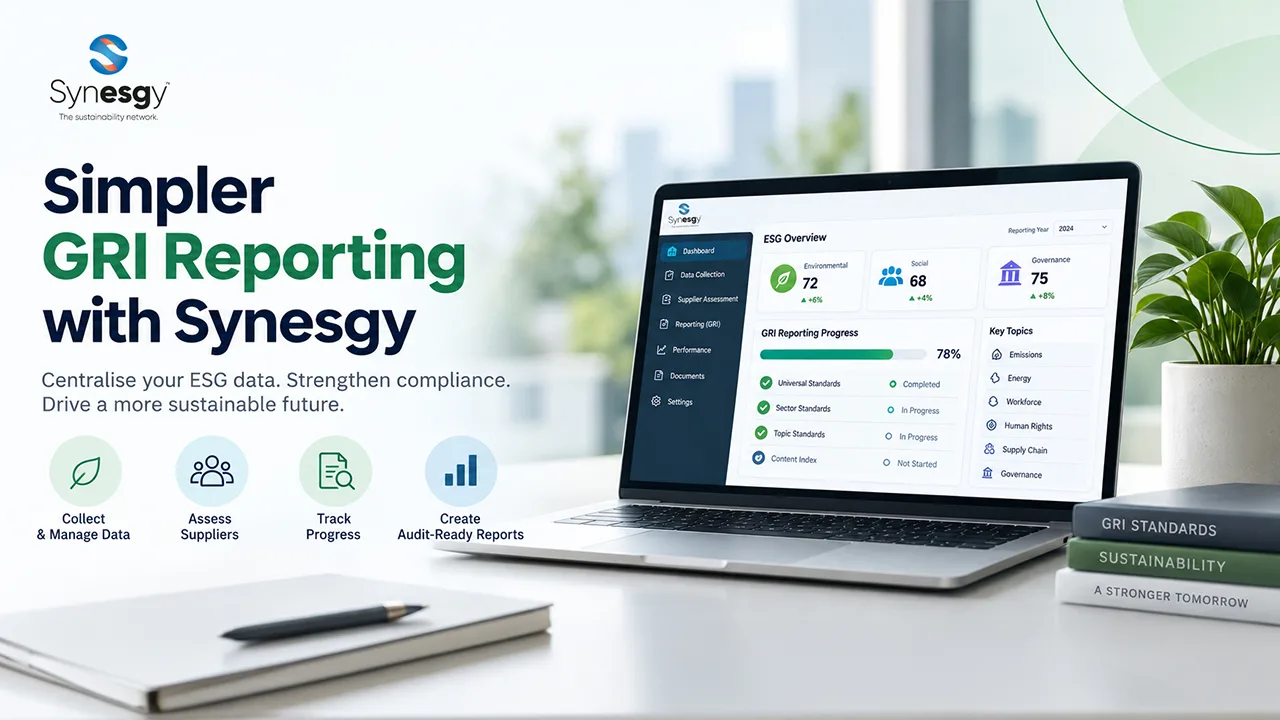
A digital ESG platform simplifies this work by bringing data collection, assessment, evidence, monitoring, and reporting workflows into one controlled environment.
What Makes GRI Global Reporting Challenging?
The difficulty of GRI Global Reporting is rarely caused by writing the final report. The greater challenge is building a reliable process behind the disclosures.
Information may come from human resources, procurement, operations, finance, compliance, facilities, and sustainability teams. Companies may also require data from suppliers and business partners. Each contributor may use different formats, definitions, reporting periods, and supporting documents.
Without a central system, reporting teams spend time requesting information, checking versions, following up on missing evidence, and confirming approvals. This increases the risk of inconsistent data, weak audit trails, and delays.
Centralising ESG Data Collection
A digital ESG platform enables structured data collection. Instead of asking teams to submit separate files, organisations can create standardised questionnaires, data fields, templates, and schedules.
Each data point can be assigned to a responsible user. Automated notifications can highlight incomplete tasks, approaching deadlines, or missing documents. Validation rules can flag unusual figures, empty fields, or inconsistencies before they enter the reporting dataset.
This makes it easier to collect information on emissions, energy, waste, workforce practices, health and safety, governance, diversity, and other material topics. It also improves consistency between reporting periods.
Supporting Supplier ESG Assessments
An organisation’s sustainability impacts often extend beyond its direct operations. GRI reporting requires businesses to consider significant impacts connected to their activities and business relationships, including relevant supplier relationships.
Digital ESG platforms can distribute supplier questionnaires, collect responses, calculate ESG scores, and classify suppliers by performance or risk. Procurement and sustainability teams can then identify suppliers with incomplete data, weak practices, or areas requiring corrective action.
Synesgy supports sustainability assessment across supply chains through digital questionnaires, scoring, benchmarking, certificates, and supplier performance dashboards. Its assessment methodology draws on recognised sustainability frameworks, including the Global Reporting Initiative.
Supplier assessment data can strengthen GRI Global Reporting by providing a more organised view of value-chain practices and impacts.
Improving Evidence Management and Traceability
A reported ESG figure is more credible when the organisation can show where it came from and how it was verified. Digital platforms allow users to attach supporting evidence directly to a response or KPI.
Evidence may include utility bills, emissions calculations, audit reports, policy documents, training records, certifications, incident logs, or supplier declarations. Version control helps prevent outdated documents from being used, while approval histories show who reviewed the information.
This traceability supports internal reviews and external assurance. It also simplifies future reporting cycles because evidence remains connected to the relevant topic, entity, and reporting period. Maintaining documented sources, decisions, assumptions and evidence also supports the verifiability of the materiality process.
Monitoring KPIs Throughout the Year
Annual data collection often creates pressure because gaps are discovered too late. A digital ESG platform allows organisations to monitor KPIs throughout the reporting period.
Dashboards can track performance against targets, previous years, business units, or supplier groups. Teams can identify rising emissions, falling training completion rates, unresolved safety incidents, or delayed supplier assessments before these issues affect the report.
Ongoing monitoring also supports the regular review of material topics as impacts and business relationships change. Reporting becomes part of continuous ESG management rather than a once-a-year exercise.
Streamlining Reporting Workflows
GRI Global Reporting involves more than collecting figures. Data may need to pass through review, clarification, approval, and consolidation before publication.
Digital platforms can establish defined workflows for each disclosure. Contributors enter information, reviewers check accuracy, managers approve results, and reporting teams consolidate the final content. Comments and revision histories remain within the system, reducing dependence on email chains.
A centralised workflow also helps teams maintain a GRI content index, track disclosure status, identify missing information, and record explanations where information is unavailable or not applicable. The GRI Standards include specific requirements concerning disclosure omissions and the explanations that must accompany them.
Enabling Better Performance Tracking
A strong reporting process should help the organisation improve, not simply document its current position. Digital ESG platforms turn collected information into performance insights.
Companies can compare results across sites, departments, suppliers, or reporting periods. They can identify recurring weaknesses, prioritise improvement plans, and assign corrective actions with deadlines and owners. Supplier scores and benchmarks can also support procurement decisions and engagement programmes.
This creates a direct connection between GRI Global Reporting and operational improvement. The final report becomes an output of an active sustainability management system.
Preparing for Digital Sustainability Reporting
GRI has introduced a Sustainability Taxonomy that represents the GRI Standards in a structured, machine-readable format using XBRL. It supports digital reporting, validation, comparability, and outputs including XBRL, iXBRL, Excel, and PDF.
This development reinforces the value of managing ESG information digitally from the beginning. Organisations with centralised data, defined ownership, consistent evidence, and structured workflows will be better positioned for increasingly digital disclosure requirements.
Conclusion
Digital ESG platforms simplify GRI Global Reporting by creating a single system for collecting data, assessing suppliers, storing evidence, monitoring KPIs, coordinating approvals, and tracking sustainability performance.
For businesses managing complex operations or supply chains, Synesgy provides a structured way to evaluate ESG performance, organise supplier information, and turn sustainability data into actionable insights. By strengthening the process behind reporting, organisations can reduce manual effort and produce more transparent, credible GRI-aligned disclosures.