
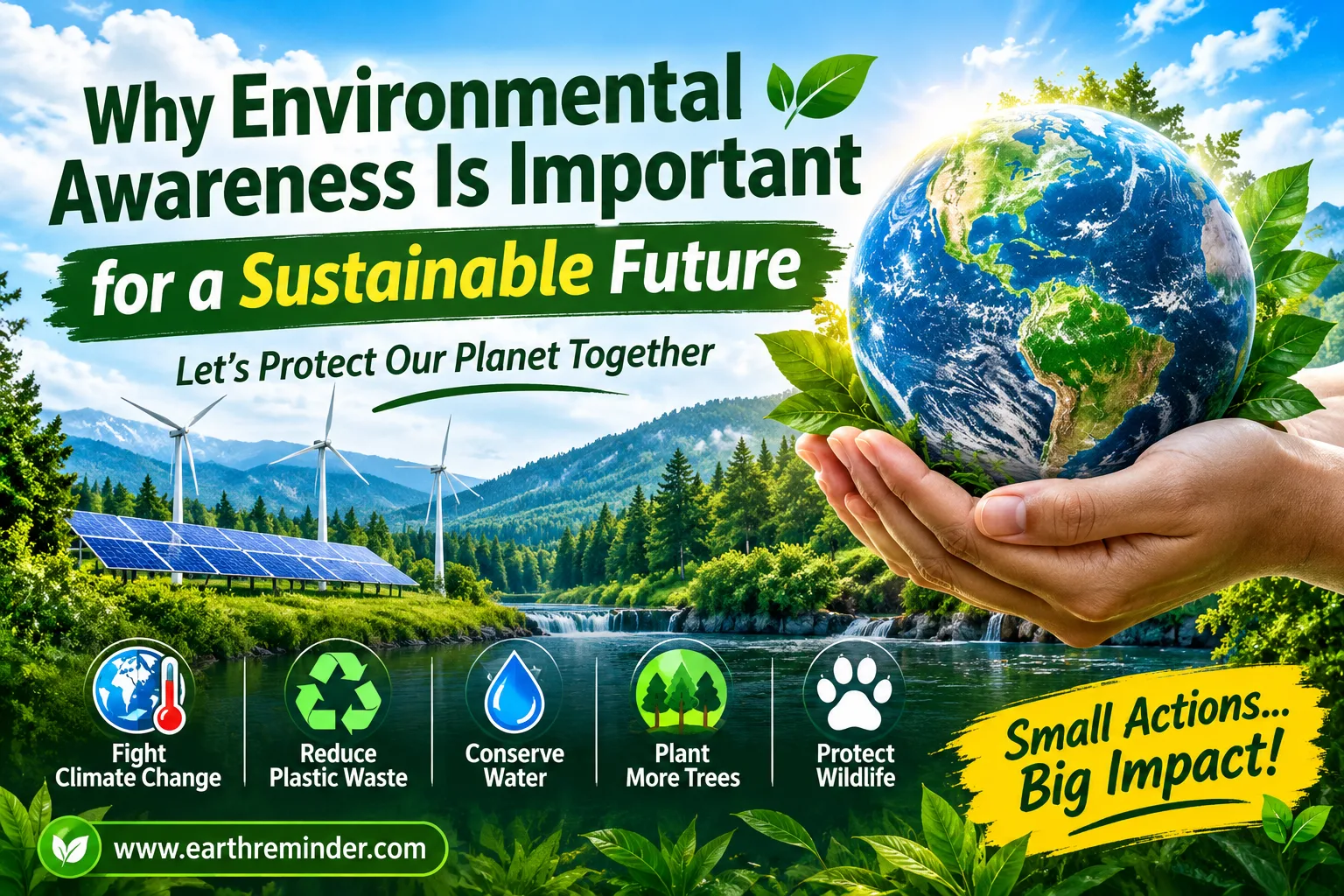
Why Environmental Awareness Is Important for a Sustainable Future
The environment is one of the most valuable resources we have. It provides us with clean air, fresh water, food, forests, and the natural resources necessary for life. However, increasing pollution, climate change, deforestation, and irresponsible human activities are putting our planet at risk. This makes environmental awareness more important than ever.
Environmental awareness helps people understand the relationship between human activities and nature. It encourages individuals, communities, and organizations to adopt responsible habits that protect the environment and support a sustainable future.
What Is Environmental Awareness?
Environmental awareness means understanding environmental problems, their causes, and their effects on people, animals, and ecosystems. It also involves recognizing that everyone has a role to play in protecting natural resources.
Being environmentally aware does not require making complicated changes. Simple habits such as saving electricity, reducing plastic consumption, planting trees, conserving water, and recycling household waste can contribute to environmental protection.
Education is an important part of this process. When people understand environmental challenges, they are more likely to make informed decisions and encourage others to follow sustainable practices.
Major Environmental Challenges Facing Our Planet
Our planet is experiencing several environmental challenges that require attention and collective action.
1. Climate Change and Global Warming
Climate change is one of the most serious environmental challenges today. The increasing concentration of greenhouse gases, particularly from burning fossil fuels, contributes to rising global temperatures.
Its effects include changing rainfall patterns, melting glaciers, rising sea levels, heatwaves, droughts, and other extreme weather events. Reducing unnecessary energy consumption, supporting renewable energy, and protecting forests can help address climate-related challenges.
2. Air and Water Pollution
Air pollution is caused by several sources, including vehicle emissions, industrial activities, burning waste, and fossil fuels. Poor air quality can harm human health and damage natural ecosystems.
Water pollution is another major concern. Plastic waste, industrial discharge, agricultural chemicals, and untreated sewage can contaminate rivers, lakes, and oceans. Protecting water sources and managing waste responsibly are essential for maintaining healthy ecosystems.
3. Deforestation and Loss of Biodiversity
Forests provide habitats for countless species, absorb carbon dioxide, help regulate the climate, and support the water cycle. However, forests are often cleared for agriculture, construction, logging, and other human activities.
Deforestation destroys wildlife habitats and threatens biodiversity. Protecting forests, restoring damaged ecosystems, and planting native trees can help preserve the natural balance.
4. Plastic Pollution and Waste Management
Plastic products are widely used because they are inexpensive and convenient. However, many single-use plastic items remain in the environment for long periods.
Plastic waste can enter rivers and oceans, harming marine animals and other wildlife. Reducing unnecessary plastic use, reusing products, separating recyclable materials, and disposing of waste properly can help reduce this problem.
Why Environmental Awareness Matters
Environmental awareness is important because it encourages people to take responsibility for their surroundings. It helps communities understand the consequences of pollution, resource wastage, and habitat destruction.
It also promotes sustainable consumption. People who understand environmental issues may choose reusable products, energy-efficient appliances, public transportation, and locally produced goods.
Environmental education can also influence future generations. Teaching children about nature, wildlife, recycling, and conservation helps develop responsible habits from an early age.
Most importantly, awareness encourages collective participation. When individuals, schools, businesses, and communities work together, environmental protection becomes a shared responsibility rather than an individual effort.
Simple Ways Everyone Can Protect the Environment
Protecting the environment begins with small and practical actions. Here are some habits that everyone can adopt:
- Save water: Turn off taps when they are not needed and repair leaking pipes.
- Reduce plastic waste: Carry reusable shopping bags, bottles, and containers.
- Conserve electricity: Switch off unused lights and choose energy-efficient appliances.
- Plant native trees: Support local greenery and provide habitats for wildlife.
- Recycle responsibly: Separate recyclable materials and dispose of household waste correctly.
- Choose sustainable transport: Walk, cycle, carpool, or use public transportation whenever practical.
- Protect wildlife: Respect natural habitats and avoid activities that harm animals.
- Spread awareness: Share reliable environmental information with friends, family, and your community.
These actions may seem small, but consistent efforts by many people can contribute to meaningful environmental improvements.
The Role of Renewable Energy in a Greener Future
Renewable energy is an important part of building a sustainable future. Solar, wind, and hydropower generate electricity from naturally replenished sources.
Increasing the use of renewable energy can reduce dependence on fossil fuels and help lower greenhouse gas emissions. Governments, businesses, and individuals can support the transition by investing in clean energy technologies and improving energy efficiency.
Although renewable energy systems also have environmental impacts, responsible planning and development can help maximize their benefits.
Conclusion: Small Actions Can Create a Big Difference
Environmental protection is not only the responsibility of governments or environmental organizations. Every individual can contribute through informed decisions and responsible daily habits.
Climate change, pollution, deforestation, and biodiversity loss are complex challenges, but awareness and collective action can help create positive change. By conserving resources, reducing waste, protecting wildlife, and supporting sustainable solutions, we can help build a healthier planet.
A sustainable future begins with the choices we make today. Let us understand our responsibility towards nature and encourage others to protect the environment.
For more informative articles, environmental insights, and ideas about climate change, wildlife conservation, and sustainable living, visit Earth Reminder:
https://www.earthreminder.com/
Let's protect our planet today for a greener tomorrow!