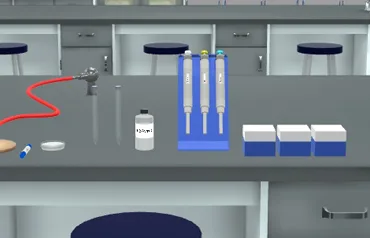
Understanding the fundamental properties of matter is essential for every science student, yet grasping abstract concepts like mass-to-volume ratios can be challenging without hands-on experimentation. Traditional school and university laboratories frequently face limited equipment availability, calibration issues, and time constraints that prevent students from thoroughly exploring physical measurements. Today, progressive educators are overcoming these hurdles by integrating an interactive Virtual Lab into their curriculum, allowing learners to visualize and test core physical laws with remarkable precision.
Mastering Mass, Volume, and Buoyancy Through Interactive Exploration
Density is a foundational concept across physics, chemistry, and engineering, dictating everything from why massive ships float to how geological layers form. However, performing manual volume displacement and mass measurements in a crowded classroom often introduces human error and equipment wear. Utilizing a Density Simulation gives students a controlled, accurate environment to investigate how different materials behave under varying conditions.
In this immersive 3D setting, learners can weigh solid and liquid samples on digital balances, measure displaced water in graduated cylinders, and calculate density values in real time. By testing irregular objects and observing immediate visual feedback, students move beyond rote formula memorization ($\rho = m/V$) and develop an intuitive understanding of material properties and buoyancy principles.
Broadening Scientific Discovery with Comprehensive Digital Tools
While mastering individual concepts is vital, effective science education thrives when students can seamlessly explore interconnected disciplines. Modern institutions increasingly rely on a versatile Science Simulator to unify physics, chemistry, and biology coursework under a single accessible ecosystem.
By combining foundational measurement exercises with advanced experimental modules, educators create a cohesive learning journey. Students build confidence in basic laboratory techniques before progressing to complex multi-step investigations—all within a consistent, user-friendly interface that mirrors authentic research environments.
Why Educators Choose PraxiLabs for Modern Science Instruction
Delivering high-quality practical education at scale requires a platform engineered for both academic rigor and student engagement. As a leading Virtual Lab solution, PraxiLabs empowers educational institutions worldwide to provide realistic 3D laboratory experiences anytime, anywhere.
Key advantages of adopting PraxiLabs include:
- Precision and Reliability: Digital instruments eliminate hardware calibration errors, ensuring students obtain clean, consistent data to analyze.
- 24/7 Self-Paced Access: Learners can repeat experiments as often as needed to master difficult procedures without being restricted by lab schedules.
- Zero Safety Risks or Consumable Costs: Institutions save significantly on equipment maintenance and materials while keeping students completely safe.
- Guided Learning Experience: Integrated lab manuals, clear instructions, and instant feedback support independent discovery and boost retention.
Shaping Confident, Future-Ready Scientists
Equipping students with strong analytical and experimental skills starts with giving them the freedom to explore without barriers. By bringing immersive 3D simulations into everyday science instruction, educators turn challenging theoretical principles into engaging, memorable discoveries—preparing the next generation of innovators to excel in STEM.