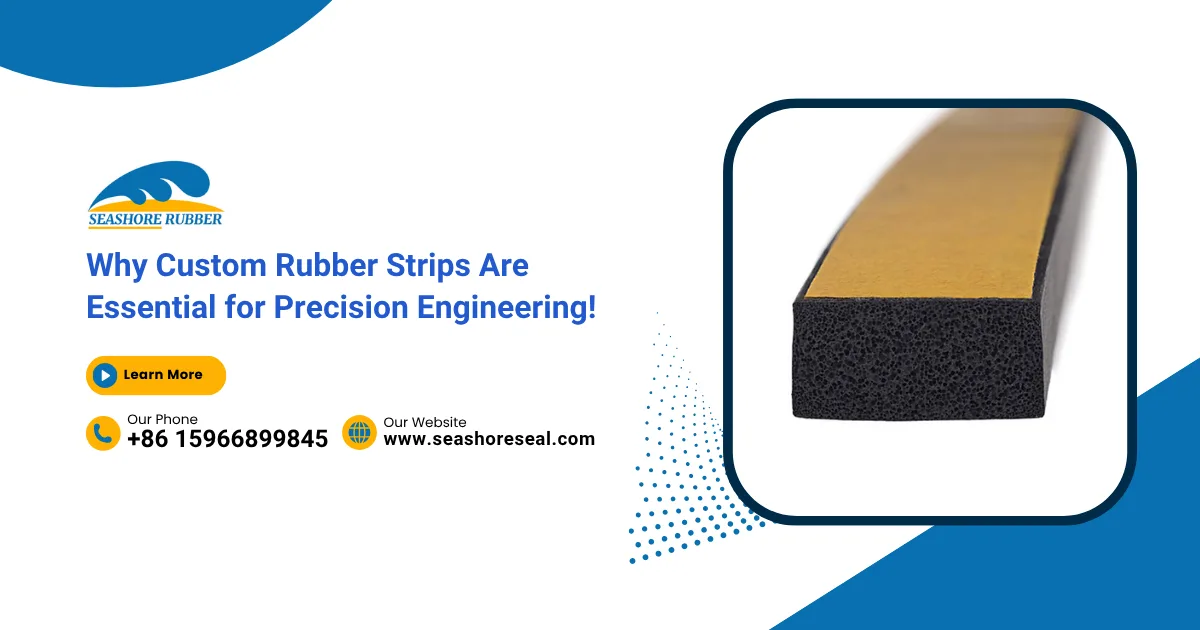
In the realm of precision engineering, where even the smallest deviation can lead to significant consequences, the quality and suitability of every component are critical. This pursuit of excellence demands not just accuracy in measurement and assembly, but also in the materials used for sealing, cushioning, insulating, and protecting vital components. Enter custom rubber strips—an often overlooked yet fundamentally important element that plays a central role in ensuring machinery and systems perform at their peak.
1. What Are Custom Rubber Strips?
a. Definition and Overview
Custom rubber strips are flexible, elongated pieces of rubber specially manufactured to precise dimensions, material properties, and performance criteria as dictated by the customer's specific needs. Unlike standard, mass-produced strips, custom rubber strips are engineered to address unique challenges, fitting perfectly into the applications for which they are designed. This customization ranges from simple differences in width, thickness, or hardness to complex requirements involving color, chemical resistance, surface texture, or compliance with international standards.
b. Common Types and Materials
Custom rubber strips can be produced from a variety of rubber materials. Each material has signature properties that make it suitable for particular applications in precision engineering:
- EPDM (Ethylene Propylene Diene Monomer): Excellent for outdoor sealing, weather, and ozone resistance.
- Silicone: Wide temperature range, biocompatibility, and food-grade options.
- Natural Rubber: High resilience and tensile strength.
- Nitrile (NBR): Superior oil and chemical resistance.
- Neoprene: Good balance of flexibility, oil/chemical resistance, and flame retardance.
- Viton (FKM): Elite chemical resistance in harsh environments.
By carefully selecting the appropriate base material, custom rubber strips are tailored for optimal functionality across a diverse range of precision engineering disciplines.
c. Production Processes
Custom rubber strips are typically manufactured through:
- Extrusion: Rubber compound is forced through a die for consistent shapes.
- Die Cutting/Slitting: Sheets of rubber are cut into strips.
- Molding: For strips with intricate profiles or enhanced property integration.
Post-production processes such as adhesive backing, flocking, hole punching, or printing may also be applied to further customize the strips for assembly and use.
2. The Role of Custom Rubber Strips in Precision Engineering
a. Precision Engineering: A Need for Exact Solutions
Precision engineering maximizes product reliability, functionality, and safety by managing extremely tight tolerances. In this context, even minute material misfits or inconsistencies can undermine entire systems. Here’s where custom rubber strips become indispensable.
Why Standard Strips Won’t Suffice
Generic rubber strips, produced to general size and performance tolerances, typically leave small—but crucial—gaps either in their fit, performance, or longevity. In high-precision applications, such gaps can result in:
- Leakage (water, air, oil, chemical)
- Mechanical failure or accelerated wear
- Electromagnetic/radio interference
- Vibration damage and noise propagation
- Loss of thermal insulation
Custom rubber strips, on the other hand, are engineered with exact dimensions, material choices, and properties, reducing the risk of operational failures and ensuring optimal system performance.
Also Read: Innovative Solutions: Unique Applications for Custom Rubber Strips!
b. Critical Functions Provided by Custom Rubber Strips
Sealing: The ability to form a perfectly tight seal, even following intricate contours, is crucial in defense, automotive, electronics, and medical devices. Custom rubber strips prevent unwanted ingress or egress, thus safeguarding critical processes.
Cushioning/Shock Absorption: Equipment often involves moving parts or faces high-frequency vibration. Custom rubber strips are deployed to isolate vibrations, cushion impacts, and prevent rattling or bouncing between components.
Thermal and Electrical Insulation: Sensitive electronics and instrumentation demand insulation from heat, cold, and stray electrical currents. Custom rubber strips—especially those made from material blends like silicone or EPDM—can meet these needs to spec.
Chemical Resistance: In laboratories, industrial processing, or chemical handling plants, strips must withstand harsh solvents, acids, and alkalis. Only a custom blend will guarantee compatibility with the exact chemicals involved.
Aesthetic and Ergonomic Integration: High-end consumer products or medical instruments use precision-cut rubber strips to create a seamless tactile interface, conceal joints, or create ergonomic grip surfaces.
Compliance and Safety: Many industries require compliance with FDA, RoHS, REACH, UL94, or other standards. Custom manufacturing allows precise formulation to meet these regulations.
3. Advantages of Custom Rubber Strips for Precision Engineering
a. Maximized Performance
By specifying exact dimensions, hardness (durometer), compression set, color, and resistance characteristics, engineers ensure custom rubber strips deliver the intended performance for the longest possible time.
b. Enhanced Reliability and Safety
Custom rubber strips reduce the risk of premature equipment failure, unexpected leaks, or environmental contamination—crucial for mission-critical applications such as aerospace, automotive safety, medical life-support, and high-voltage electronics.
c. Cost Savings Over Time
While bespoke solutions may have a slightly higher initial cost, their superior fit and function minimize downtime, material waste, and maintenance expenses, resulting in overall lower lifetime operating costs.
d. Design and Production Flexibility
Custom strips facilitate innovative product designs, enabling the realization of prototypes and novel product shapes that would not be feasible—or reliable—with standard parts.
e. Improved Assembly Efficiency
Pre-sized, ready-to-install custom rubber strips minimize cutting, trimming, or adaptation at the point of assembly, streamlining production lines and reducing the risk of operator errors.
4. Common Applications of Custom Rubber Strips in Precision Engineering
a. Automotive Systems
Custom rubber strips are vital in precision vehicle manufacturing, used for:
- Door and window weatherstripping
- Trunk and hood sealing
- Engine compartment buffers
- Vibration damping in dashboards
- Airbag system gaskets
The precision fit ensures reduced NVH (noise, vibration, and harshness), minimizes air and water ingress, and extends vehicle lifespan.
b. Medical Equipment
From MRI machines to ventilators, custom strips:
- Provide biocompatible seals
- Support sterility barriers
- Insulate sensitive electronics
- Ensure compliance with FDA and USP Class VI standards
c. Electronics and Instrumentation
Custom rubber strips play critical roles in:
- Preventing electromagnetic interference (EMI) and static discharge
- Sealing battery compartments, screens, and casing joins
- Safeguarding circuit boards from vibration and contaminants
d. Aerospace and Defense
Aircraft and military equipment require strips that:
- Withstand extreme temperatures and pressure changes
- Resist aviation fuel, deicing fluids, or hydraulic oil
- Offer flame retardance (e.g., meeting FAR 25.853)
e. Industrial Machinery
Sealing for valves, pumps, compressing systems, and conveyors—custom rubber strips deliver performance exactly matching the machinery’s tolerance and operating conditions.
f. Consumer Durables and Appliances
Silent refrigerator doors, anti-slip bases for kitchen appliances, keypad seals, or ergonomic interfaces—all can owe their feel and function to custom rubber strips.
5. The Qingdao Seashore Advantage: Tailoring Custom Rubber Strips for You
With decades of experience and a commitment to quality, Qingdao Seashore Industrial Co., Ltd. is a one-stop solution for custom rubber strips tailored to even the most exacting applications. Our approach includes:
- Close collaboration with customers from concept through delivery
- State-of-the-art mixing, extrusion, and fabrication equipment
- Full control over material formulation and testing
- Rapid prototyping for design validation
- Strict compliance with ISO, automotive, medical, and aerospace certifications
Our experienced engineering team is prepared to help you specify not only the right material and dimensions but also the right surface finish, tolerances, additives, and, if needed, color-coding and branding.
6. How to Order Custom Rubber Strips for Precision Engineering
a. Key Considerations
When ordering custom rubber strips, provide details such as:
- Required material and hardness (durometer)
- Exact strip length, width, and thickness
- Environmental exposure (temperature, UV, humidity, chemicals)
- Color
- Surface finish (smooth, textured, flocked, etc.)
- Compliance needs (FDA, REACH, UL, etc.)
- Any special installation requirements (adhesive backing, holes, slits)
b. The Ordering Process
- Consultation and Quotation: Discuss your requirements with Qingdao Seashore’s specialists and receive a detailed quote.
- Material and Profile Selection: Choose or formulate the best-suited material and decide on the profile.
- Prototyping and Testing: Receive samples or prototypes for validation.
- Finalization and Mass Production: Upon approval, your custom rubber strips are produced in agreed volumes.
- Quality Control and Delivery: Every batch is scrutinized and delivered with full documentation and traceability.
The Future of Custom Rubber Strips in Precision Engineering
The demands of precision engineering are only set to increase, as industries adopt smarter technology, automation, and miniaturization. Custom rubber strips are evolving as well—advancements in materials science yield formulations with enhanced resistance, anti-microbial properties, self-healing capabilities, and improved sustainability.
Custom rubber strips are the silent workhorses that ensure engineered systems stand the test of time, precision, and performance. They may go unnoticed once installed, but their impact is immense—creating reliable seals, cushions, insulators, and protectors at the very heart of precision engineering. Off-the-shelf solutions simply can’t deliver the same level of fit, function, and peace of mind that custom strips offer.
Frequently Asked Questions (FAQ)
Q1: What is the difference between custom rubber strips and standard rubber strips?
A: Custom rubber strips are manufactured to customer-specific dimensions, material properties, tolerances, and performance criteria, whereas standard rubber strips are made to generic specifications and may not suit specialized applications.
Q2: Can you match the color or add branding to my custom rubber strips?
A: Yes, Qingdao Seashore Industrial can supply rubber strips in a variety of custom colors, with possible integration of branding elements like embossed logos or color-coded identification.
Q3: What tolerances can be achieved with custom rubber strips?
A: With precision extrusion and cutting, we can achieve tight tolerances—commonly up to ±0.2mm, and in some cases even finer—with validation for critical engineering applications.
Q4: Are there minimum order quantities for custom rubber strips?
A: We welcome both prototyping (small batch) runs and large production orders. Minimum order quantity depends on the complexity and material, but we strive for flexibility.
Q5: What is the typical lead time for custom rubber strips?
A: Standard custom orders usually take 2-4 weeks for sampling and 1-2 weeks for mass production, although urgent requests can often be expedited.
Q6: Can custom rubber strips be made food safe or medical grade?
A: Yes, we provide FDA, USP Class VI, or other compliant materials suitable for food and medical use.
Q7: Can you provide rubber strips with adhesive backing?
A: Absolutely. We offer a selection of high-performance pressure-sensitive adhesives for easy installation.
Q8: How do I determine the best material for my custom rubber strips?
A: Our engineers will assess your environment (temperature range, UV, chemical exposure, etc.) and recommend the optimal rubber compound for your application.
Q9: How are custom rubber strips packaged and shipped?
A: Packaging is designed to prevent deformation or damage—either coiled, wound on spools, or in straight lengths with protective coverings. We ship globally via air, sea, or express courier.
Q10: Why choose Qingdao Seashore Industrial for custom rubber strips?
A: Our decades of expertise, vertical integration, advanced facilities, strict QC, and commitment to customer satisfaction ensure you receive accurate, reliable, and high-performance custom rubber strips every time.