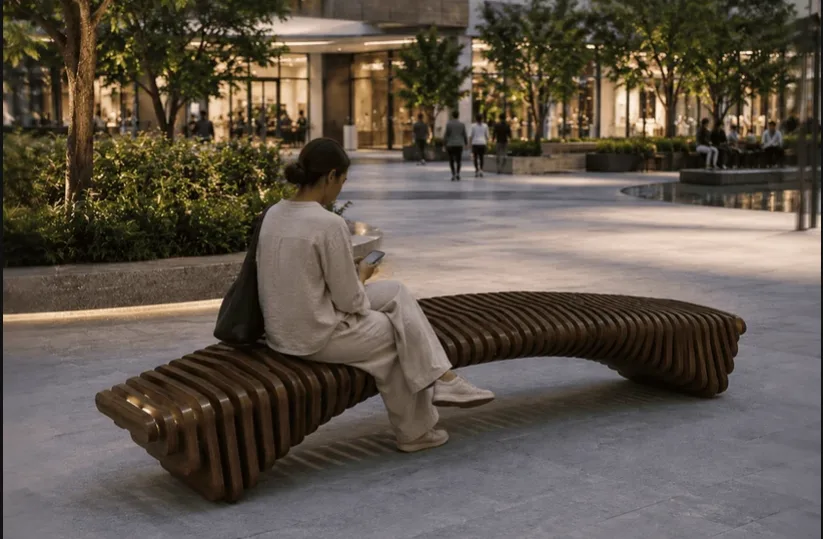
Modern interior design has moved far beyond straight lines and predictable shapes. Homeowners and designers alike are searching for furniture that feels sculptural, intentional, and a little unexpected and that's exactly where a parametric bench comes in. Born from algorithmic design and computational modeling, these pieces turn mathematical precision into flowing, organic forms that look like art but function as everyday furniture. If you're rethinking your entryway, living room, or hallway, understanding why this style has become so popular can help you decide if it belongs in your own space.
What Makes a Piece "Parametric"?
Parametric design uses software-driven algorithms to generate forms based on a set of rules and variables curvature, spacing, load distribution, and material behavior. Instead of a designer sketching a fixed shape, they define parameters, and the software generates a structure that's often impossible to achieve with traditional joinery. The result is furniture with rhythmic, wave-like patterns, lattice structures, or continuous curved silhouettes that feel simultaneously futuristic and natural.
This design approach isn't limited to seating. You'll increasingly see it applied to a parametric wood bench, room dividers, wall art, and even a parametric desk, where the same computational logic creates a sculptural work surface instead of a seat. But benches remain one of the most popular applications because they combine visual impact with genuine usability.
Why It Works So Well in Modern Interiors
1. It Serves as a Functional Sculpture
Modern interiors often aim for a "less is more" philosophy, but that doesn't mean rooms have to feel empty or sterile. A well-placed bench fills that gap perfectly; it's a piece you can sit on, but it also acts as the visual anchor of a room. Unlike a painting or sculpture that serves no practical purpose, this kind of seating earns its space twice over.
2. Seamless Integration With Minimalist Spaces
Because parametric forms are generated from clean, repeatable patterns, they tend to complement minimalist and contemporary interiors rather than clash with them. The flowing curves add visual interest without introducing clutter, making it an easy way to soften a room full of straight-edged furniture and architectural lines.
3. Customization Is Built Into the Process
Since these designs originate from adjustable parameters, they're inherently easy to customize. Dimensions, curvature intensity, wood grain direction, and finish can all be adjusted to match a specific room, making it simple to get a piece that fits your exact space rather than settling for a standard size.
4. Material Efficiency and Structural Innovation
Computational design doesn't just create striking visuals it can also optimize structural performance. Algorithms can calculate load-bearing points precisely, which sometimes allows for thinner materials and lighter overall structures without sacrificing strength. It's a genuinely smarter way to build furniture, not just a trendier one.
Where to Use It in Your Home
A bench built with parametric principles works beautifully in several spots:
- Entryways: A striking first impression that also offers a place to sit while putting on shoes.
- Living rooms: As a coffee table companion or an alternative to a traditional accent chair.
- Hallways and landings: Turning an underused transitional space into a design moment.
- Dining nooks: Paired with a table for a soft, organic contrast to hard-edged surfaces.
Choosing the Right Materials
Wood remains the most popular material for this style because it warms up what could otherwise feel like a cold, overly technical design. Oak, walnut, and ash are common choices thanks to their strength and the way they highlight the flowing grain patterns created by the algorithm-driven curves. Metal and engineered composites are also used for pieces that need extra durability or a more industrial aesthetic, but wood tends to strike the best balance between sculptural detail and everyday comfort.
Working With a Custom Furniture Studio
Because these designs rely on precise computational modeling, they're best created by a studio with both design software expertise and hands-on woodworking skill. At Zorka Furniture, every piece starts with an understanding of the room it will live in, its proportions, lighting, and existing furniture before any algorithm is applied. That process ensures the final piece feels custom-built for the space, not just visually impressive on its own.
Final Thoughts
A parametric bench isn't just a trend, it's a shift in how furniture is conceived, blending computational precision with genuine craftsmanship. For anyone designing a modern interior that needs a bit more personality without sacrificing function, Zorka Furniture brings this vision to life with distinctive parametric designs. Whether you're furnishing a grand entryway or a quiet reading corner, this style proves that mathematics and artistry can share the same piece of furniture.
Frequently Asked Questions
1. What is a parametric bench made from?
Most are crafted from wood such as oak, walnut, or ash, though metal and composite materials are also used depending on the desired look and durability needs.
2. Is this type of furniture more expensive than traditional benches?
Generally, yes. The computational design process and precision fabrication require more time and expertise, which is reflected in the price compared to mass-produced seating.
3. Can the design be customized to fit a specific space?
Yes. Since the form is generated from adjustable parameters, dimensions, curvature, and finish can all be tailored to match your room's exact layout and style.
4. Does parametric furniture work in traditional-style homes?
It can, especially as an accent piece that contrasts with classic architecture. However, it's most commonly chosen for modern, minimalist, or contemporary interiors.
5. Where can I get a custom-designed piece for my home?
Zorka Furniture specializes in designing and building bespoke seating and furniture, including custom parametric pieces tailored to your interior's exact dimensions and style.