The Brick Gets Blamed for the Metal's Failure
When water stains a ceiling near a fireplace, the chimney is the obvious suspect — it is, after all, the big brick object poking through the roof. Yet in most Durham leak calls the bricks are innocent. The failure lives in the few inches where chimney meets roof: the flashing system, a set of metal pieces whose whole job is to hand water from the brickwork back onto the shingles. Flashing is thin, hidden, and mortal. When it rusts, lifts, or was sealed wrong a decade ago, the chimney takes the blame for a leak it did not cause.
How Proper Flashing Is Supposed to Work
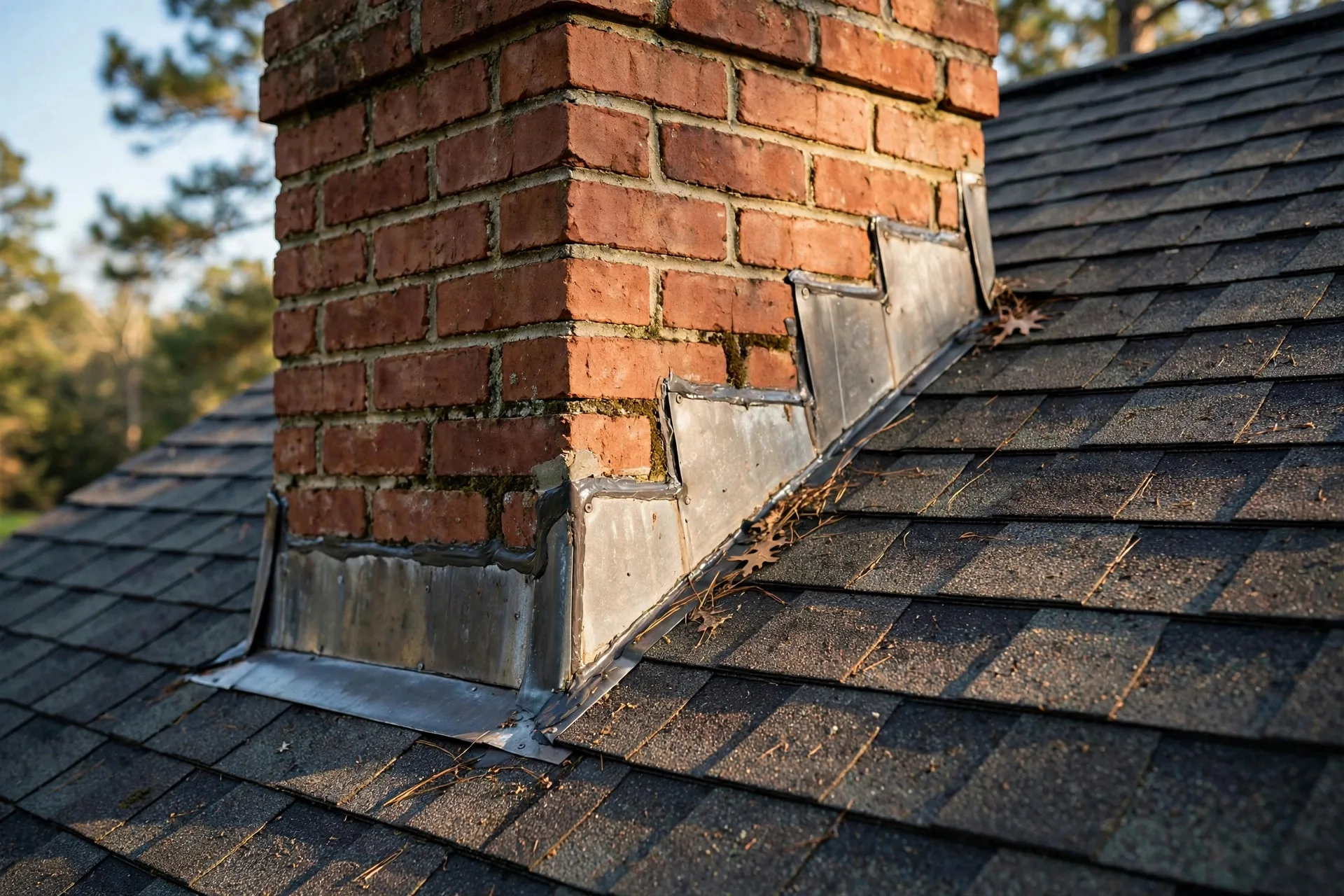
A correct chimney flashing is not one piece of metal, and it is certainly not a bead of caulk. Step flashing — small L-shaped pieces woven into each course of shingles up the chimney's sides — moves with the roof as temperatures swing. Counter-flashing, cut into the mortar joints above, overlaps the step flashing and sheds water over it. At the top side, a cricket or saddle diverts the water that would otherwise pool against the brick. Each layer assumes the one above it will eventually weep, and gives that water a path out. When you hear Roof Repair Durham explain a chimney leak, this layered path is what they are really describing — and which layer broke it.
The Three Failures Behind Almost Every Chimney Leak
The first is rust: galvanized flashing on older Triangle homes quietly corrodes until pinholes open along the water line. The second is the caulk shortcut — a past repair that smeared sealant over a flashing gap instead of replacing the metal; sealant in full sun lasts a few seasons, then cracks precisely where the water runs. The third is mortar: joints in the chimney itself crumble with age, letting water into the brick, where it travels down inside the chimney chase and appears, confusingly, as a roof leak in the room below. Each failure has a different correct repair, which is why "re-caulk it" fixes so few chimney leaks for long.
Reading the Stain Before Anyone Climbs Up
The stain's position is evidence. A stain on the ceiling directly downhill from the chimney points at the flashing line. Water appearing inside the firebox or dampness on the chimney breast wall suggests the mortar or the chimney cap instead. Efflorescence — white mineral crust on the brick inside the attic — tells you water has been moving through the masonry for a long time. Photographing which of these you have, before the roofer arrives, shortens the diagnosis from an exploration to a confirmation.
What a Real Repair Looks Like
A durable fix rebuilds the failed layer rather than coating it. Rusty step flashing is replaced course by course with the shingles lifted and reset; counter-flashing is re-cut into sound mortar; a missing cricket is framed and flashed in; failed mortar is repointed, not painted over. The work is surgical — a section of one slope, a day or less for most homes — and it ends the leak at its actual address instead of mailing the problem to next season. Homeowners sometimes learn the chimney also needs a cap or crown repair, and bundling that masonry work with the flashing visit is usually the economical moment to do both.
The Cheapest Chimney Maintenance There Is
Flashing rarely fails without warning. A five-minute look during any roof or gutter visit — rust streaks below the flashing line, sealant that has cracked or pulled away, mortar joints going sandy — catches the system while the repair is still small. Chimneys sit at the busiest intersection on the roof, where brick, metal, wood, and water all meet; the intersection deserves the inspection. Blame the chimney if you like. Just fix the flashing, and the leak almost always agrees to leave.