When Flat Shingles Start to Wave
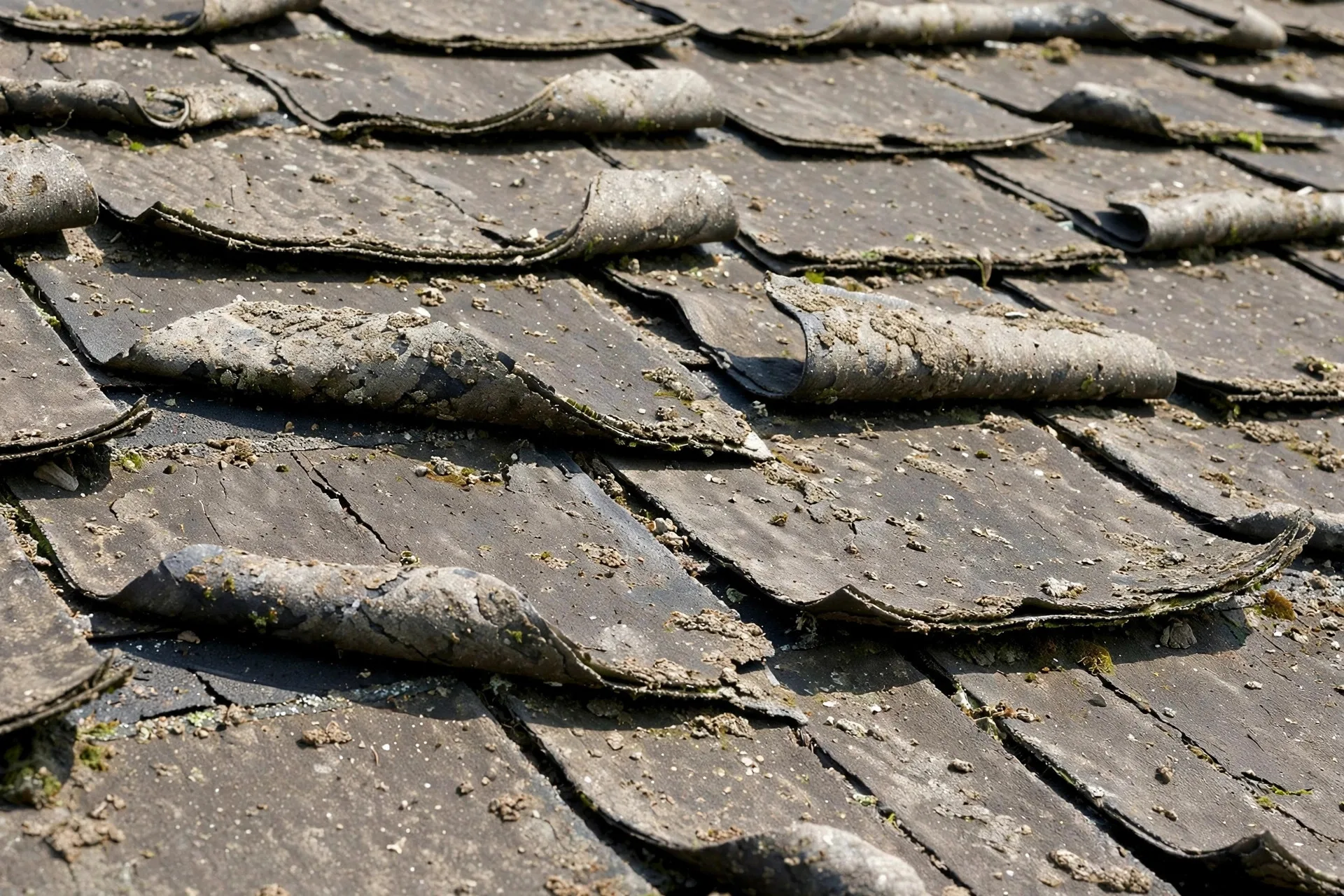
A healthy shingle lies flat and forgettable. A curling one catches the light at its lifted edges, cups upward like a drying leaf, or claws down at the corners — and once you notice it from the driveway, you see it everywhere on the slope. Curling is one of the most honest symptoms a roof produces. It is not a leak yet, and it is not cosmetic either. It is the shingle material announcing, in shape, what time and temperature have been doing to it for years.
The Two Directions Curling Takes
Cupping lifts the edges of a shingle while its center stays down, forming a shallow bowl that holds water instead of shedding it. Clawing does the opposite at the corners, curling the tabs downward until the shingle looks like it is gripping the roof. Both deformities share a root: the asphalt and fiberglass mat have lost the flexibility and the granule armor that once held them flat. A third actor joins in many Durham attics — heat from below. An under-ventilated attic bakes the shingles from the underside all summer, and a shingle cooked from both faces ages, and curls, years ahead of its rated life.
Why the Triangle's Climate Deals This Hand
Durham roofs live under a particular workload. Summer brings months of high sun on south and west slopes, with surface temperatures that can exceed 150 degrees at midday. Humidity swells and shrinks the mat through the seasons. The granules that once reflected the worst of the UV gradually thin, the asphalt oxidizes and turns brittle, and each thermal cycle bends the weakened shingle a fraction further from flat. None of this is a defect in the material — it is the material's lifespan being spent at the local rate, which is faster than the brochure's climate and slower than a desert's.
Reading the Curl: One Corner or the Whole Slope?
Pattern is prognosis. A few curled shingles in one patch often mark a local story — a past repair with mismatched material, a vent's hot exhaust, a manufacturing defect in one bundle. Curling that spreads evenly across whole slopes is a whole-roof story: the field is aging together, and the conversation belongs to timing a replacement rather than rescuing corners. This is the distinction a slope-by-slope inspection exists to make, and it is why Roof Repair Durham grades curling by area rather than by the worst shingle a homeowner can photograph — the decision rides on the pattern, not the portrait.
What Curling Invites Next
A lifted edge is an open door held ajar. Wind that a flat roof shrugs off gets purchase under curled tabs and worries them higher, until a storm takes the ones the seasons loosened — the classic sequence behind "the roof was fine until that one night." The cups hold water against the seams below them, and every freeze works the lifted edges a little further. Curling shingles also will not seal properly to the course beneath, so the roof's built-in wind defense — the self-sealing strip — quietly retires slope by slope. The roof is not leaking today because of curl; it is becoming the kind of roof that leaks tomorrow because of it.
Repair the Patch or Plan the Roof?
Isolated curling on a young or mid-life roof earns a targeted repair: replace the affected shingles, check the attic ventilation that may have cooked them, and reset the slope's defenses. Widespread curling on an older roof earns a plan instead — get the replacement measured, priced, and scheduled in a calm season rather than discovered in a stormy one, and let any repair money between now and then serve only to keep water out, not to pretend the field is young again. Curling is the roof speaking early, in a language of shape rather than stains. Homeowners who learn to read it get to choose their timing — and in roofing, choosing the timing is most of the money.