
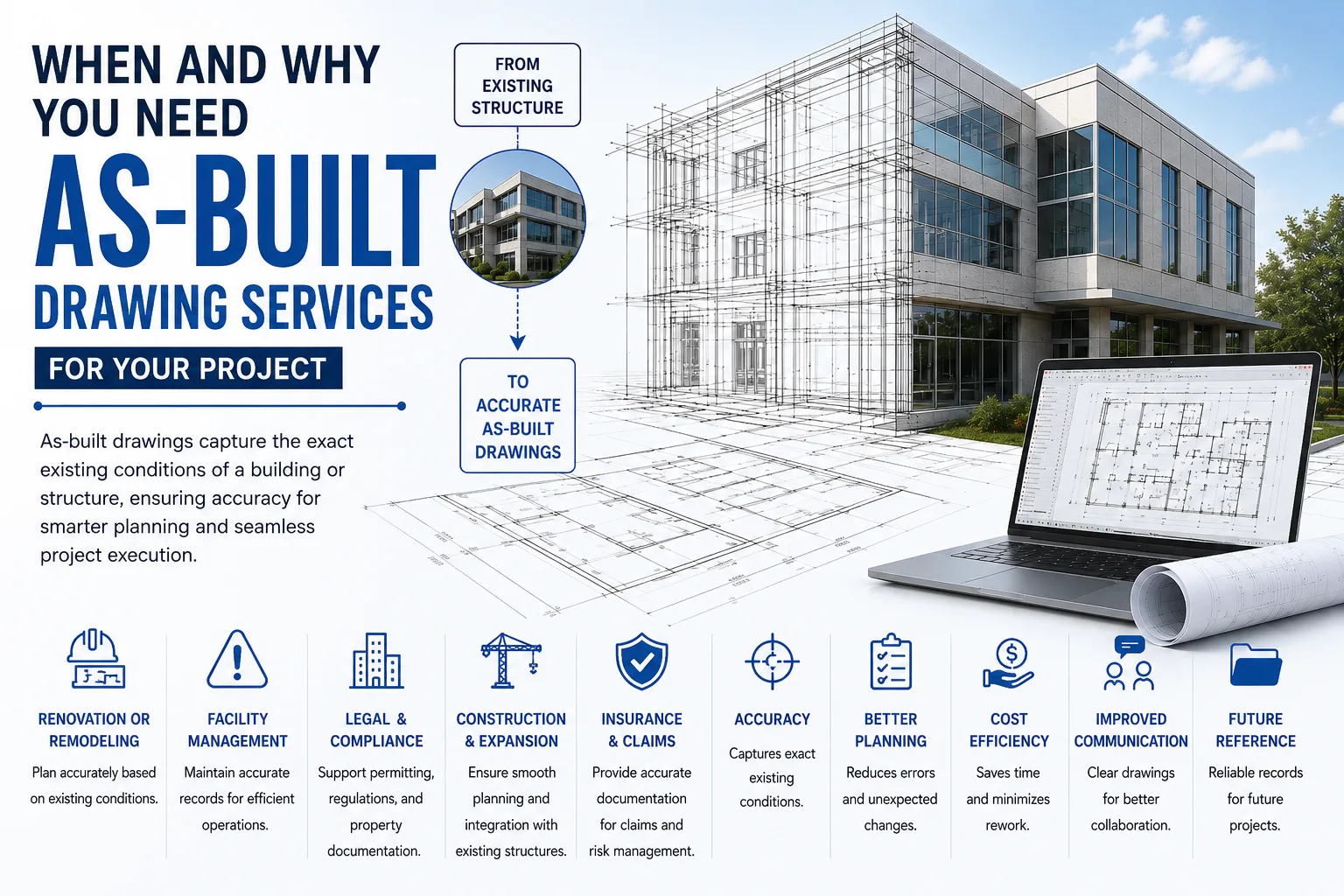
Construction and renovation projects rarely finish exactly as they were initially designed. Unforeseen site conditions, material changes, and client requests often lead to adjustments on the fly. This reality makes the original blueprints an unreliable source of truth once the dust settles. Enter as-built drawings.
As-built drawings are the final set of blueprints created after a project concludes. They reflect all the changes, modifications, and exact dimensions of the completed building. Having an accurate record of your physical space is not just a formality. It is a vital asset that protects your investment, ensures safety, and simplifies future maintenance.
If you are managing a property, planning a renovation, or closing out a major construction project, relying on outdated plans can lead to expensive mistakes. Understanding the specific moments and reasons to invest in professional As Built Drawing Services will save you time, money, and countless headaches down the road.
The Critical Junctures for As-Built Drawing Services
Knowing the right time to commission these drawings is crucial for maximizing their value. Here are the key phases when obtaining accurate as-builts becomes a necessity.
Post-Construction and Renovation Completion
The most obvious time to secure as-built drawings is immediately following the completion of a construction or renovation project. Contractors make numerous adjustments during the building phase. Capturing these modifications ensures that the building owner receives a true representation of the finished structure, rather than the theoretical design.
Pre-Leasing or Property Acquisition
Before buying a new property or signing a commercial lease, you need to know exactly what you are acquiring. Accurate as-builts provide a clear picture of the usable square footage, existing electrical layouts, and HVAC systems. This information is critical for negotiating lease terms, planning tenant improvements, and calculating accurate property valuations.
Facilities Management and Maintenance
Facility managers rely heavily on precise building data to perform routine maintenance and emergency repairs. If a pipe bursts behind a wall, knowing its exact location prevents unnecessary demolition. An updated set of drawings allows maintenance teams to identify structural elements and utility lines quickly, reducing downtime and repair costs.
Regulatory Compliance and Permitting
Local building authorities often require accurate floor plans for safety inspections and permit approvals. Whether you are updating fire evacuation routes, renewing a certificate of occupancy, or securing a permit for minor structural changes, having up-to-date drawings ensures compliance with municipal codes.
Future Expansion or Retrofitting
When it is time to expand a facility or retrofit a space for new technology, architects and engineers need a reliable starting point. Designing a new addition based on outdated blueprints often results in design clashes. Current as-builts provide the exact measurements necessary to integrate new designs seamlessly into the existing structure.
The Invaluable Benefits of Accurate As-Built Drawings
Beyond simply knowing when to get them, it helps to understand exactly why these documents are so highly valued by industry professionals.
Minimizing Costly Errors and Rework
Working off inaccurate plans is one of the leading causes of budget overruns in construction. If an architect designs a layout based on a wall that was moved three feet during a previous renovation, the new construction will inevitably hit a snag. Accurate drawings eliminate these blind spots, preventing expensive rework.
Enhancing Project Efficiency and Timelines
When contractors have access to precise site data from the very beginning, they can order materials more accurately and schedule labor more efficiently. There is no need to pause construction to verify measurements or redesign a conflicting element.
Ensuring Regulatory Compliance and Safety
Accurate drawings highlight the exact locations of fire alarms, sprinkler systems, and emergency exits. This transparency is critical for passing safety inspections and ensuring that the building remains a safe environment for all occupants.
Facilitating Future Modifications and Planning
Buildings evolve over time. Whether you are knocking down a partition or upgrading a commercial kitchen, having a reliable map of your building's anatomy makes future planning straightforward. You can feasibility-test new ideas quickly without ordering expensive exploratory demolition.
Improving Communication Among Stakeholders
A clear, accurate set of drawings serves as a universal language for architects, engineers, contractors, and owners. Everyone works from the same set of facts, which drastically reduces misunderstandings and keeps the entire project team aligned.
What to Look for in a Service Provider
Not all drafting providers deliver the same level of quality. When selecting a partner for your documentation needs, keep these crucial factors in mind.
Expertise and Experience
Look for a provider with a proven track record in your specific industry. Commercial retail spaces require a different approach than industrial warehouses or historical restorations.
Technology and Accuracy
Modern as-builts should be created using advanced measurement tools. Providers utilizing 3D laser scanning and BIM (Building Information Modeling) integration can capture a space with millimeter accuracy, far surpassing traditional tape-measure methods.
Comprehensive Deliverables
Ensure the final deliverables meet your software requirements. Whether you need standard 2D AutoCAD files, detailed Revit models, or layered PDFs, your provider should accommodate your workflow.
Client Testimonials and Portfolio
A reputable firm will happily share case studies and references. Reviewing their past work gives you a clear sense of their attention to detail and reliability. Partnering with a trusted name like Archdraw Outsourcing ensures you receive high-quality, precise documentation tailored to your specific project needs.
Real-World Impact: Two Brief Examples
To illustrate the stark contrast between having and lacking precise documentation, consider these two scenarios.
The Success Story: A retail company acquired an older commercial building to serve as their new flagship store. Before starting the redesign, they hired a firm to conduct a full 3D laser scan and generate accurate as-builts. The scan revealed that the existing structural columns were slightly off-center compared to the original 1980s blueprints. Because the design team had this information upfront, they adjusted their custom shelving layouts before manufacturing began. The project finished two weeks ahead of schedule with zero change orders.
The Costly Misstep: A hospital facility management team decided to upgrade their HVAC system based on the original construction drawings from fifteen years prior. During the installation, the contractors discovered a network of previously undocumented electrical conduits blocking the new ductwork path. Construction halted for three weeks while the engineers scrambled to redesign the routing, costing the hospital tens of thousands of dollars in delays and rework.
Secure Your Project's Foundation
Treating as-built drawings as an optional afterthought is a risky gamble. These documents are a fundamental investment in the lifespan and safety of your property. They protect your budget from unforeseen clashes, streamline future renovations, and provide peace of mind for facility managers and property owners alike.
Before you launch your next renovation, expansion, or property acquisition, make sure you have the accurate data you need to succeed. Reach out to a professional provider like Archdraw Outsourcing to discuss how expert As Built Drawing Services can safeguard your next major project.