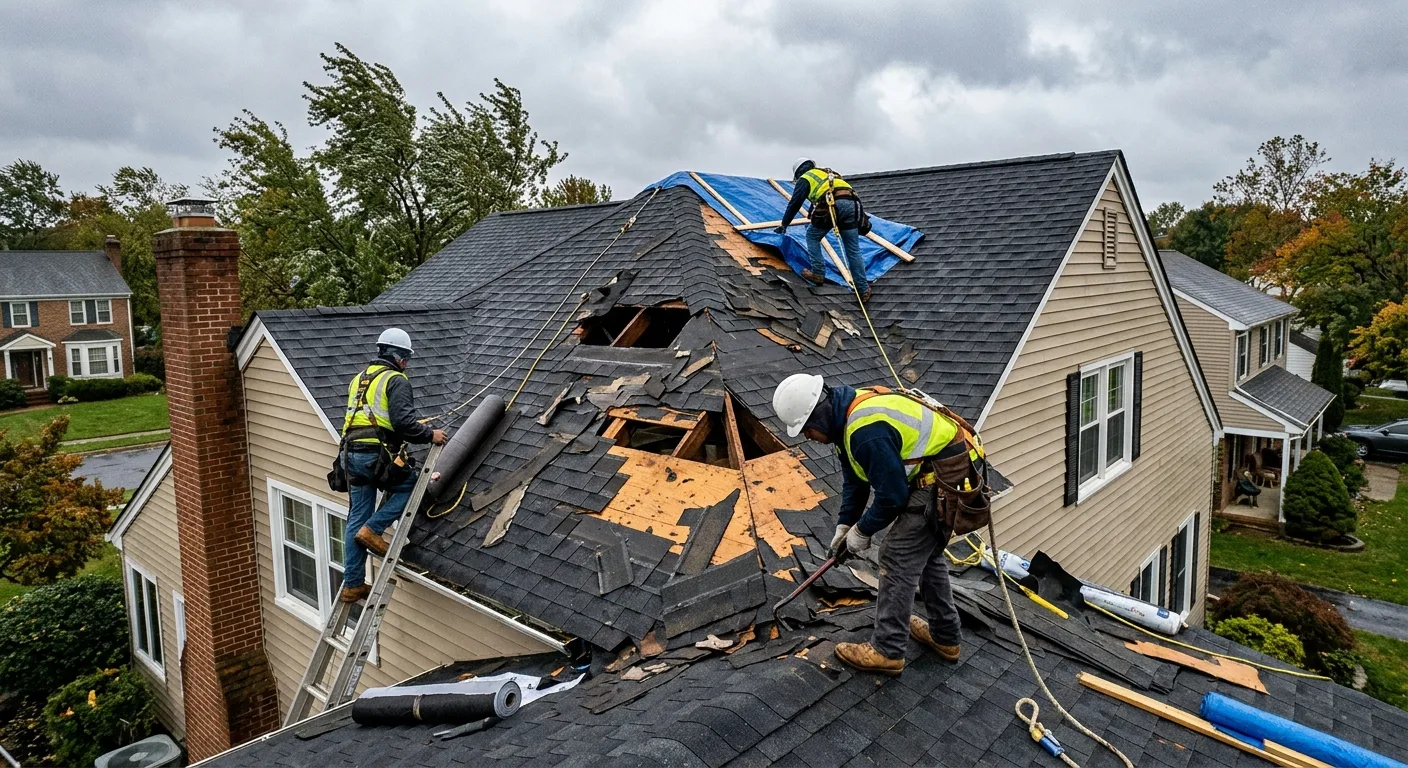
Storms are an unavoidable part of living in Delaware. Heavy rain, strong winds, hail, and occasional coastal storms can put even a well-built roof to the test. While modern roofing systems are designed to withstand challenging weather, no roof is completely immune to damage. Sometimes the signs are obvious, such as missing shingles or tree limbs on the roof. In many cases, however, storm damage is far less noticeable and may not become apparent until water begins leaking into the home weeks later.
Knowing what to do immediately after a storm can make a significant difference. Acting quickly helps prevent additional damage, simplifies the repair process, and may even support a smoother insurance claim if one becomes necessary. The key is to stay safe, document what you see, and have the roof professionally inspected before small problems become major repairs.
Put Safety First
Your first priority after any severe storm should always be safety.
If power lines are down near your property, keep a safe distance and contact your utility provider immediately. If large tree branches have fallen onto your home, avoid attempting to remove them yourself, especially if they are resting on the roof.
It is also important to resist the temptation to climb onto the roof right after the storm. Wet roofing materials can be extremely slippery, and hidden structural damage may make walking on the surface dangerous.
Instead, begin your inspection from the ground using binoculars if necessary. This allows you to identify visible damage without putting yourself at unnecessary risk.
Look for Common Signs of Roof Damage
A careful walk around your property often reveals the first signs that your roof has been affected.
Look for shingles that appear curled, cracked, lifted, or completely missing. Pieces of roofing material scattered across the yard are another indication that strong winds may have compromised the roof.
Pay close attention to gutters and downspouts as well. Storm debris can clog the drainage system or pull sections away from the roofline. Damaged flashing around chimneys, vents, and skylights should also be noted if visible.
Inside the home, inspect ceilings and attic spaces for water stains, damp insulation, or unusual odors that may indicate moisture intrusion.
Even if no leaks are immediately visible, hidden damage may still exist beneath the roofing materials.
Document Everything You Find
Taking photographs is one of the most valuable steps homeowners can take after storm damage.
Capture wide-angle photos of the home along with close-up images of damaged shingles, gutters, siding, fallen branches, or other affected areas. If water has entered the home, photograph the interior damage as well.
Keep a written record of when the storm occurred and make notes about anything unusual you observed during your inspection.
This documentation can be useful when discussing repairs with a contractor and may also help if your homeowner's insurance provider requests evidence of the damage.
Prevent Additional Damage If Possible
While waiting for professional repairs, homeowners should take reasonable steps to prevent further damage whenever it is safe to do so.
For example, if water is dripping into the home, placing buckets beneath the leak can help protect flooring and furniture. Moving valuable belongings away from affected areas may also prevent additional losses.
Avoid making temporary roof repairs unless you have the proper equipment and experience. Improper repairs can sometimes create new problems or make professional restoration more difficult.
Schedule a Professional Roof Inspection
Not all storm damage is visible from the ground.
High winds may loosen shingles without removing them entirely. Hail can create small impact marks that gradually weaken roofing materials over time. Flashing may shift slightly, allowing water to penetrate areas that appear undamaged from the outside.
A professional roof inspection provides a detailed assessment of the entire roofing system. Experienced contractors know where storm damage commonly occurs and can identify issues that homeowners might easily overlook.
Early detection often allows repairs to be completed before water infiltration leads to costly structural damage.
Understand How Delays Can Increase Repair Costs
One of the biggest mistakes homeowners make after a storm is assuming that minor damage can wait.
A single missing shingle may seem insignificant, but repeated rainfall can expose the roof deck to moisture. Over time, insulation becomes saturated, wooden framing begins to deteriorate, and mold may develop inside the attic.
What could have been a straightforward repair may eventually require partial roof replacement or extensive interior restoration.
Responding quickly after a storm helps preserve the roof's remaining lifespan while reducing the likelihood of additional expenses.
Don't Forget Other Exterior Components
Storms rarely affect only the roof.
Strong winds and heavy rain can also damage siding, gutters, windows, doors, and outdoor living areas. A comprehensive inspection should include every major exterior component.
Loose siding panels, cracked window trim, bent gutters, or damaged deck railings should all be addressed promptly to prevent further deterioration.
Because these systems work together to protect the home, repairing all storm-related damage helps restore the property's overall performance.
Choose Quality Repairs Over Quick Fixes
When homeowners are eager to restore normalcy, temporary solutions can seem appealing.
However, patching visible damage without identifying the underlying cause may only postpone future problems. Quality repairs involve replacing damaged materials, restoring proper sealing, and ensuring the entire roofing system continues functioning as designed.
Working with experienced professionals also helps ensure repairs meet local building standards and are completed using durable materials appropriate for Delaware's climate.
A properly repaired roof provides long-term protection rather than a short-term solution.
Protect Your Home Before the Next Storm
Storms cannot be prevented, but their impact can often be minimized through regular maintenance.
Annual roof inspections, routine gutter cleaning, prompt repairs, and periodic evaluations of siding and flashing all contribute to a stronger, more resilient home.
By keeping the roofing system in good condition year-round, homeowners improve its ability to withstand future storms while reducing the risk of unexpected emergencies.
Preparation today often prevents significant repair costs tomorrow.
Taking the Right Steps Makes All the Difference
Storm damage can be stressful, but knowing how to respond helps homeowners protect both their property and their peace of mind. Beginning with a safe inspection, documenting visible damage, scheduling a professional evaluation, and completing timely repairs all contribute to a faster recovery.
Whether the damage is minor or more extensive, addressing problems early prevents additional deterioration and helps maintain the value of your home.
Partnering with experts who provide professional storm damage roof repair services ensures your roof is thoroughly inspected, properly repaired, and ready to protect your home through Delaware's changing weather for years to come.