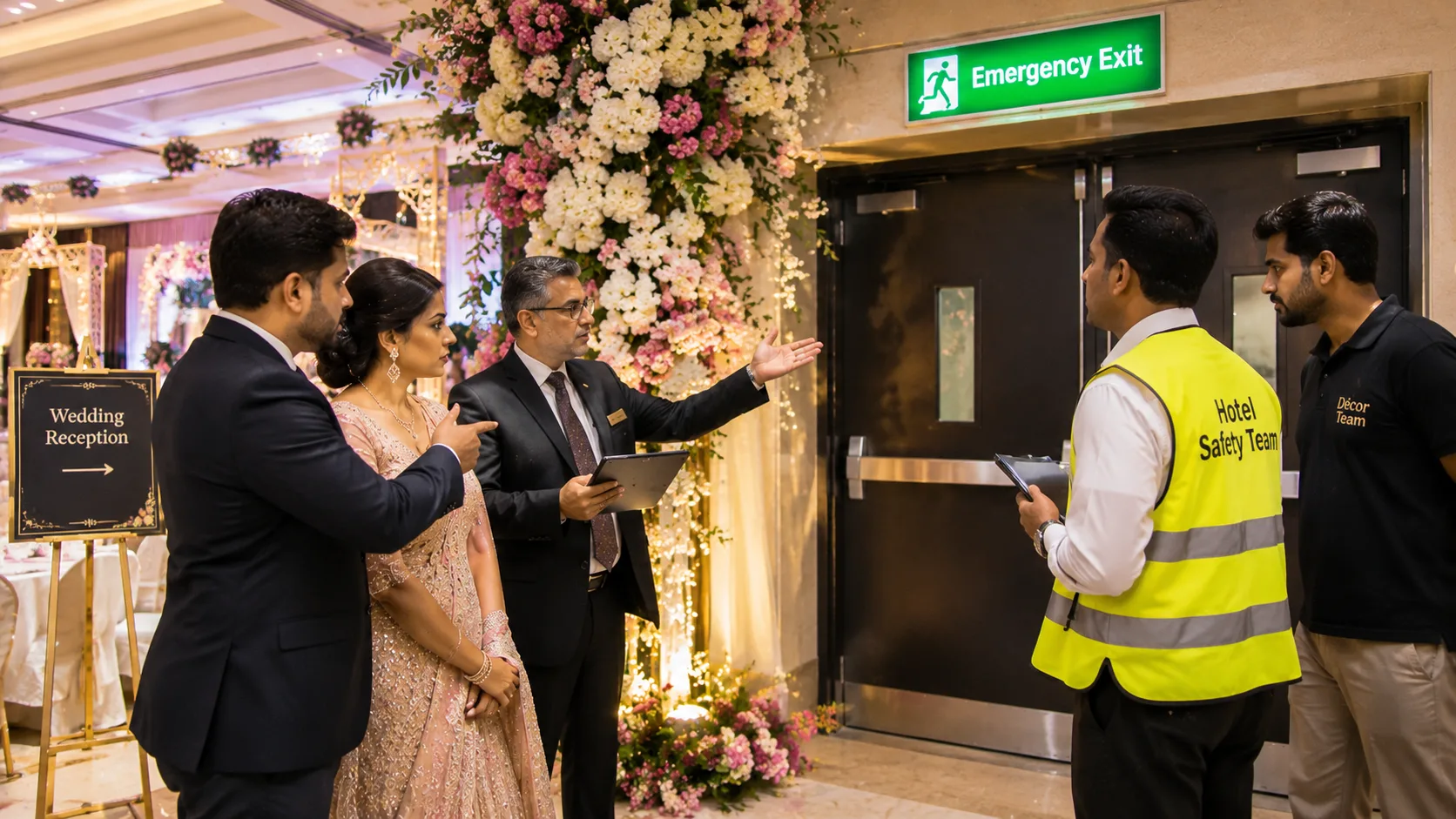
Imagine a luxury wedding ballroom decorated with grand floral arches, elaborate stage backdrops, decorative pillars and beautifully arranged guest seating. Everything looks perfect until the hotel safety team notices that some decorations are blocking an emergency exit.
The venue may ask the decorator to remove or reposition the installations before allowing the event setup to continue.
This situation can create significant problems, particularly when the wedding ceremony is approaching and guests are expected to arrive shortly.
For couples organising Dubai weddings, decorations should enhance the venue without compromising guest safety. Large floral arrangements, temporary partitions, stage structures and lighting equipment must be positioned carefully so that emergency exits and evacuation routes remain accessible.
An obstructed exit is not simply a decoration issue. It can create serious risks during a fire or other emergency, especially when hundreds of guests are attending a wedding reception.
Fortunately, couples can prevent and resolve these problems through proper venue inspections, approved decoration layouts and coordination between hotel management and wedding vendors.
Here are practical steps couples should follow if wedding decorations block emergency exits at a Dubai hotel.
1. Understand Why the Hotel Has Raised an Emergency Exit Concern
The first step is to understand exactly which decoration or installation is creating the obstruction.
Wedding decorators often work with large structures that may occupy considerable floor space.
Common examples include:
- Large floral arches positioned near exit doors.
- Wedding stage backdrops extending into evacuation routes.
- Decorative pillars placed near emergency exits.
- Guest seating arrangements blocking exit access.
- Lighting stands and electrical cables crossing corridors.
- Decorative partitions restricting passageways.
- Welcome counters placed near emergency doorways.
- Large decorative props covering emergency signage.
Ask the hotel's safety team to identify the affected exit and explain what needs to be changed.
Do not assume that an installation is safe simply because it looks attractive or has been approved by the wedding planner.
The hotel's designated safety personnel should assess whether the decoration affects emergency access, evacuation arrangements or other fire-safety systems.
2. Stop the Decoration Setup Until the Obstruction Is Resolved
If the hotel identifies a blocked emergency exit during installation, immediately pause the affected setup work.
The wedding planner should contact the decorator, hotel event manager and safety representative to discuss the required changes.
The team should:
- Identify the affected emergency exit.
- Check which decorations are causing the obstruction.
- Stop additional equipment from being placed in the affected area.
- Ask hotel management for an approved alternative layout.
- Arrange safe repositioning of the affected installations.
- Request confirmation before continuing the setup.
Avoid allowing decorators to move heavy structures, electrical equipment or fixed installations without coordinating with the hotel team.
The priority should be restoring safe access, not completing the decoration at any cost.
3. Ask the Hotel to Approve a Revised Decoration Layout
Sometimes, moving a large floral installation or changing the stage position is enough to resolve the problem.
However, the replacement arrangement should also be checked by the hotel's authorised safety personnel.
Ask your wedding decorator to prepare a revised floor plan showing:
- Wedding stage location.
- Floral arches and decorative structures.
- Guest seating arrangements.
- Dining and buffet areas.
- Lighting and sound equipment.
- Main entrances and emergency exits.
- Clear evacuation routes.
Share the updated layout with hotel management before making major installation changes.
Dubai Civil Defence's published decoration checklist specifically addresses the positioning of furniture, décor items and equipment so that egress paths are not obstructed. It also requires the layout of these items to be shown in drawings for the relevant approval process.
The principle is important for wedding setups too: a visually attractive decoration plan must also work safely within the venue.
4. Reposition Floral Arches, Stage Backdrops and Decorative Pillars
Large decorative installations are among the most common elements that can create space-management problems in wedding ballrooms.
For example, a floral arch positioned beside an emergency exit may reduce access to the doorway or interfere with the movement of guests during evacuation.
Instead of removing the entire decoration concept, ask your decorator to explore alternative positions.
Possible solutions include:
- Moving floral arches towards the designated stage area.
- Reducing the width of decorative backdrops.
- Relocating decorative pillars away from exit routes.
- Repositioning welcome displays.
- Removing unnecessary decorative partitions.
- Using smaller floral arrangements around the stage.
Any revised installation must remain within the hotel's approved layout.
Do not conceal emergency exit signs with flowers, lighting equipment or fabric decorations.
The decorator should also avoid placing equipment or storage materials in corridors and near final exit doors.
5. Check Guest Seating and Furniture Placement
Emergency exit problems do not always come from decorations alone.
A large guest seating arrangement can also obstruct access to emergency doors.
This becomes particularly important during Indian destination weddings, where couples may arrange hundreds of chairs, dining tables, VIP seating areas and family sections.
Ask the wedding planner to review:
- Distance between guest seating and exit routes.
- Placement of dining tables.
- Reserved family seating arrangements.
- Buffet counters and service stations.
- Camera and photography positions.
- DJ and sound equipment.
- Space around ballroom entrances.
If the hotel asks for furniture to be repositioned, update the complete seating plan instead of making isolated changes.
Guests should be able to identify and reach the approved emergency exits without having to move chairs, decorative items or other equipment.
6. Make Sure Emergency Exit Signs and Fire Safety Equipment Remain Visible
Another important issue is the visibility and accessibility of emergency safety equipment.
Sometimes, decorators focus on the overall appearance of the ballroom and unintentionally place installations in front of essential safety facilities.
Check that decorations do not interfere with:
- Emergency exit signs.
- Emergency lighting.
- Fire extinguishers.
- Fire alarm call points.
- Fire hose cabinets.
- Sprinkler systems.
- Fire doors.
- Evacuation direction signs.
Never cover, disconnect, relocate or obstruct fire protection equipment to accommodate wedding decorations.
If a decoration conflicts with any of these facilities, ask the hotel's safety team to approve a suitable alternative.
7. Check the Materials Used for Wedding Decorations
The appearance of wedding decorations matters, but the materials used in their construction also require attention.
Large wedding installations may contain fabric, artificial flowers, wooden frames, foam materials, decorative panels and electrical lighting components.
Ask the decorator and hotel about the materials permitted for the proposed installation.
Confirm:
- Whether the materials meet the venue's fire-safety requirements.
- Whether fabrics and decorative panels require specific approval.
- Whether temporary structures need technical inspection.
- Whether electrical lighting installations meet hotel requirements.
- Whether installation and removal methods are approved.
Dubai Civil Defence's published decoration checklist specifies the use of approved textile materials for the interior décor applications covered by that checklist.
Couples should ask the hotel which material approvals and technical documents apply to their particular wedding setup.
Do not assume that materials described as fire-resistant or flame-retardant are automatically accepted without verification.
8. Coordinate With the Wedding Decorator and Hotel Safety Team
When decorations obstruct emergency exits, the problem should be resolved through coordination rather than arguments between vendors and hotel staff.
The wedding planner should organise a discussion involving:
- Hotel event manager.
- Hotel safety or fire-safety representative.
- Wedding decorator.
- Stage designer.
- Lighting and sound technician.
- Wedding planning coordinator.
Each team should understand which installations need to be modified.
The decorator should then provide the revised design and complete the necessary adjustments.
Keep photographs of the updated arrangement and request confirmation from hotel management that the revised setup has been checked.
This documentation can also help prevent the same problem from occurring during subsequent functions.
9. What Should Couples Do If the Hotel Raises the Problem Just Before Guests Arrive?
A last-minute safety inspection can be particularly stressful when decorations are almost complete and guests are expected shortly.
However, the wedding schedule should never take priority over emergency access.
The wedding planner should immediately:
- Stop work on the affected installation.
- Inform the decorator and hotel safety representative.
- Identify the exact obstruction.
- Arrange an approved alternative layout.
- Request an inspection after the changes.
- Inform the couple about any unavoidable schedule adjustments.
If the issue cannot be resolved before guests arrive, the hotel may require the affected area to remain inaccessible or the event setup to be modified.
Do not allow guests to enter an area that hotel management considers unsafe.
A temporary adjustment to the stage design or entrance arrangement is preferable to creating an unsafe environment.
10. Conduct a Final Emergency Exit Inspection Before the Wedding Begins
Before the first guest arrives, conduct a complete walkthrough with the hotel representative and wedding planner.
Check the following areas:
Emergency exits
- All designated exits are accessible.
- Doors can operate as intended.
- No floral arrangements or decorative structures obstruct doorways.
- Corridors and stairways are free of equipment.
Decorations
- Stage backdrops remain within the approved layout.
- Floral installations do not obstruct evacuation routes.
- Guest seating allows access to exits.
- Lighting stands and cables do not create obstructions.
Safety equipment
- Emergency signage remains visible.
- Fire extinguishers remain accessible.
- Fire alarm equipment is unobstructed.
- Emergency lighting is operational.
- Fire doors are not blocked or held open improperly.
Final approval
- The hotel safety representative has reviewed the completed setup.
- Necessary modifications have been completed.
- The wedding planner knows the hotel's evacuation procedure.
- Vendor teams understand their responsibilities.
Document the inspection and keep the final approved layout available to the relevant event coordinators.
What Dubai Safety Requirements Should Couples Know?
Dubai has specific public-safety requirements for venues hosting public events.
The law defines public event venues to include places used for ceremonies and other events. Article 6 requires applicable venues to provide safe entry and exit, firefighting equipment, fire protection systems, emergency evacuation arrangements, directional signage and emergency access to safe areas.
These requirements make emergency exit access an important consideration when planning a wedding ballroom layout.
Couples should work with hotel management and the relevant safety personnel to ensure that temporary wedding installations do not interfere with the venue's approved safety arrangements.
Frequently Asked Questions
1. Can a Dubai hotel ask wedding decorators to remove installations blocking emergency exits?
Yes. The hotel can require changes to an event layout that creates a safety concern. The decorator should follow the venue's instructions and obtain approval for any revised arrangement.
2. Can floral decorations be placed near emergency exit doors?
Their placement depends on the hotel's approved layout and applicable safety requirements. Floral arrangements must not obstruct exit access, door operation or emergency signage.
3. What happens if wedding stage decorations block an evacuation route?
The affected installation should be stopped or repositioned under hotel supervision. The revised arrangement should be checked by authorised venue safety personnel before the event proceeds.
4. Can decorators cover emergency exit signs for aesthetic reasons?
No. Emergency signage must remain visible and accessible. Wedding decorations should never interfere with emergency direction signs.
5. Who is responsible for fixing decorations that block emergency exits?
The wedding decorator is responsible for carrying out the required installation changes, while the hotel and event organiser coordinate the safety review according to their respective responsibilities.
6. Should couples inspect emergency exits before approving their wedding decoration design?
Yes. Couples should ask hotel management to review the stage layout, floral installations, furniture arrangement and other temporary structures before setup begins.
7. What should couples do if hotel management identifies a blocked exit just before the wedding?
Stop the affected setup work, inform the decorator and arrange immediate modifications under hotel supervision. If necessary, adjust the event schedule rather than allowing an unsafe arrangement.
8. Can a wedding reception continue if one emergency exit is blocked?
Couples should not make that decision themselves. Hotel safety management must assess the situation and confirm whether the venue remains compliant with its approved evacuation arrangements before guests are admitted or the event continues.
Final Thoughts
Wedding decorations create the visual experience that couples and guests remember, but their placement must never compromise emergency access.
Blocked emergency exits, hidden safety signs and obstructed evacuation routes can create serious risks during large wedding celebrations.
A beautiful wedding ballroom should also be a safe space where every guest can reach the designated emergency exits without unnecessary obstacles.