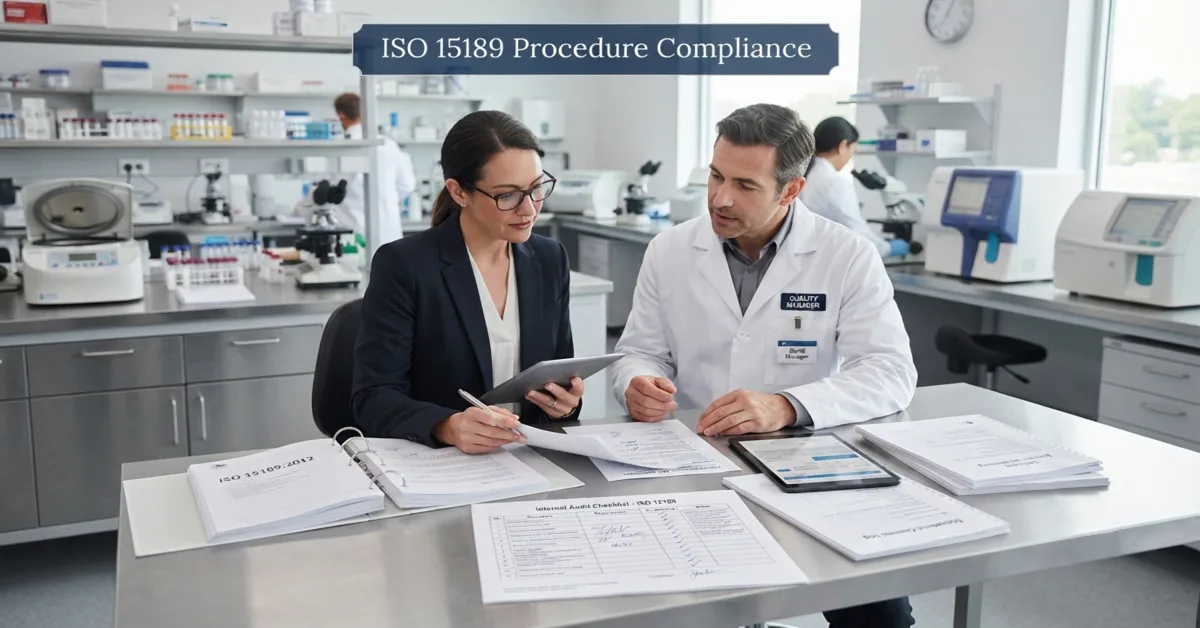
Medical laboratories rely on documented procedures to maintain consistent testing practices, control operational risks, and produce reliable results. However, having written procedures does not automatically mean that a laboratory meets accreditation requirements. Each procedure must reflect applicable requirements, be properly approved, and be effectively implemented in daily operations. Understanding how to verify ISO 15189 procedure compliance helps laboratory managers identify gaps and maintain an effective quality management system.
1. Check Alignment With ISO 15189 Requirements
The first step is to determine whether the procedure addresses the applicable requirements of ISO 15189:2022. Review the relevant clauses and confirm that the documented activities cover the laboratory's actual scope of services.
For example, procedures related to equipment management should explain equipment selection, maintenance, calibration or verification, and performance monitoring, as applicable. Similarly, sample collection and handling procedures should address identification, transportation, acceptance, and rejection criteria.
A procedure should provide clear instructions that support the relevant requirements rather than simply mentioning the standard.
2. Verify Responsibilities and Process Instructions
A compliant procedure should clearly explain who performs each activity, how the activity is conducted, and what records must be maintained. Responsibilities should be assigned to competent personnel, with appropriate authorization and supervision where necessary.
During a laboratory SOP review, check whether instructions are understandable, practical, and consistent with actual working conditions. Vague responsibilities or missing process steps can create inconsistencies and affect testing reliability.
3. Review Document Approval and Version Control
Document control is another important part of procedure compliance verification. Check whether every procedure has a document number, title, revision number, issue date, approval details, and defined review arrangements.
Ensure that authorized personnel approve procedures before implementation and that obsolete versions are removed from points of use or otherwise prevented from unintended use. Employees should have access to the latest approved instructions.
These checks help laboratories meet relevant ISO 15189 documentation requirements and prevent errors caused by outdated information.
4. Compare Written Procedures With Actual Laboratory Practices
One of the most effective ways to assess compliance is to compare documented instructions with activities performed by laboratory personnel.
For example, if a procedure requires two identification checks before sample processing, observe whether staff consistently perform both checks. If equipment maintenance activities are documented, verify whether the required maintenance is completed and recorded.
This comparison helps identify differences between documented processes and actual implementation. A procedure that looks correct on paper but is not followed consistently may indicate a compliance gap.
5. Examine Records and Audit Evidence
Records demonstrate whether documented procedures are being implemented effectively. Review relevant evidence, including equipment maintenance logs, temperature monitoring records, internal quality control results, personnel competency records, and sample handling records.
Understanding how ISO 15189 documents support internal audits helps laboratories maintain reliable audit evidence and verify compliance with documented procedures.
Check whether records are complete, traceable, properly maintained, and available when required. Suitable ISO 15189 audit evidence helps demonstrate that laboratory activities follow approved procedures and produce consistent outcomes.
6. Identify Gaps and Implement Corrective Actions
If a procedure does not meet applicable requirements or is not followed correctly, identify the reason before making changes. Possible issues include unclear instructions, inadequate training, missing records, outdated documents, or ineffective process controls.
Implement appropriate corrective actions, update the procedure where necessary, communicate changes to relevant employees, and verify whether the actions have improved process effectiveness. Periodic reviews and internal audits help maintain continued compliance.
Use Proper Documentation to Support ISO 15189 Compliance
Checking procedure compliance requires more than reviewing written instructions. Laboratories must verify that procedures address applicable requirements, are properly controlled, and are consistently followed in practice.
A well-organized documentation system makes this process easier by providing structured procedures, responsibilities, records, and audit references. Using professionally prepared ISO 15189 Procedure documentation can help medical laboratories establish consistent processes, strengthen document control, and prepare supporting evidence for accreditation assessments. Regular reviews and effective implementation ultimately help maintain a reliable laboratory quality management system.