
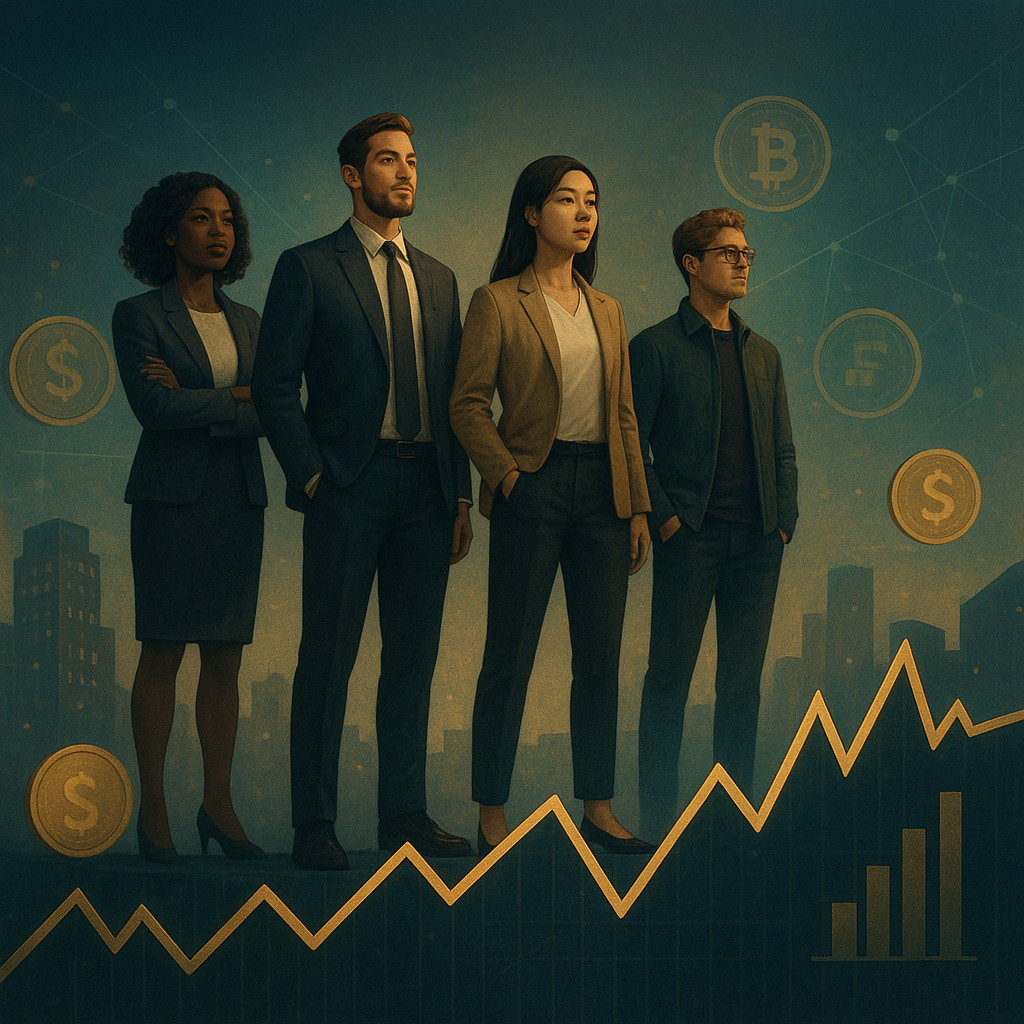
Opening the Window: A New Investing Era Unfolds
In 2026, investors face a financial landscape transformed by technology, geopolitics, and shifting global priorities. Consider this: over the past five years, global assets under management (AUM) have surpassed $120 trillion, yet the distribution of wealth and access to investment opportunities tell a much more nuanced story. The rise of artificial intelligence-driven trading, the increasing influence of environmental, social, and governance (ESG) factors, and the democratization of investing platforms have converged to create a market environment unlike any before. This is not the investing world of decades past, dominated solely by traditional equities and bonds. Instead, it is an ecosystem where data science, sustainability, and new asset classes redefine value and risk.
This evolution is exemplified by how younger generations approach investing: prioritizing impact alongside profit and leveraging technology to navigate complexity. As a senior journalist and financial expert, I have tracked these changes closely, drawing insights from industry leaders, market data, and emerging trends. The challenge for today’s investors is to understand how these forces interplay and how to craft strategies that align with both financial goals and evolving global realities.
"Investing today demands a broader lens—one that blends technology, sustainability, and traditional fundamentals," says Dr. Elena Reyes, Chief Investment Strategist at Global Capital Partners.
From Past to Present: The Journey of Investing Practices
To appreciate where investing stands now, we must trace its trajectory over recent decades. The late 20th century heralded the rise of index funds and passive investing, shifting the balance away from active stock picking. This democratization lowered costs and broadened market participation but also introduced new systemic risks. The 2008 financial crisis exposed vulnerabilities in leverage and opaque financial derivatives, prompting regulatory reforms and a rethink of risk management.
The 2010s and early 2020s witnessed the emergence of algorithmic and high-frequency trading, which transformed market microstructure. Meanwhile, the rise of fintech startups disrupted traditional brokers by offering zero-commission trades and fractional shares, making investing accessible to millions globally. This period also saw the initial integration of ESG metrics as investors increasingly demanded that companies demonstrate social responsibility.
By 2026, these historical layers have culminated in a market that is simultaneously more accessible and more complex. According to data from the Financial Times and industry reports, retail investors now account for nearly 35% of trading volume in major stock exchanges, a significant jump from single digits in the early 2000s. Institutional investors are concurrently embedding AI and sustainability analytics deeply into their process, reflecting a dual focus on performance and purpose.
"The evolution from traditional stock picking to sophisticated data-driven strategies marks a critical inflection point," notes Michael Chen, Head of Quantitative Research at Apex Wealth Management.
Decoding the Market: Key Trends and Data in 2026
Analyzing 2026’s market dynamics requires sifting through multiple layers of data and market signals. One of the most striking trends is the rise of thematic investing, where portfolios are constructed around macro themes such as clean energy, AI innovation, and emerging markets digitization. This contrasts with conventional sector or geography-based allocations.
Statista and industry reports indicate that global sustainable investment assets have now exceeded $45 trillion, accounting for nearly 40% of total AUM worldwide. This rapid growth reflects investors’ increasing demand for transparency on environmental and social impact, alongside traditional financial metrics.
Meanwhile, artificial intelligence has revolutionized portfolio management. AI-driven models now analyze petabytes of data daily, optimizing asset allocation in real-time and identifying subtle market signals imperceptible to human analysts. Yet, this reliance on AI introduces new risks, including model opacity and systemic vulnerabilities in volatile markets.
Another pivotal development is the surge in alternative assets beyond stocks and bonds. Cryptocurrencies, tokenized real estate, and private equity have become mainstream components of diversified portfolios. According to the latest Global Investment Trends Monitor, alternative investments now represent over 25% of institutional portfolios, up from 15% in 2020.
- Top five investment themes in 2026: AI and automation, climate tech, healthcare innovation, emerging market digital infrastructure, and blockchain-based assets.
- Retail investor preferences: 60% prioritize ESG factors, 45% use robo-advisors, 30% invest in digital assets.
These data points highlight a market where technology and sustainability are no longer niche considerations but central pillars of investing philosophy.
2026 Market Realities: What’s Changed and What Remains
The current investing environment reflects several profound shifts, yet some fundamentals remain intact. Volatility continues to be a defining feature, driven by geopolitical tensions, climate-related disruptions, and rapid technological change. However, investors today have access to more sophisticated tools and information than ever before, allowing for nuanced risk management.
One notable change is the regulatory landscape. Governments worldwide have updated frameworks to address digital assets, AI use in finance, and ESG disclosures. The EU’s Sustainable Finance Disclosure Regulation (SFDR) has been adopted by many regions, enhancing transparency but also increasing compliance costs for fund managers.
Additionally, market participants are adapting to a more interconnected global economy. Supply chain shifts, energy transition policies, and demographic changes in emerging markets influence investment decisions. For example, the rise of India and Southeast Asia as tech hubs is reshaping portfolio allocations away from traditional Western markets.
Despite these changes, core investing principles endure: diversification, due diligence, and alignment with long-term objectives. The tension between innovation and tradition creates both challenges and opportunities for investors navigating 2026.
- Increased emphasis on cross-asset diversification combining equities, fixed income, alternatives, and digital assets.
- Growing importance of integrating geopolitical risk analysis into investment decisions.
- Enhanced focus on liquidity management amid market fluctuations.
These adaptations are crucial as the market continues to evolve.
Expert Insights: Navigating Complexity with Confidence
Industry leaders emphasize that successful investing in 2026 requires a multidimensional approach. Dr. Reyes advocates for blending quantitative models with qualitative judgment, cautioning against overreliance on AI alone. Meanwhile, Chen highlights the importance of continuous learning and agility.
Several asset managers have begun incorporating sustainability not just as a screening tool but as a driver of alpha generation. For example, GreenWave Capital reported that its ESG-integrated funds outperformed benchmarks by 2.3% annually over the past three years, demonstrating the financial merits of responsible investing.
Moreover, financial advisors are evolving their roles from mere product selectors to holistic wealth coaches. They increasingly help clients understand complex instruments such as tokenized assets or green bonds and tailor portfolios that reflect personal values and risk tolerance.
"Investors must embrace complexity with discipline and curiosity. The ability to synthesize diverse data and perspectives is now a competitive advantage," says Dr. Reyes.
"Technology is a powerful ally, but human insight remains irreplaceable in interpreting market signals and client needs," Chen adds.
Looking Ahead: The Future of Investing and Key Takeaways
As we peer into the investment horizon beyond 2026, several themes emerge with clarity. The fusion of AI, sustainability, and global macro trends will intensify, reshaping asset allocation and risk frameworks. Investors who adapt by building resilient, flexible portfolios that leverage technology and integrate ESG will be better positioned.
Financial literacy will become even more critical as retail participation rises and investment products grow in complexity. Education and transparency will empower individuals to make informed decisions aligned with their goals.
Furthermore, innovation in financial products—such as decentralized finance (DeFi) protocols and tokenized real assets—will continue expanding the investment universe. Regulatory clarity and robust risk controls will be essential to harness these opportunities safely.
For investors seeking to succeed in this environment, several actionable steps stand out:
- Embrace thematic and impact investing: Align portfolios with emerging global trends and personal values.
- Leverage technology wisely: Use AI and data analytics to enhance decision-making but maintain human oversight.
- Diversify across traditional and alternative assets: Balance growth potential with risk management.
- Stay informed on regulatory developments: Understand implications for compliance and market access.
- Engage with trusted advisors: Collaborate with professionals who offer holistic and personalized guidance.
Investors can also deepen their understanding by consulting expert resources such as Mastering the Market: An In-Depth Guide to Stock Investing Success and exploring the insights in Why Smart Investing Demands More Than Just Picking Stocks. These analyses provide practical frameworks for navigating complexity while optimizing returns.
In sum, investing in 2026 is a multifaceted endeavor requiring a blend of innovation, prudence, and purpose. The market’s evolving nature challenges investors to rethink traditional strategies and embrace new paradigms. Those who do so will not only participate in wealth creation but contribute to shaping a sustainable and inclusive financial future.