When you tour a home, it's easy to focus on the kitchen, the roof and the basement. The trees usually get a quick glance, if that.
But the trees on a property can affect your roof, your driveway and your budget in your first year of ownership.
Here's what Rhode Island home buyers should know before they close.
Why Trees Belong on Your Checklist
Mature trees add shade, privacy and curb appeal. They can also come with work you'll want to know about before you sign.
A dead tree near the house, limbs resting on the roof, or a tree crowding the foundation can mean removal or trimming costs soon after you move in. Knowing that early gives you options.
What a Home Inspection Covers
A standard home inspection is visual and focuses on the house itself. Under common industry standards, inspectors look at vegetation mainly when it is likely to affect the building.
That means a tree hanging over the roof may be noted. A decaying tree at the back of the lot may not be.
If the property has large trees, it's worth having them looked at separately.
What to Look For During a Showing
You don't need to be an expert to spot common warning signs. Walk the yard and look for:
- Bare or dead limbs in a tree that's otherwise leafed out
- Mushrooms or fungus growing at the base of the trunk
- Cracks or splits in the trunk or where large limbs meet
- A strong lean with soil lifted or cracked on one side
- Limbs touching the roof, gutters or siding
- Trees very close to the foundation, driveway or walkways
- Old stumps or sprouts coming up from the ground
Take photos as you go. They make follow-up conversations much easier.
Questions to Ask the Seller
The seller often knows more about the trees than any listing will tell you. Ask:
- Has any tree work been done in the last few years?
- Have any trees or large limbs come down in past storms?
- Are any trees shared with a neighbor along the property line?
- Are there records or estimates from past tree work?
Get a Tree Walkthrough Before You Close
If you see any of these signs, or the property has several large trees, ask a tree company to walk the property during your inspection window.
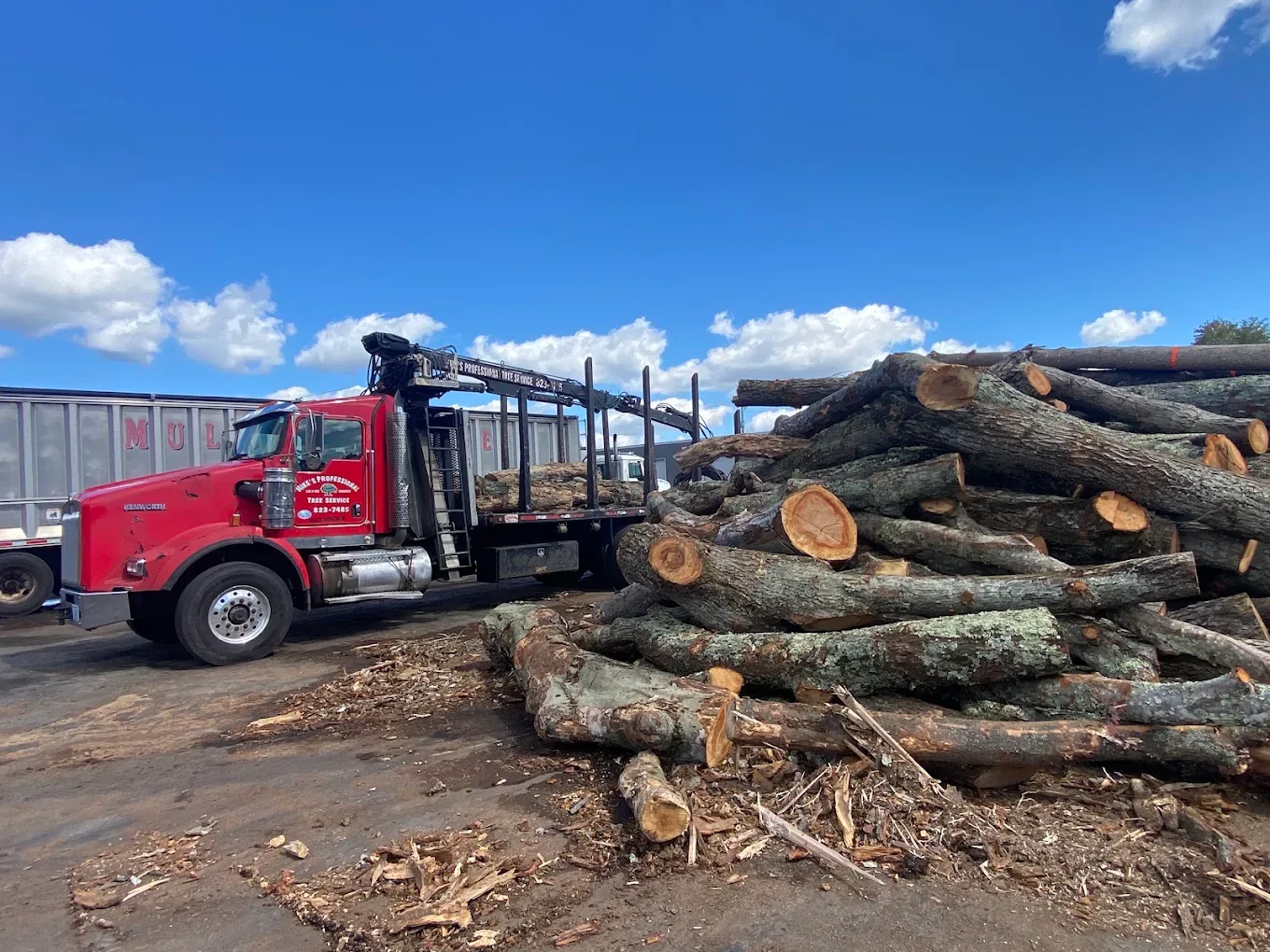
Local companies that have worked on Rhode Island properties for decades, such as Mike's Professional Tree Service, can help identify trees that may need attention now and those that can be monitored.
Ask for a written estimate for any recommended work. A clear number is far more useful than a general concern.
Rhode Island Considerations
Storm Season
Rhode Island sees hurricanes, nor'easters, heavy snow and ice, and summer storms. Weak limbs and declining trees are often the first to fail when the weather turns.
Licensed Arborists
Rhode Island requires all practitioners of arboriculture to be licensed through the Department of Environmental Management. The state also publishes lists of licensed arborists, so you can check before you hire.
Trees Near Roads and Property Lines
Trees near roads, sidewalks, or property lines can sometimes involve additional considerations. If you're concerned about a particular tree, ask your tree professional whether there are any obvious access, ownership, or permitting questions to address before scheduling work. When municipal approval is required, the appropriate town office can provide the current requirements.
Using Tree Findings in Your Negotiation
If the walkthrough turns up work that needs to be done, you have a few options:
- Ask the seller to complete the work before closing
- Request a credit for the estimated cost
- Adjust your offer to reflect the work ahead
A written estimate gives you something concrete to bring to the table. Make sure it spells out whether cleanup and hauling are included.
After You Move In
Once the home is yours, a few habits keep your trees in good shape:
- Walk the property each spring and fall
- Have limbs over the roof and driveway trimmed back before storm season
- Keep notes and photos of any trees you're watching
Have dead or declining trees evaluated before the next major storm, rather than waiting until a tree comes down unexpectedly.
The Bottom Line
Trees are part of what you're buying. A few minutes of looking, and a professional opinion where it's needed, can help you avoid surprise costs in your first year.
Walk the yard as carefully as you walk the house, and you'll close with a clearer picture of what comes with your new home.