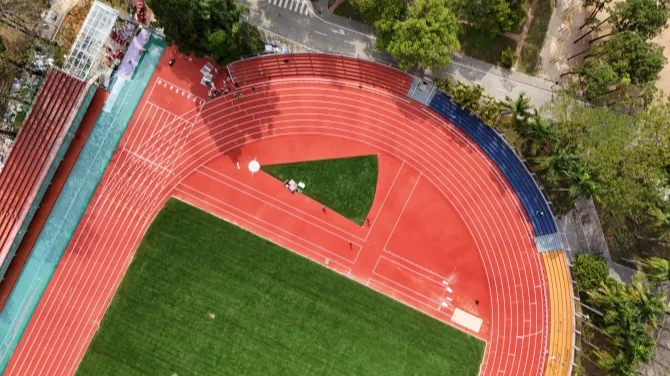
Have you ever watched a sprinter break a world record and thought about the track beneath their feet? Most people don’t. But behind every great performance, there is a surface that was designed, tested, and approved to the highest standards on Earth.
That approval has a name: World Athletics Certification.
A Quick Introduction
World Athletics is the global governing body for track and field. It sets the rules for competitions, manages world records, and — crucially — certifies sports venues and equipment. When a running track earns its certification, it means that surface has passed a battery of the most demanding tests in the sports industry.
This is not a rubber stamp. It is a rigorous, multi-stage process that examines every detail.
What Does the Certification Process Look Like?
Think of it like a home inspection, but far more intense. Engineers and specialists review the venue from blueprint to finish. They check:
- Design and layout — Are the dimensions correct for international competition?
- Construction methods — Was the facility built with precision and care?
- Materials — Do the surface and sub-layers meet global quality benchmarks?
- On-site performance — Does the track behave the way it should under real-world conditions?
They also measure things most of us would never think about: surface flatness, elasticity, durability, slip resistance, and even how the surface responds to different weather conditions. If any single element fails to meet the standard, certification is denied until the problem is corrected.
Why It Matters for Athletes
For athletes, the benefits come down to two words: safety and fairness.
A certified track absorbs impact properly. It has the right amount of grip. This reduces the risk of slips, falls, and joint injuries. Over the course of a career — thousands of training sessions and hundreds of races — these details add up in a big way.
Fairness is equally important. When competition happens on certified ground, every athlete faces the same conditions. No one gains an edge because of a faster surface or loses time because of a bumpy lane. Records set on certified tracks are trusted worldwide. That trust is the foundation of the sport.
Why It Matters for Venue Owners
If you run or invest in a sports facility, certification is one of the smartest moves you can make. Here’s why:
Visibility. Certified venues are listed on World Athletics’ official recommendations. International event organizers use that list when picking competition sites.
Revenue. Certification opens the door to hosting major meets, national championships, and international qualifiers. More events mean more bookings and more income.
Community impact. Big sporting events bring visitors, media coverage, and tourism money. Cities with certified venues often see a rise in hotel bookings, local spending, and civic pride.
Lower long-term costs. Certified venues are built with high-quality materials. They last longer and need less frequent repair, saving money over time.
The Bigger Picture
World Athletics Certification is more than a technical achievement. It is a statement of values — that safety, fairness, and quality are non-negotiable.
For athletes, it means training and competing on surfaces worthy of their talent. For venue owners, it means global recognition and sustainable returns. For fans, it means the records they celebrate are earned on a truly level field.
The next time you watch a race, take a moment to think about what’s underfoot. The surface matters more than you might imagine.
If you found this useful, follow for more deep dives into the world of sports infrastructure.