KMnO₄ is one of the most widely used inorganic chemicals across water treatment, healthcare, laboratories, agriculture, and industrial processing. If you've searched for kmno4 chemical name and uses, you're likely looking for more than just its scientific name—you also want to understand why this compound is so valuable. Known for its strong oxidizing properties and deep purple colour, KMnO₄ plays an important role in removing contaminants, disinfecting surfaces, treating water, and supporting various chemical processes.
This guide explains the chemical name of KMnO₄, its properties, applications, benefits, safe handling practices, and frequently asked questions to help you understand where and how this compound is used.
What Is the Chemical Name of KMnO₄?
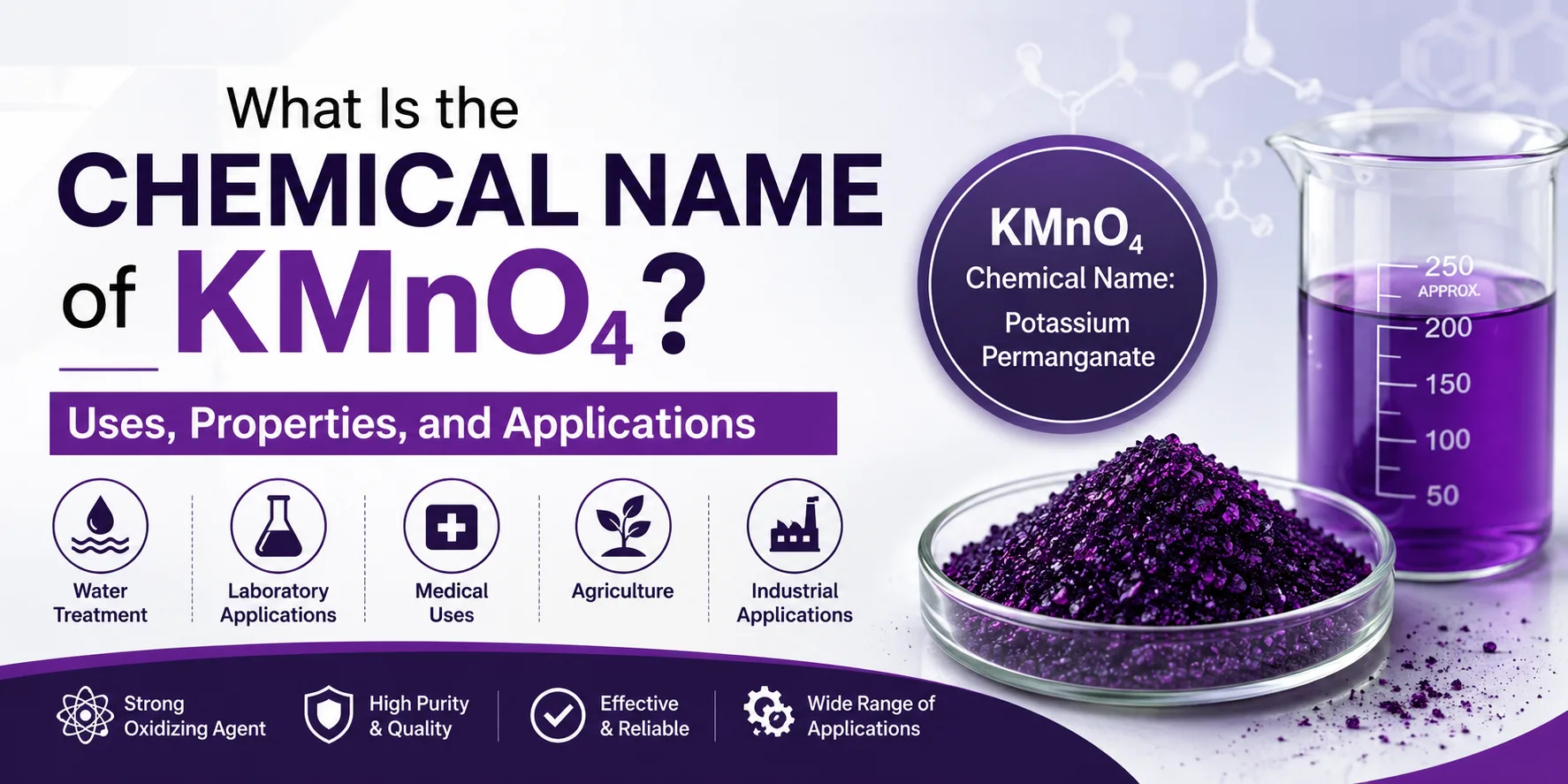
The chemical name of KMnO₄ is Potassium Permanganate.
It is an inorganic compound made up of:
- K = Potassium
- Mn = Manganese
- O₄ = Four oxygen atoms
Its molecular formula is KMnO₄, and it appears as dark purple or almost black crystalline granules. When dissolved in water, it forms a bright purple solution.
Potassium permanganate is classified as a powerful oxidizing agent, meaning it reacts with impurities by transferring oxygen during chemical reactions. This characteristic makes it useful across numerous industries.
Basic Information About KMnO₄
PropertyDetailsChemical NamePotassium PermanganateChemical FormulaKMnO₄Molecular Weight158.03 g/molAppearanceDark purple crystalsColour in WaterBright purpleOdourOdourlessSolubilityHighly soluble in waterNatureStrong oxidizing agent
These physical and chemical characteristics make potassium permanganate suitable for both industrial and laboratory applications.
Why Is KMnO₄ Used?
The popularity of potassium permanganate comes from its excellent oxidation capability.
It can effectively oxidize:
- Iron
- Manganese
- Hydrogen sulfide
- Organic impurities
- Certain microorganisms
- Odour-causing compounds
Instead of simply masking contaminants, KMnO₄ chemically changes them into forms that are easier to remove through filtration or other treatment methods.
Chemical Properties of KMnO₄
Understanding its chemical behaviour explains why KMnO₄ is used in so many applications.
1. Powerful Oxidizing Agent
Potassium permanganate readily accepts electrons during reactions, making it highly effective for oxidation processes.
2. Stable Under Proper Storage
When stored in cool, dry conditions away from organic materials and reducing agents, KMnO₄ remains stable for long periods.
3. Water Solubility
It dissolves easily in water, allowing accurate preparation of solutions for industrial, laboratory, and medical use.
4. Distinct Purple Colour
Its characteristic purple colour helps operators visually monitor dosage during many treatment processes.
Physical Properties of Potassium Permanganate
Some important physical characteristics include:
- Dark purple crystalline appearance
- Odourless solid
- Easily dissolves in water
- Non-flammable
- High purity grades available for industrial applications
- Strong staining ability
The purple colour fades as the oxidizing reaction is completed, providing a simple visual indication during some applications.
Major Uses of KMnO₄
Potassium permanganate has applications in numerous industries.
1. Water Treatment
Water treatment is one of the largest applications of potassium permanganate.
It helps remove:
- Iron
- Manganese
- Hydrogen sulfide
- Taste and odour compounds
- Organic contaminants
Municipal water plants and industrial facilities frequently use KMnO₄ before filtration to improve overall water quality.
Benefits
- Cleaner water
- Better filtration efficiency
- Reduced unpleasant odour
- Improved water clarity
2. Drinking Water Purification
When used in controlled doses by trained professionals, potassium permanganate assists in drinking water treatment by oxidizing dissolved contaminants before filtration.
Proper dosage is essential because excessive amounts should not remain in treated water.
3. Wastewater Treatment
Industrial wastewater often contains contaminants that require oxidation before discharge or reuse.
KMnO₄ helps treat:
- Sulphides
- Organic compounds
- Iron deposits
- Manganese contamination
This supports improved treatment efficiency and helps facilities meet water quality requirements.
4. Groundwater Remediation
Environmental engineers use potassium permanganate for in-situ chemical oxidation.
It helps break down certain organic pollutants present in contaminated groundwater, making remediation projects more effective.
5. Medical Applications
Potassium permanganate has long been used in healthcare as a diluted antiseptic solution.
Healthcare professionals may recommend properly diluted solutions for:
- Minor skin infections
- Certain fungal infections
- Weeping eczema
- Cleaning affected skin areas
Medical use should always follow professional guidance because concentrated solutions may cause irritation.
6. Laboratory Applications
Laboratories frequently use KMnO₄ for:
- Oxidation reactions
- Chemical analysis
- Redox titrations
- Educational experiments
Its predictable oxidation behaviour makes it valuable in analytical chemistry.
7. Textile Industry
Textile manufacturers use potassium permanganate during various processing operations, including:
- Fabric treatment
- Bleaching processes
- Denim finishing
- Dye-related applications
8. Agriculture
Agriculture benefits from potassium permanganate in several controlled applications.
It may be used for:
- Equipment sanitation
- Seed treatment in specific cases
- Water system cleaning
- Disease management in horticultural settings
Applications should always follow agricultural recommendations.
9. Aquaculture
Fish farms sometimes use potassium permanganate under expert supervision to improve water quality and help manage certain external parasites and organic waste.
Correct dosage is essential to avoid harming aquatic life.
10. Food Processing Equipment Cleaning
Although potassium permanganate is not a food ingredient, it may be used in some industrial sanitation processes for cleaning equipment, subject to applicable regulations and proper rinsing procedures.
Advantages of Using Potassium Permanganate
Many industries choose KMnO₄ because of its effectiveness. Some of its major advantages include:
- High Oxidation Efficiency: Reacts quickly with iron, manganese, hydrogen sulphde, and other contaminants.
- Improves Water Quality: Enhances water clarity, removes unpleasant odours, and supports better treatment performance.
- Versatile Applications: Suitable for water treatment, laboratories, healthcare, agriculture, textile processing, and various industrial processes.
- Easy Solution Preparation: Dissolves readily in water, making it easy to prepare solutions with accurate concentrations.
- Reliable Performance: Delivers consistent results when used according to recommended guidelines.
- Supports Efficient Filtration: Converts dissolved impurities into particles that can be removed more easily through filtration.
- Cost-Effective for Large-Scale Use: Offers effective contaminant removal with controlled dosing in industrial and municipal applications.
- Long Shelf Life: Remains stable when stored properly in a cool, dry place away from incompatible materials.
Safety Precautions While Handling KMnO₄
Although potassium permanganate is highly useful, safe handling is essential.
Wear Protective Equipment
Use:
- Safety gloves
- Goggles
- Protective clothing
Avoid Direct Contact
Concentrated material may irritate the skin and eyes.
Store Properly
Keep containers:
- Dry
- Cool
- Tightly sealed
- Away from combustible materials
- Away from reducing agents
Prevent Contamination
Do not mix with incompatible chemicals without proper knowledge.
Follow Recommended Dosages
Using excessive amounts can affect treatment performance and increase operational costs.
How Should KMnO₄ Be Stored?
Proper storage extends product quality.
Recommended practices include:
- Store in original sealed containers.
- Keep away from moisture.
- Avoid direct sunlight.
- Protect from heat.
- Store separately from flammable or organic materials.
- Maintain adequate ventilation.
Industries That Commonly Use Potassium Permanganate
Many industries rely on KMnO₄, including:
- Water treatment plants
- Chemical manufacturing
- Pharmaceutical sector
- Textile processing
- Mining operations
- Agriculture
- Aquaculture
- Environmental remediation
- Research laboratories
- Municipal utilities
Its versatility makes it one of the most widely recognized oxidizing chemicals in industrial use.
How Does KMnO₄ Work?
Potassium permanganate works through oxidation.
During this process:
- KMnO₄ contacts contaminants.
- Oxygen is transferred during the reaction.
- Impurities are converted into less soluble forms.
- Filters remove the resulting particles.
- Cleaner water or processed material is obtained.
This oxidation mechanism explains its effectiveness across many industries.
Common Mistakes to Avoid
Many performance issues result from improper handling rather than product quality.
Avoid these mistakes:
- Incorrect dosing
- Poor storage conditions
- Mixing with incompatible chemicals
- Using contaminated containers
- Ignoring safety guidelines
- Purchasing low-quality material without quality verification
Following manufacturer recommendations helps achieve better results.
Conclusion
Understanding kmno4 chemical name and uses helps you appreciate why potassium permanganate remains an essential chemical across multiple industries. Its strong oxidizing properties make it highly effective for water treatment, wastewater management, laboratory analysis, healthcare applications, agriculture, textile processing, and environmental remediation. When handled correctly and used according to recommended guidelines, KMnO₄ delivers reliable and consistent performance. If you're looking for high-purity products backed by quality standards and dependable supply, choosing a trusted Potassium Permanganate Manufacturer in India can help ensure optimal results for your industrial or commercial applications.