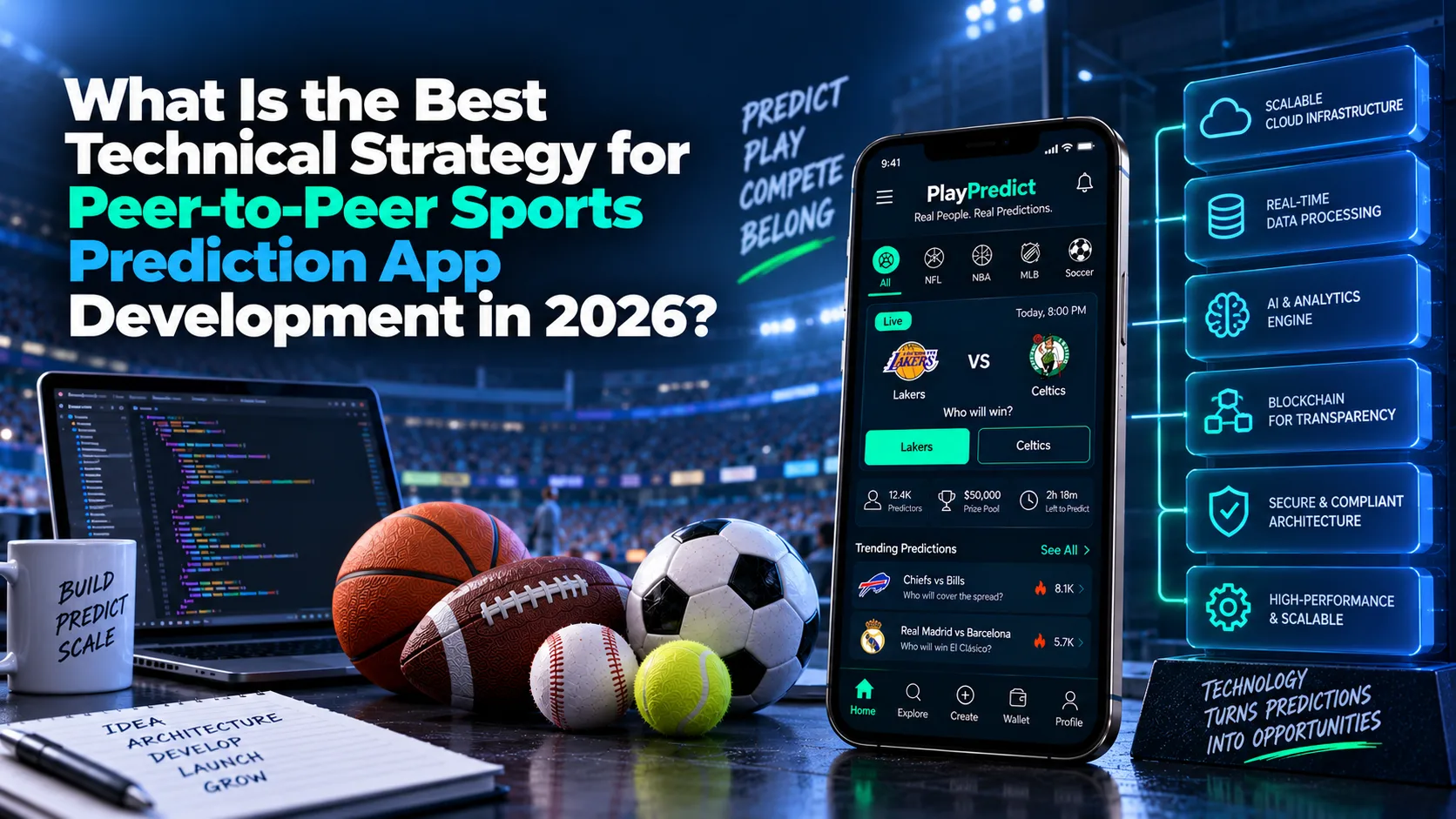
Sports gaming and quantitative event forecasting are undergoing an architectural shift away from traditional bookmakers toward decentralized, exchange-driven markets. Conventional retail sportsbooks rely on an asymmetrical counterparty framework: the house sets fixed odds, carries direct balance-sheet liability against public wins, and extracts an aggressive 5% to 10% operating margin ("the vig") on every wager. In contrast, modern prediction marketplaces borrow their mechanics from high-frequency financial derivatives exchanges, allowing participants to trade opposing outcome contracts directly with one another at market-clearing prices.
In an exchange model, users trade binary outcome contracts (such as predicting point spreads, game totals, or statistical milestones). The operator maintains market neutrality, acting as a technical facilitator that locks collateral into automated escrow, matches bids and asks via continuous order books, and collects a steady 1% to 3% transaction fee on net winnings or trading turnover. This operational design insulates the platform from catastrophic payouts while providing users with narrower spreads, dynamic position hedging, and transparent price discovery.
However, building an exchange-grade product involves engineering challenges that do not exist in standard fantasy or score-tracking applications. Executing scalable peer-to-peer sports prediction app development requires a high-concurrency order-matching engine, sub-second sports telemetry processing, automated escrow ledgers, and dynamic geolocation compliance to satisfy strict regulatory requirements.
How Does a Peer-to-Peer Prediction Exchange Differ from a Conventional Sportsbook?
The underlying business and operational model of a peer-to-peer prediction marketplace represents a complete departure from traditional sportsbooks:
- Zero Operator Counterparty Risk: Conventional bookmakers assume financial exposure on every match, creating solvency risks during major underdog upsets. In a peer-to-peer exchange, the platform never takes a directional stake; opposing participants fully fund both sides of every matched contract before execution.
- Continuous In-Play Position Trading: Standard sportsbooks lock user capital until a match concludes. Prediction exchanges treat game outcomes like liquid financial assets. Participants can buy, hedge, or sell out of their positions as in-game probabilities swing, driving high-frequency trading volume and extended session durations.
- Turnover-Based Monetization: Centralized sportsbooks profit when players lose. Prediction platforms monetize gross trading activity directly, charging modest commissions on winning settlements or levying micro maker-taker fees. This aligns platform incentives with user trading activity rather than player losses.
- Continuous Price Discovery: Rather than consuming static odds from external data feeds, an exchange maintains live Central Limit Order Books (CLOBs) for every market, enabling true market-driven price discovery.
What Core Architecture Layers Power a High-Frequency Prediction Exchange?
A production-grade prediction exchange requires four synchronized architectural modules:
1. The High-Throughput Order-Matching Engine
The core matching engine manages continuous Central Limit Order Books, matching bids and asks using price-time priority (FIFO) execution. Built with high-performance, compiled languages like Go, Rust, or C++, the engine must process thousands of order placements, cancellations, and partial fills per second with sub-millisecond execution times during high-traffic events like the Super Bowl or Champions League finals.
2. Algorithmic Liquidity and AMM Pools
Niche sports and minor proposition markets often struggle with initial order-book depth. To prevent illiquid markets from causing user drop-off, platforms deploy Automated Market Maker (AMM) pools alongside order books, utilizing mathematical models like logarithmic market scoring rules (LMSR). These automated pools ensure continuous liquidity, allowing users to open and close positions instantly, even before natural market depth develops.
3. Real-Time Telemetry and Event Settlement
Accurate in-play contract trading requires low-latency sports data ingestion from certified telemetry providers like Sportradar, Genius Sports, or Stats Perform. The platform processes in-game scoring, referee reviews, and clock stoppages over persistent WebSocket connections, enforcing automated circuit breakers that pause matching the millisecond a game-critical event occurs.
4. Escrow and Double-Entry Settlement Ledgers
When opposing orders match, participant funds must be locked in isolated escrow accounts. This is accomplished using double-entry relational database ledgers with distributed Redis locking for fiat platforms, or non-custodial smart contracts on layer-2 blockchains (such as Polygon or Arbitrum) for decentralized Web3 architectures. Once official game outcomes are certified, settlements disburse automatically.
Top 10 Software Providers and Development Companies in 2026
Selecting an engineering partner requires evaluating verified domain experience in financial exchange logic, sports telemetry pipelines, and regulatory compliance:
1. Idea Usher
Best suited for: Bespoke full-stack engineering, proprietary order-matching backends, and custom micro-transaction ledgers.
Idea Usher is a custom software product engineering firm that designs and builds custom web and mobile platforms across fintech, media streaming, and sports tech. Rather than licensing rigid white-label iGaming packages, the firm specializes in bespoke systems engineering for clients requiring proprietary order-matching backends, customized prediction mechanics, and tailored user journeys.
Their engineering teams build scalable microservices architectures using Go, Node.js, and PostgreSQL, combining distributed Redis locking with real-time WebSocket communication to ensure sub-millisecond trade execution. Idea Usher develops native and cross-platform mobile clients, integrates certified sports data feeds, and builds automated escrow ledgers for both fiat and digital asset payment rails. Every platform is delivered with complete source code handover, allowing operators to scale without recurring vendor licensing fees.
- Core Capabilities: Bespoke order-matching engines, real-time WebSocket data streaming, custom escrow ledgers, and responsive iOS and Android mobile interfaces.
2. Intellivon
Best suited for: AI-driven odds analytics, automated market-making algorithms, and predictive liquidity rebalancing.
Intellivon operates at the intersection of enterprise artificial intelligence and financial software engineering, developing intelligent data layers and automated algorithmic market-making services for prediction platforms. In sports prediction markets where liquidity fragmentation can stall trading volume, Intellivon builds proprietary algorithmic trading bots that provide foundational liquidity across major sporting events.
Their developers build machine learning pipelines that analyze historical team data, real-time injury reports, and weather telemetry to model live game probabilities. Intellivon also engineers automated risk management consoles that monitor exchange-wide exposure, identifying anomalous trading patterns and preventing manipulative front-running during live, in-play prediction windows.
- Core Capabilities: Algorithmic market-making bots, automated liquidity balancing, predictive odds modeling, and real-time fraud detection engines.
3. BetConstruct
Best suited for: Comprehensive turnkey betting exchange engines, global iGaming compliance, and high-volume sports trading.
BetConstruct is an established global technology provider for the gaming and sports wagering industry. The company offers a dedicated betting exchange product that allows operators to let their players back and lay outcomes directly against each other. Their platform handles hundreds of thousands of live events annually, supported by automated risk-monitoring tools, custom margin configurations, and integrated Player Account Management (PAM).
- Core Capabilities: Turnkey betting exchange modules, global regulatory licensing, multi-channel deployment (web, iOS, Android), and native live match tracking.
4. GammaStack
Best suited for: Custom P2P sports betting software, GLI-33-certified platforms, and source-code delivery.
GammaStack is an iGaming and sports software development company with over a decade of experience engineering custom sports wagering software. The company builds bespoke peer-to-peer betting exchanges where users create their own odds and trade contracts directly. GammaStack emphasizes compliance readiness, holding GLI-33 certifications and delivering platforms with full source code transfer and zero ongoing revenue-share obligations.
- Core Capabilities: Independent P2P betting exchanges, GLI-33 regulatory compliance, custom digital wallet development, and full source code handover.
5. Vinfotech
Best suited for: Dedicated sports prediction market software, event-contract trading, and fan engagement platforms.
Vinfotech is a specialized software engineering firm focused on prediction market platforms, fantasy sports software, and interactive fan engagement hubs. The company builds white-label and custom prediction market software for gaming operators, sports leagues, and fintech brokers. Their sports prediction engine automatically generates, prices, and resolves event contracts directly from real-time match data feeds, enabling operators to run continuous trading markets across major sports.
- Core Capabilities: Event-contract trading engines, automated market generation from live telemetry, custom UX for retail traders, and complete platform source code ownership.
6. OpenBet
Best suited for: Scaled enterprise sports betting technology, high-concurrency event processing, and regulatory compliance.
OpenBet is a foundational technology partner for some of the world's largest sports betting and gaming brands. The company specializes in processing enormous volumes of concurrent transactions during peak global sporting events like the Super Bowl or the Grand National. OpenBet delivers an enterprise-grade platform with modular components for betting engines, player account management, and content aggregation, backed by strict regulatory compliance across multiple continents.
- Core Capabilities: Massive transaction concurrency handling, enterprise-grade scalability, robust regulatory compliance, and modular betting tech stacks.
7. Kambi
Best suited for: Premium enterprise turnkey sportsbook systems, automated risk management, and algorithmic pricing.
Kambi is an established, pure-play B2B sports betting supplier that powers leading global consumer brands. The company provides a complete turnkey technical and operational framework, including high-speed odds compilers, sophisticated risk management, and automated trading tools. For large operators seeking an enterprise-grade platform with managed odds and strict compliance in highly regulated markets, Kambi provides extensive technical stability.
- Core Capabilities: Algorithmic odds compiling, managed risk and trading operations, high-concurrency server infrastructure, and strict regulatory adherence.
8. Altenar
Best suited for: Regulated Tier-1 and Tier-2 B2B sportsbook infrastructure, managed trading services, and global compliance.
Altenar is a leading B2B sportsbook technology provider powering operators across more than 30 regulated global markets. Operating under ISO 27001 data security standards, Altenar provides fully managed and turnkey sportsbook modules with flexible front-end integration via APIs. While primarily focused on traditional sportsbooks, their infrastructure handles high-concurrency live data feeds, complex risk management, and integrated player account management across major international leagues.
- Core Capabilities: Enterprise B2B sportsbook architecture, official data feed integrations, managed trading services, and international regulatory compliance.
9. EveryMatrix
Best suited for: Modular sports data architecture, OddsMatrix API integration, and enterprise player account management.
EveryMatrix is an enterprise B2B iGaming software provider delivering modular solutions for global operators. Through its OddsMatrix division, the company provides large-scale sports data, live event feeds, and comprehensive betting APIs covering hundreds of thousands of monthly events. Their modular platform allows operators to decouple sports data, payment orchestration, and account management, providing the backend scale required to support high-volume prediction products.
- Core Capabilities: Modular sports data architecture, OddsMatrix API integration, enterprise player account management, and multi-jurisdiction compliance.
10. Digitain
Best suited for: High-throughput sports betting engines, multi-jurisdiction regulatory tools, and API-first modularity.
Digitain is an enterprise iGaming platform provider delivering sportsbook, casino, and exchange-style solutions to international operators. Their platform architecture features high-speed event processing, extensive multilingual coverage, and modular APIs that allow operators to embed sports prediction modules into existing mobile or web applications. Digitain supports a wide range of global payment processors and provides continuous risk management tools.
- Core Capabilities: Modular API-first sportsbook and exchange tools, high-concurrency event handling, localized payment gateways, and institutional regulatory compliance.
What Are the Typical Cost Tiers and Development Timelines?
The capital investment and timeline required to design, develop, and launch a custom peer-to-peer sports prediction exchange depend on technical scope and regulatory requirements:
- Focused Single-Sport MVP ($45,000 to $80,000 | 12 to 16 Weeks): Covers cross-platform mobile apps (iOS and Android), a centralized order-matching engine for pre-match trading across one or two sports, standard fiat payment gateway integration, basic KYC compliance, and an administrative management console.
- Multi-Sport In-Play Exchange ($85,000 to $160,000 | 18 to 26 Weeks): Adds in-play dynamic order matching, Automated Market Maker (AMM) liquidity pools, multi-provider sports data ingestion, cash-out mechanics, automated geofencing verification, and real-time analytics.
- Enterprise Global Prediction Platform ($170,000 to $250,000+ | 28 to 40+ Weeks): Features a high-frequency matching engine handling 10,000+ transactions per second, multi-currency fiat and crypto wallet support, smart contract escrow settlement, AI-assisted anomaly detection, and automated regulatory reporting across multiple jurisdictions.
What Are the Most Critical Technical Pitfalls in Prediction Exchange Engineering?
Engineering teams building peer-to-peer prediction exchanges must actively mitigate several operational failure modes:
In-Play Execution Latency and Courtsiding: In live sports, game situations change in fractions of a second. If an order-matching engine experiences even a 500-millisecond execution delay, participants with low-latency stadium feeds can exploit market delays to execute guaranteed winning orders. Platforms must implement sub-second order suspensions and automated delays on live order submissions.
- The Cold-Start Liquidity Deficit: A prediction exchange cannot function without opposing participants. If initial users encounter empty order books with wide spreads, they will abandon the app. Modern platforms resolve this by seeding Automated Market Maker (AMM) liquidity pools or partnering with institutional market makers to ensure trade execution from day one.
- Concurrency Race Conditions in Wallet Balances: High-frequency trading creates severe database concurrency. If user accounts are not isolated with distributed in-memory locks (such as Redis locks), rapid clicking or multi-device logins can cause balance duplications or uncollateralized trades. All ledger transactions must be atomic and ACID-compliant.
- Regulatory Classification Challenges: Legal requirements for sports prediction platforms differ significantly across jurisdictions. In some regions, prediction exchanges fall under sports betting licensing; in others, they are regulated as financial commodity event contracts (such as CFTC-regulated exchanges in the United States). The software architecture must support modular compliance configurations to adapt to jurisdictional rules dynamically.
Frequently Asked Questions
What is the primary difference between a prediction exchange and a traditional sportsbook?
A traditional sportsbook sets the lines and takes on direct counterparty risk, profiting when users lose and building an asymmetric margin into the odds. A prediction exchange operates as a neutral marketplace where participants trade outcome contracts directly with other participants, and the platform earns a transparent commission on trading volume or net winning payouts.
How do peer-to-peer platforms solve the cold-start liquidity problem in smaller markets?
Platforms solve early liquidity shortages by implementing Automated Market Maker (AMM) mathematical pricing algorithms or integrating programmatic liquidity providers via APIs. These mechanisms ensure that participants can always enter or exit prediction contracts instantly at fair market prices, even when natural counterparties are not immediately available.
What sports data API providers are best for real-time prediction platforms?
The industry standard providers for low-latency, official sports telemetry are Sportradar, Stats Perform, and Genius Sports. For decentralized Web3 applications, Chainlink oracles provide verified real-world sports outcomes directly to on-chain smart contracts for automated payout execution.
How do P2P sports prediction apps generate revenue without acting as the bookmaker?
P2P prediction platforms monetize by charging a flat 1% to 3% commission on winning payouts, levying micro-transaction fees on maker/taker trading volume, or offering premium analytical subscriptions and advanced trading tools to active participants.
Peer-to-peer sports prediction platforms represent a compelling model for interactive sports gaming and quantitative event trading. By replacing the centralized house edge with transparent, user-to-user marketplaces, prediction exchanges deliver higher economic efficiency to sports participants and a resilient, risk-insulated operational model to platform operators. Engaging an experienced software engineering partner ensures that your platform launches with the sub-millisecond execution speeds, automated escrow safeguards, and regulatory compliance required to scale in the global market.