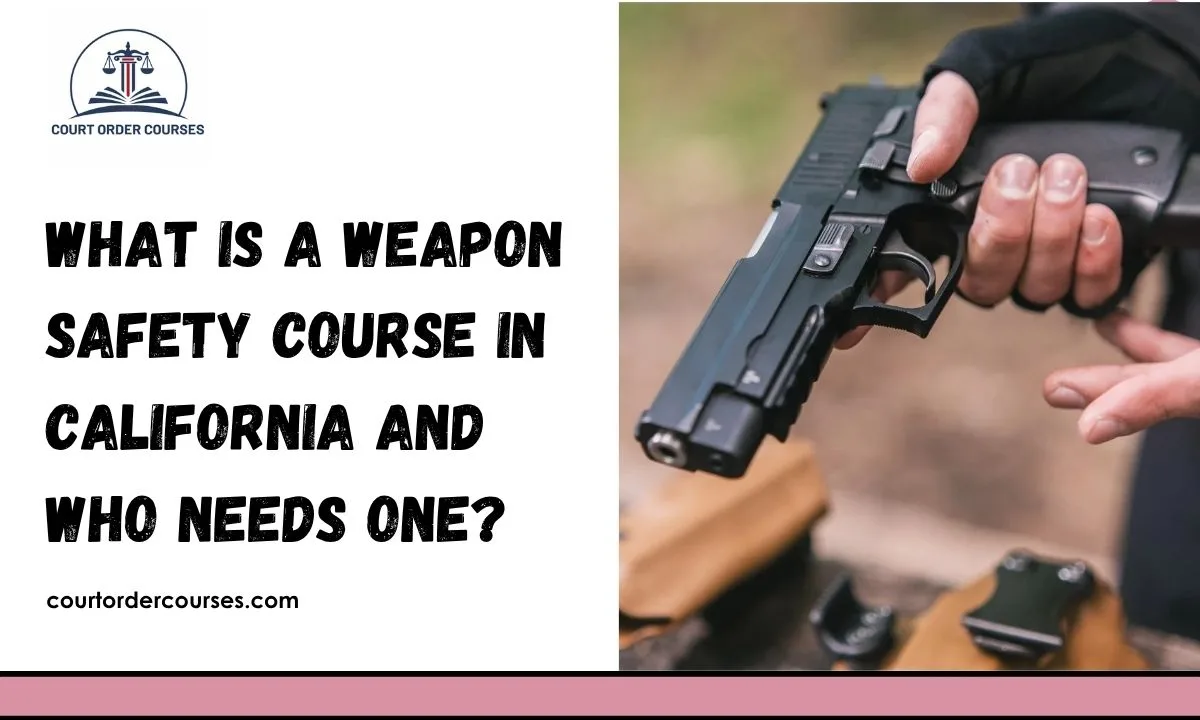
A Weapon Safety Course in California is an educational class on safe handling, storage, and legal responsibilities for firearms and other weapons. Courts, probation offices, or other referring bodies may require it, and acceptance depends on the written order, required hours, and format. Always confirm details before enrolling.
What Are the Key Takeaways Before You Enroll?
- Your court order, probation terms, or referral letter decides the required hours and format, not the course provider.
- California law gives judges wide discretion over probation conditions, so requirements differ from case to case.
- No statute or county code that could be verified names a "weapon safety course" by title.
- A completion certificate is proof of coursework only. It does not restore rights or authorize a firearm purchase.
- Ask the court clerk, your attorney, or your probation officer to confirm acceptance before you pay.
What Is a Weapon Safety Course in California?
A Weapon Safety Course in California is a structured educational program that teaches responsible handling, storage, and legal awareness around weapons. The topics usually include firearm safety rules, ammunition basics, secure storage, conflict de-escalation, and the responsibilities that come with owning or being near a weapon.
People take these classes for different reasons. Some are required to by a judge or a probation department, while others simply want to build safer habits at home.
Why Would a Court Order a Weapon Safety Course?
Judges often look for ways to address the behavior behind a case while also protecting the public. When a case involves a weapon, an education requirement can be one of the conditions placed on a defendant, a probationer, or someone in a diversion program.
The course is generally meant to build knowledge and accountability. It is not a punishment on its own, and it does not replace fines, supervision, or other terms the court may impose in the same case.
What Does California Law Say About Probation Conditions?
California Penal Code section 1203.1 gives sentencing courts authority to set conditions of probation. Subdivision (j) allows other reasonable conditions that the court finds fitting and proper for justice, for making amends to society, and for the reformation and rehabilitation of the probationer. You can read the statute on the official California Legislature website.
That broad language is why education classes can appear as conditions even when a statute does not name them.
Is There a County Law That Requires a Weapon Safety Course?
California superior courts operate county by county, and local judges, probation departments, and diversion programs may use their own forms and preferences. However, no county code or state statute could be verified that requires a course titled "weapon safety course" for a specific offense.
For that reason, treat this class as a court-ordered or referral-based requirement rather than a universal legal rule. If your paperwork names a course, the paperwork controls.
What Is the Difference Between a Legal Requirement and a Court Recommendation?
A legal requirement comes from a statute, regulation, or a binding court order. A recommendation comes from a lawyer, a probation officer, or a program that suggests the class but does not impose it.
This distinction matters because only the first can create consequences if you skip it. A written order with a deadline should be treated seriously, while a suggestion should still be confirmed with the person who made it so you know whether it counts toward your case.
Who Typically Takes a Weapon Safety Course?
The most common group is people who received a course requirement through a court, probation office, or diversion program. Others include first-time firearm owners, hunters, parents with weapons at home, security personnel needing a refresher, and concealed carry permit holders who want to review responsible use.
Because the audience is mixed, a good class explains ideas in plain language and does not assume any prior experience with firearms or other weapons.
What Topics Are Covered in a Weapon Safety Course Online?
The online Weapon Safety Course in California from Online Course for Court covers firearms, knives, blunt objects, defensive devices, and other personal or improvised weapons. Firearm lessons address common types and parts, primary safety rules, ammunition, handling, range conduct, secure storage, and maintenance precautions.
Later lessons cover carrying and storing edged tools, risk control for pepper spray and stun devices, situational awareness, conflict de-escalation, avoiding unnecessary force, accident prevention, and emergency response.
What Are the Core Rules of Weapon Safety?
Most safety education is built around a few habits that apply in every situation. Treat every weapon as if it is loaded. Keep your finger off the trigger until you are ready to shoot. Never point a weapon at anything you do not intend to shoot. Know your target and what is behind it.
Safe storage rounds out these habits. The California Department of Justice publishes practical guidance on its firearm safety tips page, which is a good companion to any class.
Can You Take a Weapon Safety Course Online?
Yes, many people complete this type of class online. A self-paced format lets you study from home and fit lessons around work, family, or supervision appointments.
One limit is worth knowing. Online instruction cannot evaluate physical handling or shooting proficiency. If your order calls for live-fire training or an in-person demonstration, an online class on its own may not meet it, so read the language in your paperwork closely.
How Many Hours Should Your Weapon Safety Course Be?
The required hours come from your court order or referral, and they can vary widely. The Weapon Safety Course in California is offered in 4, 6, 8, 12, and 16 hour versions so students can match the number stated in their paperwork.
Longer versions add material on knives and edged weapons, blunt and other personal weapons, use-of-force concepts, accident prevention, and emergency response. If your paperwork lists no hours, ask the requesting authority before you purchase.
Will a Court Accept an Online Weapon Safety Course?
Acceptance depends on the court, the judge, and the exact words of your order. Factors that commonly matter include the number of hours, whether an online format is permitted, the qualifications of the provider, the deadline, and who should receive the certificate.
No provider can promise that a certificate will automatically satisfy an order. Completing a course is one step, and the final decision about whether it counts rests with the court or agency that requested it.
How Do You Confirm Acceptance Before Paying?
A short confirmation now can prevent a costly repeat later. Before you enroll, contact the court clerk, your defense attorney, your probation officer, or the diversion program coordinator and ask a few specific questions.
Ask whether online courses are permitted, how many hours are required, whether a particular provider is needed, how the certificate must be submitted, and what the deadline is. Write down the answers, along with the date and the name of the person you spoke with.
What Are the Steps to Complete a Court-Required Weapon Safety Course?
- Read your court order or referral letter and note the hours, deadline, and any format limits.
- Contact the court clerk, attorney, or probation officer if anything is unclear.
- Choose the course length that matches the stated hours.
- Enroll and complete the lessons in either the video or text format.
- Download your certificate of completion when you finish.
- Submit it exactly as the requesting authority directs, then keep a copy and proof of delivery.
What Is the Difference Between Video and Text Formats?
Both formats present the same material, so the choice is about how you learn best. Text lessons suit people who like to read at their own pace and revisit sections. Video lessons suit visual and auditory learners who prefer demonstrations and narration.
Either way, you can study when it suits you, which helps when you are juggling a job, school, or court dates and need to finish before a deadline.
What Happens After You Finish the Course?
When you complete the lessons, you receive a certificate of completion that you can download. Submit it to the court, probation office, attorney, or program named in your instructions, following their preferred method.
Keep the original file and any email or receipt that shows you sent it. If a question comes up later, having proof of the date and method of delivery can save time and stress.
Does Completing the Course Allow You to Buy a Firearm?
No. A weapon safety certificate does not authorize a weapon purchase, restore firearm rights, or replace a permit. California purchases still involve state requirements, background checks, and other legal steps that are separate from any class.
If you are unsure whether you can lawfully own or buy a firearm after a case, speak with a qualified attorney. A course provider cannot answer that question for you.
Is This a Substitute for Live-Fire Training or Legal Advice?
No. An online class is educational and does not include live-fire practice, defensive-tactics certification, or individualized legal advice. It also is not counseling or a substitute for any separately required program.
If your order includes other conditions, such as counseling or community service, those requirements remain in place. A weapon safety class addresses only the education piece described in your paperwork.
What If the Paperwork Does Not Say How Many Hours You Need?
Missing details are common, especially in busy courts or diversion programs. Do not guess the number of hours, because choosing a shorter class than required can mean paying twice.
Reach out to the person who issued the requirement and ask for the hours in writing, even if it is a brief email. A clear answer protects your time, your money, and your standing in the case.
What Should You Do If You Are Close to Your Deadline?
Start with the court or agency that set the deadline. If you cannot finish in time, ask before the date passes whether an extension is possible, and have your attorney weigh in if you have one.
Because an online class can be completed from home, it may help when time is short. However, you still need to finish the lessons honestly and submit the certificate in the form your requesting authority expects.
What Mistakes Should You Avoid When Choosing a Course?
The most common mistake is enrolling before reading the order. Another is assuming that any weapon-related class will count without checking. A third is waiting until the final days before a deadline.
Also be careful with providers that promise guaranteed results. Court decisions belong to the court, so a reliable provider will encourage you to confirm acceptance with the requesting authority rather than promise an outcome.
How Is a Weapon Safety Course Different From a Firearm Safety Certificate?
These are separate things. A California Firearm Safety Certificate is tied to state firearm purchase and transfer rules and is issued through a state process. A weapon safety class is an educational course that may be requested as part of a court or program requirement.
Do not assume one can stand in for the other. Your paperwork or the relevant state agency can tell you which one applies to your situation.
Where Can You Find Official Safety Information in California?
The California Department of Justice Bureau of Firearms is the best starting point for official guidance. Its firearm safety tips page covers storage and responsible ownership, and its main firearms site explains state rules in more detail.
For case-specific questions, rely on your attorney, the court clerk, or your probation officer. General articles like this one can help you prepare, but they cannot interpret an individual court order.
Frequently Asked Questions
What is a Weapon Safety Course in California?An educational class on safe weapon handling, storage, and legal duties.
Is a weapon safety course online accepted by every court?No. Acceptance depends on your court order and the court's requirements.
How long is a court-ordered weapon safety course?It varies. Your order sets the hours, often 4 to 16.
Does a weapon safety certificate let me buy a gun?No. It does not authorize purchases or restore firearm rights.
Can I finish a weapon safety course in California in one day?Yes, if your order allows self-paced online study and the hours fit.
Who should confirm that my certificate will count?The court, probation officer, or attorney who gave you the requirement.
Do I need a weapon safety class if no one ordered it?No. It is optional unless a court or program requires it.