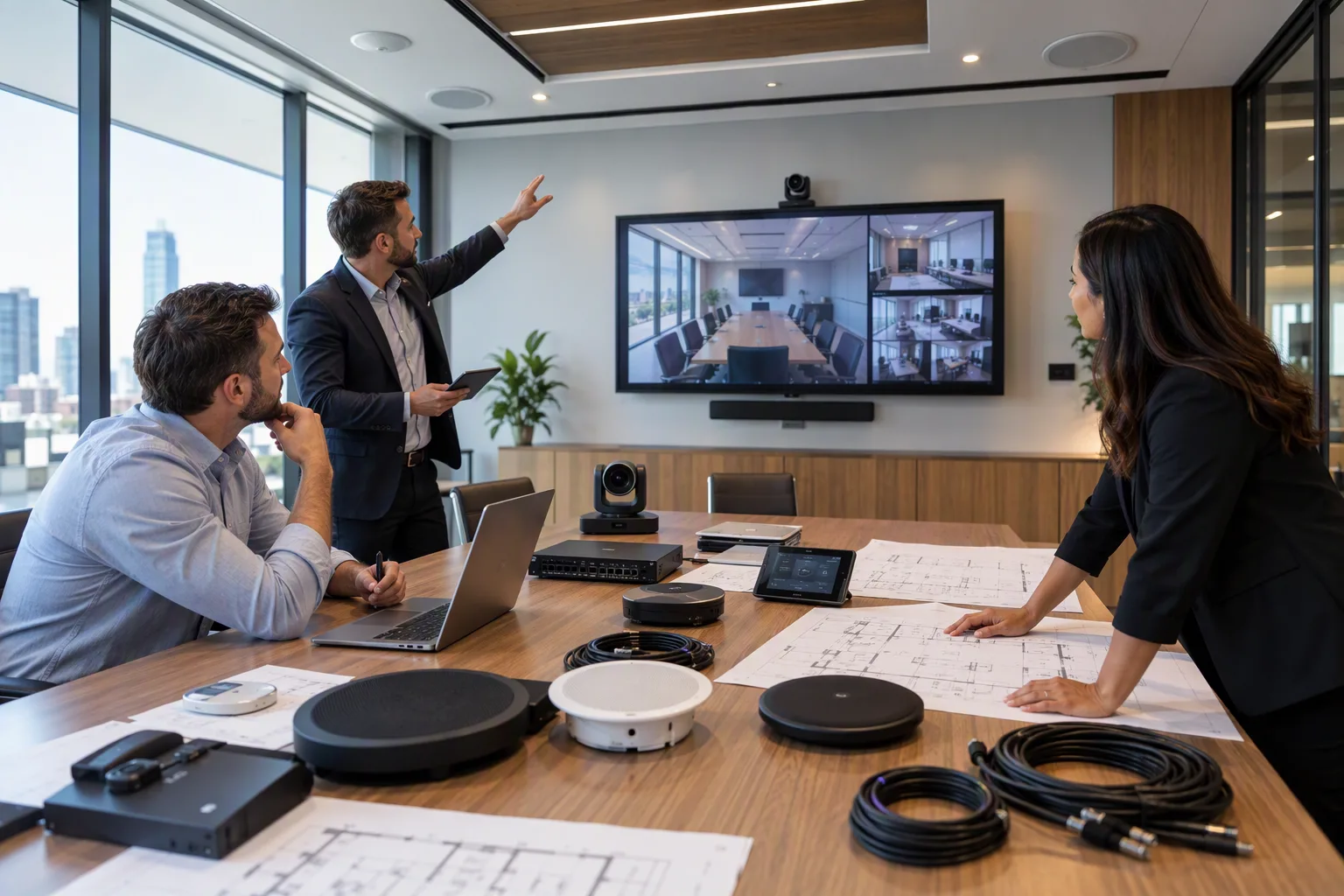
Best AV Integration Services can include many different types of equipment and installation work. The total cost of an AV integration project is not based on one item alone. It can change depending on the size of the space, number of devices, system features, cabling, installation work, and level of control needed. Understanding these factors can help businesses and property owners plan an AV project with clearer expectations.
1. Size and Type of the Room
The size and purpose of a room can have a direct effect on the AV system required. A small meeting room may only need a display, speakers, a camera, and a simple connection system. A large conference room may need several displays, microphones, speakers, cameras, and control equipment.
Different spaces also have different requirements. Training rooms, boardrooms, classrooms, auditoriums, and meeting rooms may all use different AV setups. Larger spaces usually require more equipment and longer cable runs, which can increase the overall project cost.
2. Number of AV Devices
The number of devices is another important cost factor. A basic setup may use only a few devices, while a larger system can include displays, projectors, speakers, microphones, cameras, media players, amplifiers, and control panels.
Each additional device can require power, cabling, mounting, configuration, and testing. For this reason, the total equipment count should be considered when planning the project budget.
3. Type and Quality of Equipment
AV equipment is available in many models and specifications. Displays can differ in size, resolution, brightness, and connectivity. Speakers can also vary based on room size and sound requirements.
For example, a large presentation room may need a brighter projector and larger screen than a small meeting room. Higher specifications can increase equipment costs. The right choice depends on how the room will be used rather than simply selecting the most advanced equipment.
4. Installation and Mounting Requirements
Installation work can also affect the project cost. Displays may need wall or ceiling mounting, while projectors may require ceiling brackets and accurate positioning.
Some rooms may need additional work to support the equipment safely. Ceiling height, wall construction, access to installation areas, and existing infrastructure can all affect the amount of work required.
A simple installation may take less preparation, while a more complex room can require additional labor and planning.
5. Cabling and Network Requirements
AV systems often depend on different types of cables and network connections. HDMI, Ethernet, audio, control, and power connections may all be needed depending on the system.
Long cable runs can require additional materials and installation work. Some projects may also need cable management, conduits, wall plates, or other infrastructure.
If the AV system connects with an existing network, the network setup and available connection points may also need to be checked before installation.
6. Control and Automation Features
Some AV systems use a central control system to operate several devices from one interface. A touchscreen or control panel can be used to manage displays, projectors, lighting, audio, and other equipment.
A simple control setup may have only a few functions. More advanced systems can require additional programming and configuration. The number of devices and functions being controlled can therefore affect the overall project cost.
7. Integration With Existing Systems
A new AV system does not always start from an empty room. Many projects involve existing displays, speakers, networks, meeting-room equipment, or control systems.
If existing equipment can be reused, it may reduce the need for new hardware. However, compatibility needs to be checked first. Older equipment may require adapters, new connections, or replacement if it cannot work properly with the new system.
8. Room Acoustics
Sound quality is affected by the physical room. Large glass surfaces, hard walls, high ceilings, and open spaces can create sound reflections and make speech harder to understand.
Some AV projects may need acoustic improvements or careful speaker placement. The number and position of speakers can also change depending on the room layout.
Good planning helps ensure that audio equipment matches the actual characteristics of the space.
9. System Testing and Configuration
After equipment is installed, the complete system needs to be configured and tested. Displays, microphones, speakers, cameras, control systems, and connections should work together correctly.
Testing can include checking video quality, sound levels, device communication, network connections, and control functions. Larger systems usually require more testing because there are more devices and connections to check.
10. Future Expansion Needs
It can also be useful to consider future requirements before finalising an AV system. A business may later add more displays, cameras, microphones, or meeting spaces.
Planning for expansion can affect the initial design. Additional network capacity, cable pathways, connection points, and suitable equipment locations may be considered during the first installation.
Understanding these factors makes it easier to estimate the cost of an AV project. The final amount can depend on the room, equipment, installation requirements, cabling, control features, existing systems, and future needs. When comparing Best AV Integration Services, it is useful to look at how each proposed system addresses these requirements rather than considering equipment prices alone.