Teak is one of the most admired hardwoods in furniture making, particularly in mid-century modern and vintage furniture. Known for its durability, attractive grain patterns and natural oils, teak has remained a popular choice for dining tables, cabinets, sideboards and outdoor furniture for generations. However, one noticeable characteristic of this timber is that its appearance changes over time.
A newly finished teak table may display warm golden-brown tones, while the same piece several years later might appear darker, lighter or even silver-grey. These transformations are a normal part of the timber's ageing process and are influenced by several environmental and material factors.
Understanding why teak wood colour changes can help furniture owners make better decisions about cleaning, maintenance and restoration. Rather than viewing every colour variation as damage, it is important to recognise how natural ageing affects the appearance and character of teak.
1. The Natural Ageing Process of Teak Wood
Teak contains naturally occurring oils, resins and extractives that contribute to its durability and distinctive appearance. When freshly cut or newly refinished, the timber often displays golden honey, warm brown and occasionally darker caramel tones.
Over time, exposure to air, light and changing environmental conditions gradually alters the surface appearance. Chemical reactions within the timber, particularly oxidation, contribute to these changes. As the wood interacts with oxygen, some of its natural compounds change, influencing the colour visible at the surface.
This process does not necessarily indicate that the timber is deteriorating. In many cases, the wood remains structurally sound while its appearance develops a deeper or more muted character.
The original grain patterns and natural variations also become more noticeable as finishes age. This is one reason why older teak furniture can have a distinctive appearance that differs from newly manufactured pieces.
2. How Sunlight and UV Exposure Affect Teak Colour
Sunlight is one of the most significant influences on the changing appearance of teak furniture. Ultraviolet radiation can affect the natural compounds in timber, gradually altering its colour and surface characteristics.
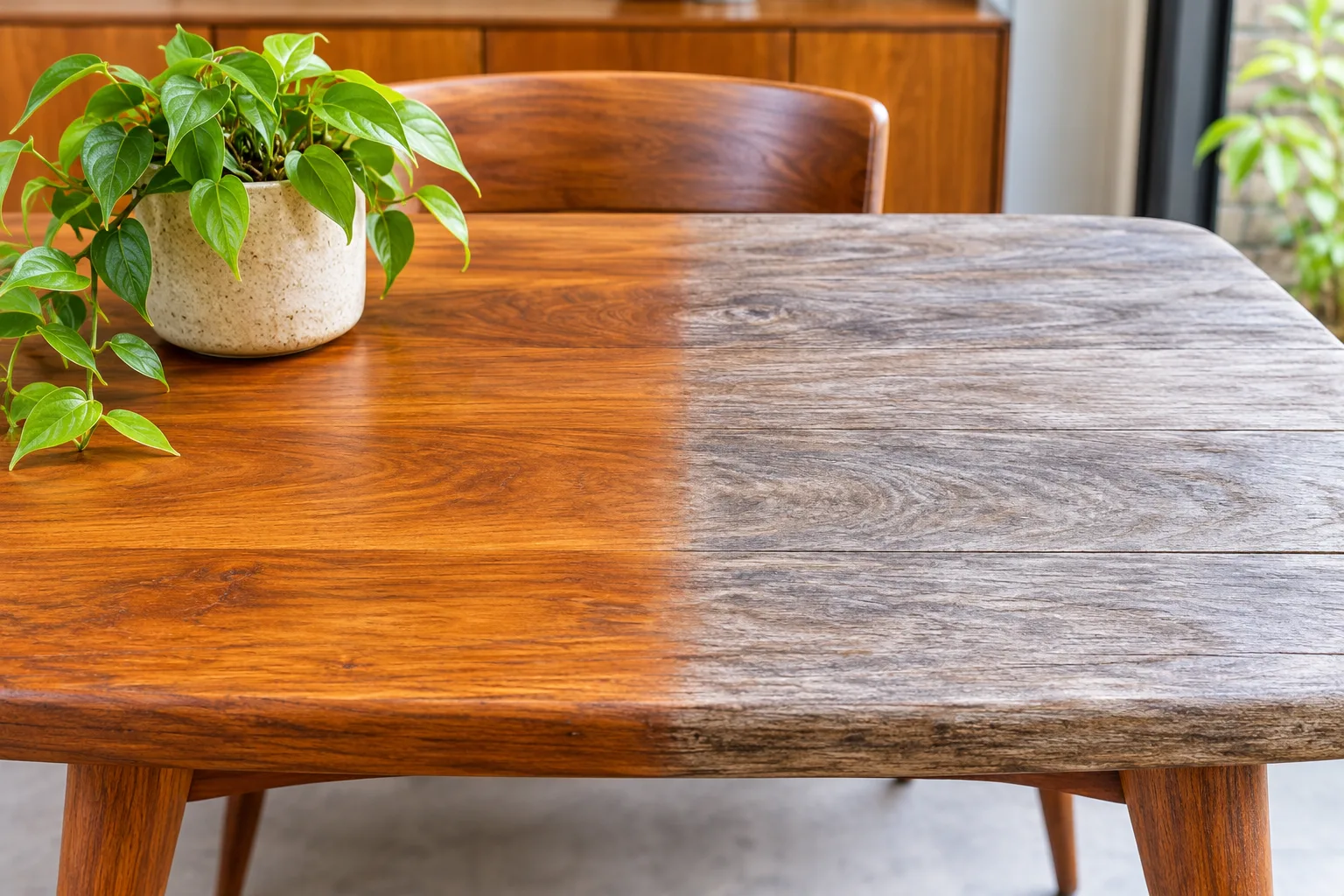
Furniture placed near large windows, in conservatories or in outdoor areas may experience uneven sunlight exposure. Sections that receive direct sunlight can become lighter or develop a different tone compared with areas protected by objects, cushions or other furniture.
This explains why a teak tabletop sometimes displays noticeable colour differences between its exposed and covered sections.
Indoor furniture is not completely protected from this effect. Even indirect sunlight entering through windows can contribute to gradual colour changes over many years.
To reduce uneven fading, consider positioning teak furniture away from strong direct sunlight. Rotating smaller decorative items and occasionally changing the position of furniture can also help maintain a more consistent appearance.
3. Why Ageing Teak Furniture Develops a Silver-Grey Appearance
One of the most recognisable transformations in teak is the development of a silver-grey surface. This is particularly common in outdoor furniture exposed to sunlight, rain and changing weather conditions.
The grey appearance develops as sunlight and weathering gradually alter the timber's outer surface. Natural oils and surface compounds are affected, while repeated exposure to moisture and drying contributes to the weathered appearance.
This process is often described as natural teak discolouration. It creates a softer, muted finish that many furniture owners appreciate, especially in outdoor settings.
However, a grey surface does not automatically mean that teak has lost its strength or durability. The appearance of the surface and the structural condition of the timber are two different considerations.
It is also important to distinguish natural weathering from more serious problems. Persistent moisture, fungal growth, dirt accumulation and surface deterioration can create additional marks that require attention. A proper inspection helps determine whether the colour change is simply cosmetic or part of a wider maintenance issue.
4. The Role of Moisture, Humidity and Indoor Conditions
Environmental conditions inside a home can also influence the appearance of teak furniture. Changes in humidity, temperature and moisture exposure may affect how the timber responds over time.
Although teak is naturally durable, it is still a type of wood and can respond to changes in its surroundings. Repeated exposure to excessive moisture may create water marks, uneven dark patches or surface discolouration. Similarly, very dry conditions can contribute to changes in the timber's moisture content.
Spills left on a tabletop, damp cleaning cloths and water trapped around joints can sometimes leave visible marks. These marks may appear darker than the surrounding timber, particularly when the surface finish has worn away.
Maintaining reasonably stable indoor conditions can help protect teak furniture. Use a soft, slightly damp cloth for routine cleaning and dry the surface afterwards. Avoid leaving standing water on the timber or placing hot and wet objects directly onto finished surfaces.
5. How Original Finishes Influence the Colour of Teak
The finish applied to teak furniture plays an important role in determining how its colour develops over time. Different finishing products interact with the timber in different ways, affecting its depth, warmth and overall appearance.
Traditional oil finishes can enhance the natural grain and produce a rich, warm appearance. However, they may require periodic maintenance depending on the product and the furniture's use.
Clear protective coatings, including lacquer and polyurethane, create a surface layer that influences how light interacts with the timber. As these coatings age, they may develop a yellowish appearance, lose clarity or show scratches and worn patches.
Wax finishes can also change the way teak looks, sometimes creating a softer sheen that gradually becomes uneven through regular handling.
Before attempting to restore an older teak piece, it is important to identify its existing finish. Applying a new product without understanding the original treatment can lead to inconsistent colour, poor adhesion or unnecessary changes to the furniture's character.
Professional assessment is particularly valuable for vintage and mid-century pieces where preserving the original appearance is an important consideration.
6. How to Preserve the Natural Beauty of Ageing Teak Furniture
Maintaining teak furniture does not always mean trying to return it to its original colour. In many cases, the most appropriate approach is to preserve the timber's natural character while addressing genuine surface damage.
Start with gentle cleaning using a soft cloth and a suitable wood-cleaning method. Avoid aggressive scrubbing, harsh chemicals and abrasive materials that could damage the existing finish.
Keep furniture away from prolonged direct sunlight where practical, and clean spills promptly to reduce the risk of water marks. Regular inspections can also help identify loose joints, surface scratches and areas where protective coatings have deteriorated.
If the timber has become noticeably uneven in colour, professional refinishing may be worth considering. A restoration specialist can assess the original finish, determine whether surface preparation is necessary and recommend an appropriate treatment.
For valuable vintage furniture, unnecessary sanding or stripping should be avoided. These processes can remove original timber, alter the proportions of delicate details and reduce the authenticity of an older piece.
The goal should be to achieve a balanced appearance while retaining as much of the original material and character as possible.
Understanding the Beauty of Naturally Ageing Teak
Teak changes colour because of natural ageing, oxidation, sunlight exposure, moisture and the gradual development of its surface finish. These transformations are part of what makes genuine teak furniture distinctive. A golden surface may gradually become deeper and warmer, while outdoor pieces can develop an attractive silver-grey patina.
Recognising the difference between natural ageing and actual surface damage is essential when deciding how to care for older furniture. With appropriate maintenance and carefully considered restoration techniques, teak furniture can retain its beauty, functionality and character for many decades.
At Mid-Century Modern Restoration Man, understanding the natural properties of timber is an important part of preserving vintage and mid-century furniture. A thoughtful restoration approach respects the original material while helping each piece continue to be enjoyed for generations.