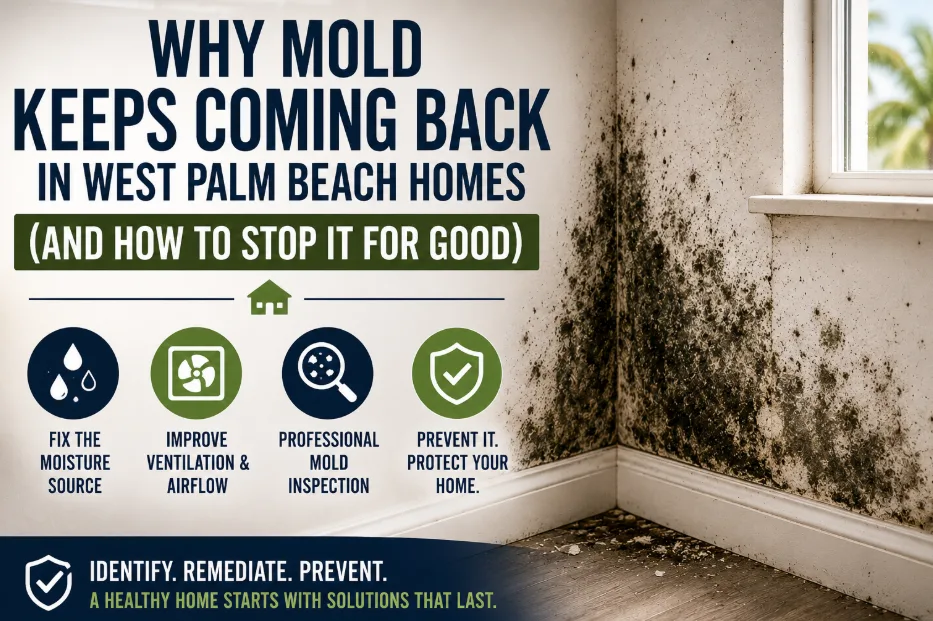
It’s 2:00 AM, and you’re standing in your hallway in West Palm Beach wearing pajamas, staring at a fuzzy grey-green patch on your drywall. The worst part? You paid a professional company thousands of dollars just six months ago to get rid of it. You were promised it was gone for good. Yet here it is, creeping back around the baseboards like it owns the place.
The truth is, mold isn't magical, and your house isn't cursed. But living down here means fighting a constant, invisible battle against moisture. If a cleanup crew comes in, wipes down the visible spots, runs a fan for two days, and leaves without fixing why the air was damp in the first place, that mold is coming back. Every single time.
Let's talk about what is actually going on behind your walls, why standard cleanup efforts fail, and how you can finally stop burning cash on temporary fixes.
Why West Palm Beach is a Mold Paradise
If you grew up somewhere up north, you might think of mold as something that only happens in flooded basements or damp cellars. Down here, the whole environment feels like a greenhouse. West Palm Beach sits right on the water, surrounded by ocean breezes, intense heat, and sudden tropical downpours.
Our humidity consistently hovers above 70% or 80% for most of the year. Mold spores only need three things to thrive: a food source (like drywall, wood, or dust), organic material, and moisture. In South Florida, your home provides the food, and nature provides the moisture.
+-----------------------------------------------------------------------+ | THE MOLD TRIANGLE | | | | [ MOISTURE ] | | (Humidity, Leaks) | | / \ | | / \ | | / \ | | / \ | | [ FOOD SOURCE ] --- [ SPORES ] | | (Drywall, Wood) (Everywhere in air) | +-----------------------------------------------------------------------+
When you hire someone for mold remediation in West Palm Beach, they are tackling the spores and the damaged materials. But if they don't help you control the environment, you're basically taking a bath and putting dirty clothes right back on. If you want a lasting fix, quality mold remediation in West Palm Beach has to address the surrounding air quality, too.
The Big Mistakes That Cause Mold to Return
Over the years, working with homeowners and seeing failed cleanup jobs firsthand, I’ve noticed a pattern. The mold usually comes back for a few very specific reasons.
1. Treating the Symptom, Ignoring the Leak
This is the single biggest cause of recurring mold. A company comes in, cuts out two feet of ruined drywall, treats the studs, paints with primer, and seals it back up. It looks brand new.
But where did the water come from?
Sometimes it’s an obvious roof leak after a bad storm. But more often, it’s a tiny, pinhole leak in a copper pipe behind the wall. Or maybe a slow condensation drop from an old AC line. If the root cause isn't fixed, the new drywall will absorb that moisture just like the old sheet did. Give it a few weeks, and the colony rebuilds. Proper mold remediation in West Palm Beach means cutting off the moisture supply before putting up new walls—a fundamental rule for any effective mold remediation south florida project.2. Your AC System is Secretly Feeding the Spores
In South Florida, your air conditioner isn't just a luxury; it’s your primary moisture defense system. Most homeowners don't realize this, but an oversized or poorly maintained AC unit is a main culprit for recurring growth.
- Oversized AC Units: If your system cools the house down in ten minutes flat, it isn't running long enough to pull moisture out of the air. You end up with a cool, clammy house—which mold loves.
- Dirty Evaporator Coils: Dirt on the coils holds onto moisture and breeds spores right inside your air handler, blowing them into every room.
- Leaky Ductwork: Cracks or loose connections in your attic pull in super-hot, humid attic air, condensing inside the cool vents.
If you don't clean or balance your HVAC system, you are just re-contaminating your home every time the blower turns on. Anyone specializing in mold remediation in South Florida will tell you that your HVAC is ground zero for keeping air clean.
3. Air Cleaning Wasn't Done Long Enough
When properly handling mold remediation in South Florida, containment is critical. Professionals set up plastic barriers and run air scrubbers to create negative pressure. This keeps tiny spores from floating into your living room or bedrooms while workers tear out infected drywall.
If a contractor cuts corners, turns off the equipment early to move to the next job, or doesn't seal off the vents properly, millions of disturbed spores scatter throughout the house. They settle in carpets, curtains, and furniture, just waiting for the next humid day to sprout. That's why thorough mold remediation in South Florida always includes extended air filtering.
The Hidden Water Sources You're Probably Missing
You fixed the obvious plumbing leak, and your AC is running great. Why is the mold still coming back? In our climate, water sneaks into homes through pathways that people rarely think to check.
[ Roof & Stucco Crevices ] ──> Moisture seeps in during tropical rains [ Unsealed Windows/Doors ] ──> Humid air leaks through worn weatherstripping [ Concrete Slab Wick ] ──> Ground water rises up through untreated concrete [ AC Drain Line Clogs ] ──> Pan overflows directly into closet floors
Exterior Stucco Cracks
Concrete block construction is standard down here, coated in stucco. But hairline cracks form as houses settle and ground shifts during dry and wet seasons. During a driving summer rainstorm, wind forces water right into those cracks. The water sits inside the wall cavity, hidden behind paint, quietly growing mold from the outside in.
Window Sill and Door Frame Seals
Solar heat bakes window caulk until it turns brittle and cracks. When rain hits, water seeps under the window frame and runs straight down into the wall cavity below. You won't see a puddle on the floor, but the back of your baseboard will be covered in white fuzz within a month.
Concrete Slab Vapor Barriers
Older Florida homes often have compromised or missing vapor barriers underneath the concrete slab. During periods of heavy rain, water table levels rise. Moisture pushes up through the porous concrete (a phenomenon called capillary action) and gets trapped under vinyl plank flooring, tile, or wood. That’s usually where problems start, leaving homeowners baffled because there are no pipes anywhere nearby. Without addressing this ground moisture, any attempt at mold remediation in South Florida will only be a short-term band-aid.
How Real Professionals Fix Mold (The Right Way)
If you're tired of throwing money down the drain on quick fixes, you need to know what a legitimate, thorough cleanup process actually looks like. It isn't just bleach and a spray bottle. In fact, never use bleach on drywall—it’s mostly water, and the chlorine evaporates quickly, leaving the water behind to feed the roots of the mold!
Here is how real field experts handle a job that stays clean for good:
Step 1: Independent Testing
Never let the same company that does the cleanup do the initial or final air testing. That is an immediate conflict of interest. Hire an independent mold assessor. They will pull air samples, identify the exact strain of mold, measure spore counts compared to outdoor air, and give you an unbiased report.
Step 2: Total Containment
Before a single piece of drywall is touched, the area should look sealed off completely. Heavy plastic sheeting seals off the room. Vents are closed. Negative air machines run continuously, venting clean air outside while keeping spores trapped inside the work zone.
Step 3: Source Correction
Nothing gets restored until the moisture source is 100% dead and dried. That means fixing the plumbing leak, sealing the roof flashing, re-caulking the stucco, or adjusting the AC drain line. Successful mold remediation in West Palm Beach always starts with shutting down the water source.
Step 4: Physical Removal & Deep Vacuuming
Porously infected materials (drywall, insulation, carpet padding) must be bagged and thrown out. Non-porous surfaces are scrubbed with heavy-duty cleaners, then vacuumed using true HEPA equipment—not standard shop vacs, which just blow microscopic spores right back into the air.
Step 5: Final Inspection & Re-Testing
Before the plastic comes down and before the new drywall goes up, the independent assessor comes back to re-test the air. If spore counts aren't down to safe background levels, the contractor cleans again on their own dime. This final step is non-negotiable for reliable mold remediation in West Palm Beach.
Daily Habits to Prevent Mold from Returning
Once your home is officially cleared, the daily maintenance begins. Living in South Florida means staying proactive. A few simple tweaks to your routine can save you thousands down the road.
Action ItemRecommended TargetWhy It MattersIndoor HumidityKeep below 50%Spores struggle to germinate in dry air.AC ThermostatSet to "AUTO", never "ON"Setting to "ON" blows moisture back off the coils into your home.DehumidifiersRun a dedicated unit in problem zonesHelps your AC during hot, rainy months.AC Drain LineFlush monthly with vinegarPrevents backup overflows into closets and hallways.Bath/Kitchen FansRun for 20 mins after showersPulls humid air straight out of the house.When managing ongoing moisture after mold remediation in South Florida, keeping an eye on your indoor humidity meter daily is your best defense.
Questions Homeowners Ask Me All the Time
Can I just paint over recurring mold with anti-mold paint?
No. Paint only seals the surface. The mold roots live inside the drywall board and will eat right through the fresh coat of paint in a few weeks.
How long should an air scrubber run during mold cleanup?
Usually a minimum of 24 to 48 hours continuously after all infected drywall and materials have been completely removed and disinfected.
Is mold guaranteed to come back down here?
Not if you keep interior humidity strictly under 50% and fix structural leaks immediately. Mold needs water; eliminate the water, and it physically cannot grow.
Why does mold smell like wet dirt or old socks?
That musty smell comes from gases released by active mold colonies as they digest organic materials like wood or paper.
Will insurance cover recurring mold issues?
Usually, insurance only covers mold caused by sudden, accidental water leaks (like a burst pipe). They frequently deny claims caused by long-term neglect, poor maintenance, or rising groundwater.
Is bleach effective for killing indoor mold?
No, bleach only kills surface mold on non-porous materials like tile. On drywall or wood, its high water content sinks in and actually feeds the mold roots underneath.
Can a dirty AC unit spread mold everywhere?
Yes. If spores get into your air handler or duct system, the blower acts like a distribution network, spreading spores to every single room in the house. This makes future mold remediation in South Florida much more complicated.
How do I know if the mold issue is actually gone?
The only reliable way is through testing done by an independent mold assessor who compares indoor air samples to outdoor air.
What is the ideal humidity level for a home in West Palm Beach?
Aim to keep your indoor relative humidity strictly between 45% and 50%. Anything above 60% drastically increases the risk of active growth.
Why does mold keep appearing around my AC vents?
This is usually caused by cold air hitting warm, humid air right at the vent grill, creating surface condensation that feeds mold spores on the ceiling.
Useful Resources & Local Guidance
If you are dealing with a severe or stubborn situation, don't guess. Use these trusted resources to make sure you're protecting your health and your property value:
- Florida Department of Health: Provides state regulations, licensing verification, and safety guidelines for contractors.
- EPA Guide to Mold and Moisture: Practical protocols on how water damage spreads and how proper containment works.
- DBPR (Florida Department of Business and Professional Regulation): Always verify your mold assessor and contractor hold active, separate Florida licenses before signing any contracts.
The Bottom Line
Living in paradise comes with a price, and down here, that price is eternal vigilance against humidity.
If you are fighting a mold problem that just won't quit, stop spending money on surface fixes, bleach, or quick spray treatments. Take a step back. Bring in an independent inspector to run proper air tests, track down the hidden moisture leaks behind your walls, and get your indoor humidity locked down. Proper mold remediation in South Florida isn't just about cleaning up the mess today—it's about locking out moisture so it never comes back.
And trust me, that gets expensive fast if you keep doing it piecemeal. Do it right once, fix the water source, and you can finally sleep through the night without worrying about what’s growing behind your baseboards.
Need Help With a Stubborn Mold Issue?
Don't fight recurring water damage alone. Contact a licensed, local specialist today for an independent moisture inspection and get your home back to a clean, safe, dry space once and for all.