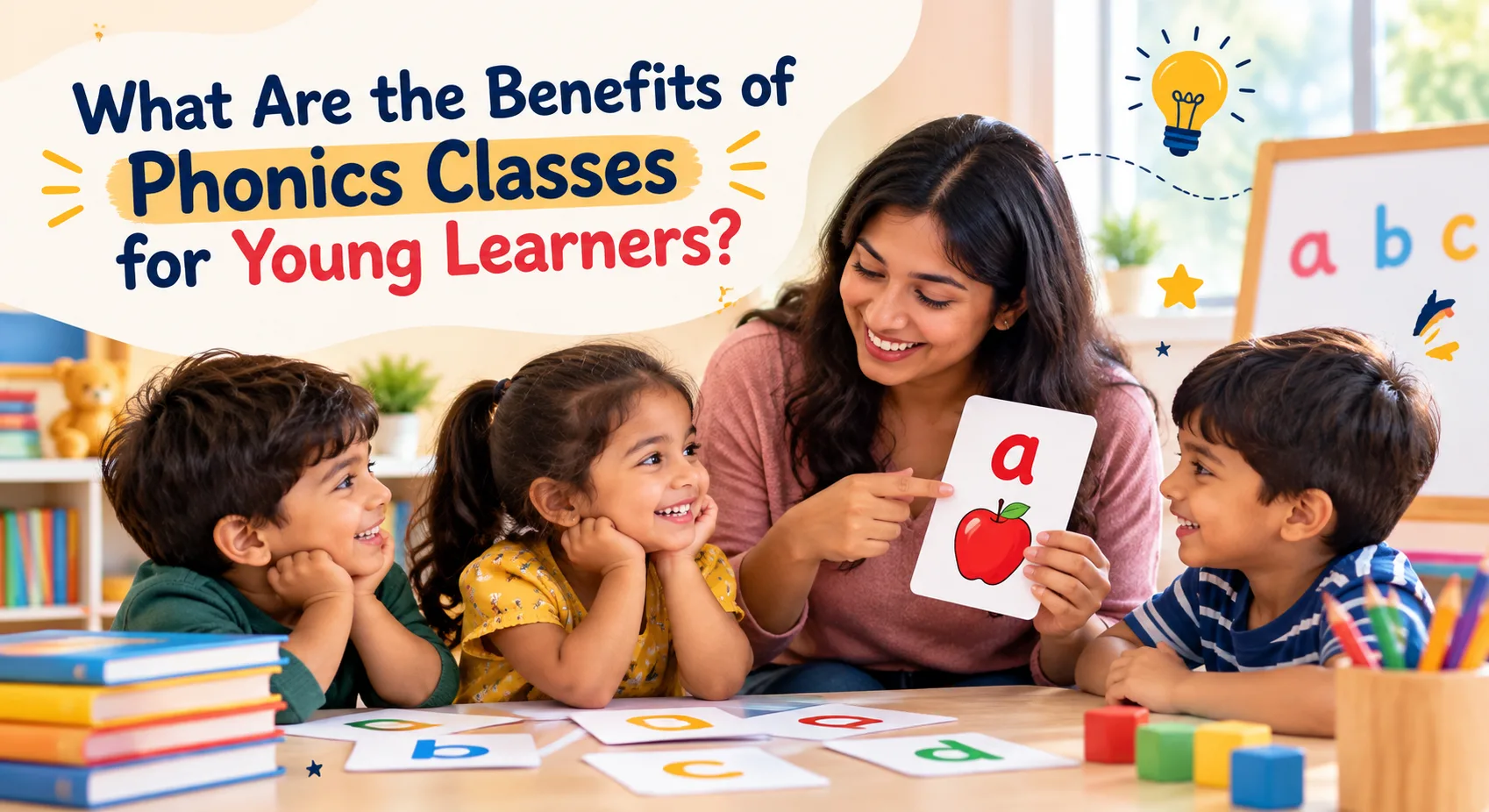
Learning to read is an important milestone in a child’s education. It helps children understand stories, follow instructions, express ideas, and build confidence in their language skills. Phonics is one of the most effective approaches for helping young learners understand the connection between letters and sounds. Instead of relying only on memorization, children learn how words are formed and how individual sounds work together to create meaningful words.
Phonics Classes Dubai can provide structured learning experiences that help children develop early reading and pronunciation skills. These classes generally introduce sounds in a gradual manner, allowing learners to understand simple words before progressing to more complex vocabulary. With regular practice and supportive teaching, children can become more comfortable with reading and communicating in English.
Understanding How Phonics Supports Reading
Phonics teaches children that letters and groups of letters represent specific sounds. For example, learners may first become familiar with the sounds associated with individual letters and then learn how those sounds can be combined to read words. This approach gives children a practical method for working out unfamiliar words.
The ability to decode words independently is particularly useful during the early stages of reading. Rather than immediately asking for help when they encounter a new word, children can use their knowledge of sounds to attempt pronunciation. Over time, this can encourage greater independence and make reading activities more enjoyable.
Building Strong Pronunciation Skills
Pronunciation is another important area supported by phonics education. Children learn to identify and reproduce sounds more accurately, which can help them speak words with greater clarity. Listening activities can also improve their ability to distinguish between similar sounds.
Developing these skills at an early age can create a stronger foundation for spoken English. Children become more aware of how sounds are produced and how small differences in pronunciation can change the meaning of words.
Improving Spelling and Word Recognition
Phonics is not limited to reading. It can also support spelling development. When children understand the sounds within a word, they can begin to connect those sounds with the letters needed to write it.
For instance, learning how a word can be separated into individual sounds gives children a useful strategy when attempting to spell unfamiliar words. Repeated exposure to sound patterns can also improve word recognition, allowing learners to identify common words more quickly.
Encouraging Confidence in Young Learners
Children may feel nervous when they struggle to read or pronounce words. A structured phonics approach can make the learning process more manageable by introducing concepts step by step. Each successful attempt can give learners a sense of achievement.
Interactive activities, games, picture-based exercises, and repetition can make lessons engaging while reinforcing important concepts. When children experience progress, they are often more willing to participate and attempt new words without fear of making mistakes.
Supporting Vocabulary Development
As children learn to decode words, they are naturally exposed to new vocabulary. Teachers can introduce age-appropriate words and explain their meanings through stories, examples, and classroom activities.
This combination of reading and vocabulary practice can help children understand language in context. Instead of learning isolated words, they can discover how vocabulary is used in sentences and everyday communication.
Developing Long-Term Language Skills
Early literacy skills can influence a child’s future academic development. Strong reading abilities make it easier to understand textbooks, assignments, instructions, and other educational materials as children progress through school.
Phonics provides a foundation that can later support more advanced reading strategies. Once learners become comfortable decoding words, they can gradually focus more on reading fluency, comprehension, vocabulary, and critical thinking.
Choosing an Effective Learning Approach
When selecting a phonics programme, parents should consider the teaching method, lesson structure, age suitability, and level of individual attention provided. A good programme should balance instruction with practical activities so that children can learn concepts without feeling overwhelmed.
Consistent practice is also important. Short, regular reading activities at home can reinforce what children learn during lessons. Parents can encourage children to read simple books, identify sounds in everyday words, and practise pronunciation in a positive environment.
Also Read :- How Do Creative Skill Development Courses Build Career-Ready Skills?
Conclusion
Phonics can give young learners a practical foundation for reading, spelling, pronunciation, vocabulary, and communication. By understanding how sounds and letters work together, children can gradually become more independent and confident readers. A structured and engaging learning environment can make this process easier while encouraging a positive attitude toward language learning. For parents looking for effective early literacy support, IBPTI can be considered as part of a broader approach to developing strong language skills.