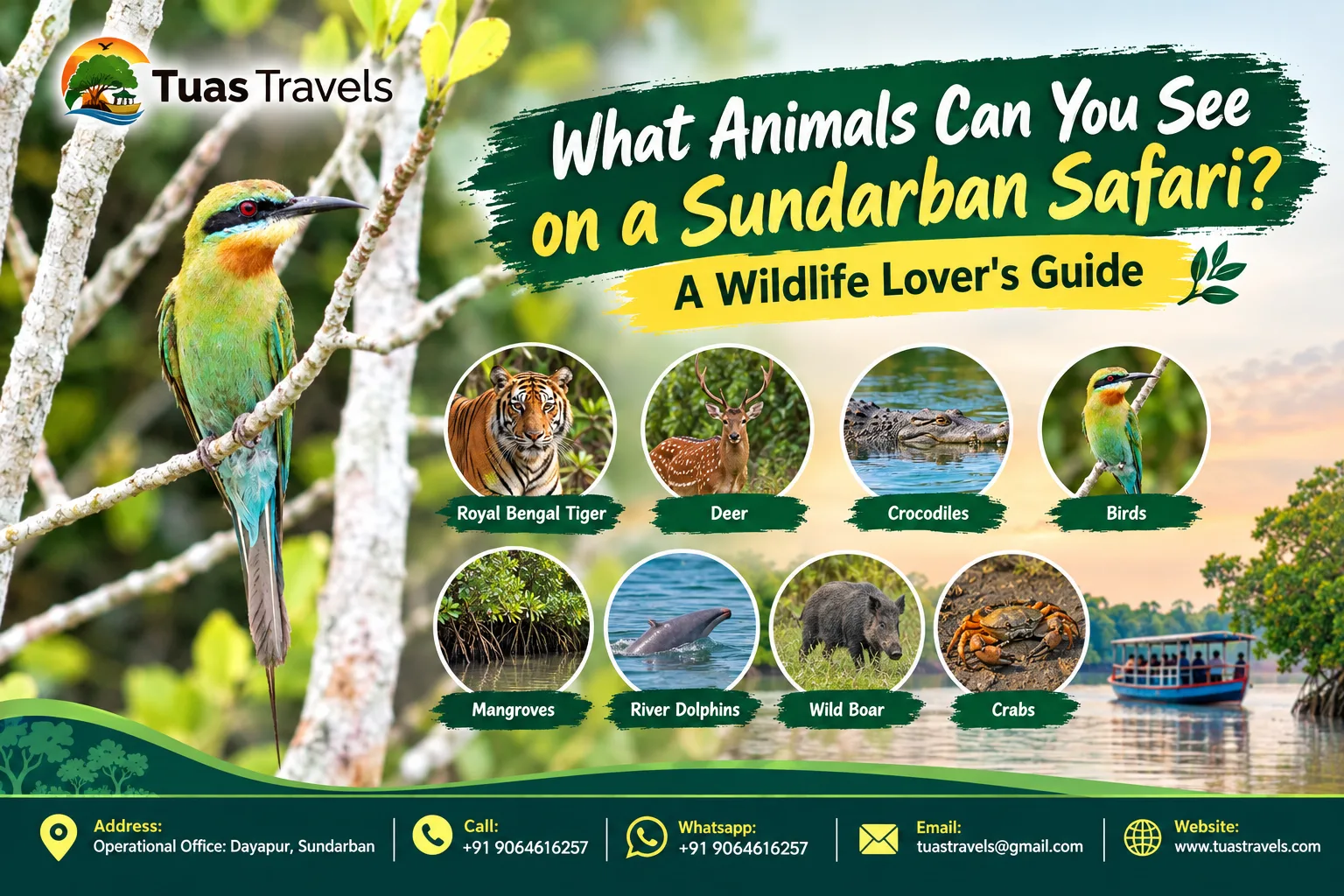
The Sundarbans, with its extensive river system, creeks, mudflats and mangrove forests, has an amazing diversity of animals and birds.
The boat safari is an exclusive experience to see wildlife in their natural habitat. Animals can be seen along the river banks or in the thick of the mangroves. Each safari is unique and so is the experience of having to be patient and watchful.
Royal Bengal Tiger
The most popular of the Sundarban's residents is the Royal Bengal Tiger. The dense environment of mangroves can make the sighting of a tiger difficult and not predictable, unlike the open grassland habitats where it is easy to spot a tiger.
With a tiger sighting, you cannot guarantee what you will see, but it certainly does add to the excitement of every safari. Carefully observe along river banks, creeks and edges of forests; listen to your guide's observations.
Pugmarks or even a stirring in the greenery can be a memorable aspect for wildlife photographers even if they don't get to see the actual wildlife.
Spotted Deer
The more commonly seen mammals in the Sundarban include spotted deer (chital).
They may occasionally be found along edges of forest or open areas of land. They also play an important role in the natural food chain of the forest.
A herd of spotted deer in front of a mangrove backdrop can be a great source for wildlife and environment photographs for photographers.
Saltwater Crocodiles
The saltwater crocodile is found in the Sundarban, a very strong crocodile. These reptiles are especially suited to the tidal waterways of this area.
Sometimes they are found standing in muddy banks or floating by the banks of rivers or creeks, partially immersed. They can be very hard to see due to their camouflage.
Never approach with a crocodile boat or get too close when watching crocodiles, always follow the advice of the boat crew and guide.
Wild Boar
The Sundarbans are a home to another interesting mammal, the wild boar. They are able to wander through the forest and muddy areas in search of food.
While they may not be as popular as tigers or crocodiles, meeting wild boars is a way of enhancing the variety of a safari in the wild.
Their interactions with the mangrove environment and their behavior can also be interesting for those interested in photography.
Monitor Lizards
Sundarban's environment is warm and wet, making it a great living place for monitor lizards.
The large reptiles may be seen prowling through vegetation, or resting by water ways (or looking for food). They may be able to hide in their habitat, so attention is required to observe them.
If you are a nature lover, you will find it rewarding to see a monitor lizard as it will remind you that the Sundarban has some interesting reptiles as well as mammals.
Snakes and Other Reptiles
Several species of snakes and other reptiles are also found in the mangrove ecosystem. There are some that live in the plants and others that are sometimes found by the waterways or border of forests.
People should NOT go near, disturb or photograph snakes! It is always best to observe wildlife from a distance and under the supervision of well-trained personnel.
Birdlife of the Sundarbans
One of the most fun activities of exploring the wildlife of the Sundarban is birdwatching. These waterways, mudflats and mangroves are home to numerous resident and migratory birds.
Throughout the season and year, visitors can see kingfishers, herons, egrets, cormorants, raptors and others wetland birds.
The boat offers bird photographers a special perspective. Early mornings can be very rewarding because birds tend to be more active and the light is softer.
Every Safari Is Different, And This Is A Good Thing
There are several natural conditions that effect the sightings of wildlife in the Sundarbans, such as tides, weather, animal movement and the time of day. Animals are not set in stone; you're not guaranteed to see a particular species on every tour.
It is this randomness that makes a Sundarban safari so special. Even though you are expecting to see only a tiger, remember to look for deer amongst the forest, crocodiles by the water and colourful birds, or reptiles amongst the plants.
Enjoy the All Inclusive Sundarban Wildlife Experience
While the Royal Bengal Tiger may be the centrepiece, it is just one component of this amazing ecosystem. The extraordinary biodiversity of the Sundarbans is also home to the spotted deer, saltwater crocodile, wild boar, monitor lizards, snakes and the wide range of bird-life.
A well-planned tour offers just a chance for wildlife lovers, photographers and birdwatchers to experience this ecosystem from the water and enjoy the many species that make the Sundarbans unique.