
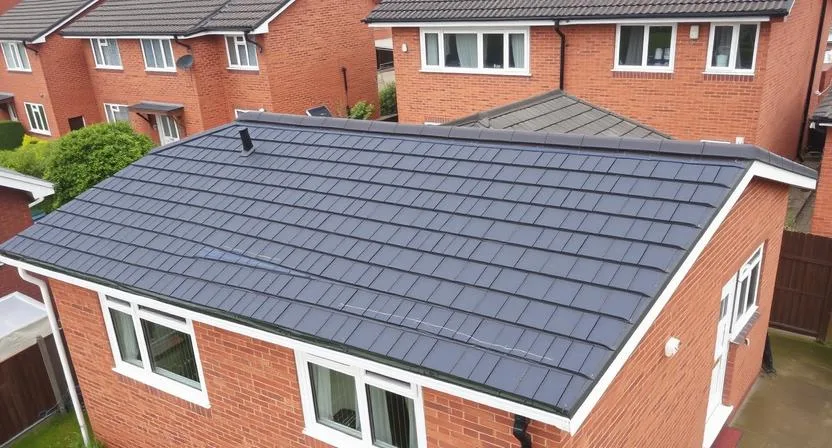
A roof is easy to ignore when it is doing its job. From the ground, a house can look perfectly sound even when small problems are developing above it. That is one reason Roofing Springfields is worth considering as more than a construction or maintenance topic. The roof can provide useful clues about how a property handles weather, water and age.
The interesting part is that roofing problems rarely begin with a dramatic failure. More often, they develop quietly. A small gap, a blocked drainage point or a deteriorating junction can remain unnoticed for months before the consequences become visible indoors.
Understanding those early clues can change the way homeowners think about roof maintenance.
A Roof Is Really a Water-Management System
People often think of a roof primarily as a protective surface. Its more important job, however, is controlling where water goes.
Rain lands on the roof and needs to move towards designated drainage points. From there, gutters and downpipes carry it away from the building.
That sounds straightforward, but a roof contains numerous points where water movement becomes more complicated. Valleys, ridges, penetrations, changes in roof direction and connections between different materials all require careful detailing.
This means a roof can be structurally sound while still having a drainage problem.
A useful inspection therefore asks more than, "Does the roof look damaged?"
It also asks:
- Where does rainwater travel?
- Can water leave the roof efficiently?
- Are drainage paths clear?
- Are junctions handling water properly?
- Are there areas where water could collect?
That change in perspective is important because many roofing issues are ultimately water-management issues.
Small Defects Can Have Long Consequences
Consider a cracked tile or a small opening around flashing.
Neither may look particularly serious. If rainwater repeatedly reaches the same vulnerable area, though, the surrounding materials may gradually deteriorate.
The sequence can be surprisingly slow:
Small defect → repeated moisture → material deterioration → internal signs → larger repair
This is why waiting for a ceiling stain before investigating the roof is not always the best approach.
By the time water becomes visible inside the house, the problem may have existed for considerably longer.
The Ceiling Does Not Always Tell the Whole Story
One of the more confusing aspects of roof leaks is that the visible symptom and the actual cause can be separated.
Imagine rain entering near one section of the roof. Once inside, gravity may cause the water to move along timber, insulation or another surface before it reaches the ceiling.
The eventual stain could therefore appear several metres from the original entry point.
This explains why simply applying a patch where water becomes visible does not necessarily resolve the underlying problem.
A useful investigation follows the path of moisture rather than assuming the nearest visible mark is the source.
Gutters Are Part of the Bigger Picture
A roof cannot be considered independently from its drainage system.
Gutters collect water from the roof edge, while downpipes provide a route away from the property. When either becomes obstructed or damaged, the consequences can affect other components.
Leaves are an obvious source of blockage, particularly where trees are close to a home. But gutters can also develop problems through corrosion, sagging, poor alignment or damaged connections.
The practical lesson is simple: a roofing inspection that ignores drainage is incomplete.
A roof may have perfectly serviceable tiles or metal sheets but still struggle to handle heavy rainfall because water cannot leave the system efficiently.
Weather Reveals Weaknesses
Every roof experiences weather, but severe conditions can expose weaknesses that were previously difficult to notice.
Strong winds can test loose materials and vulnerable fixings. Heavy rain can reveal drainage problems. Extended heat can place stress on certain materials and seals.
This creates an interesting distinction between damage caused by weather and weakness revealed by weather.
A storm does not necessarily create every roofing problem from scratch. Sometimes it exposes an existing issue that had been developing quietly.
That is why checking a roof after significant weather can be useful even when there is no obvious major damage.
Age Is Useful Information, Not a Verdict
Roof age is often treated as though it determines whether replacement is necessary.
In reality, age is only one part of the assessment.
Two roofs of the same age can be in very different conditions because their histories may be completely different. One may have received regular maintenance and experienced relatively modest exposure. Another may have suffered repeated water problems or neglected drainage.
The better question is not simply:
"How old is the roof?"
It is:
"How is the roof performing today, and what evidence is there about its remaining condition?"
This approach avoids making expensive decisions based on age alone.
Previous Repairs Can Tell a Story
A roof with evidence of previous repairs is not automatically a poorly maintained roof.
In fact, regular repairs can indicate that problems were identified and dealt with as they arose.
The more useful question is whether repairs appear isolated or repetitive.
If the same area has repeatedly required attention, there may be an underlying reason. It could involve drainage, movement, detailing, material compatibility or another issue that a simple patch does not address.
Roof maintenance is therefore partly about understanding history.
A series of small repairs can sometimes reveal more about a roof than one obvious defect.
Ventilation Is Often Overlooked
Roofing discussions tend to focus heavily on rain, but moisture inside a roof space can have another source: condensation.
Warm, moist air can move into roof spaces and condense on cooler surfaces when ventilation is inadequate.
That matters because moisture damage is not always evidence of a roof leak.
Confusing condensation with rainwater entry can lead to the wrong solution. A proper assessment should consider the wider environment inside the roof space rather than automatically blaming the external covering.
This is a good example of why practical roofing analysis requires more than looking for broken materials.
What Homeowners Can Observe Safely
Not every roof inspection requires climbing onto the roof.
There is plenty that can be observed from ground level.
Look for:
- Sagging sections
- Missing or visibly displaced materials
- Damaged gutters
- Water stains on external walls
- Overflowing gutters during rain
- Visible deterioration around roof edges
- Branches repeatedly touching the roof
- New ceiling stains after rainfall
Inside the home, pay attention to unexplained dampness, peeling paint or changes around ceilings.
These observations do not provide a diagnosis, but they can indicate when closer assessment may be worthwhile.
When a Repair Makes More Sense Than Replacement
Roofing discussions sometimes become unnecessarily binary: either nothing needs doing, or the entire roof needs replacing.
Real properties are rarely that simple.
A roof can have a localised defect that is best addressed with a targeted repair. Another roof may have widespread deterioration where larger-scale work makes more sense.
The decision should depend on the extent and nature of the problem, the condition of surrounding materials and the likely performance of the existing system.
A sensible assessment considers the whole roof before recommending a major intervention.
A Better Way to Think About Maintenance
The most useful roofing strategy is often neither "repair everything immediately" nor "wait until something leaks."
A better approach is observation combined with planned maintenance.
That means understanding:
- What condition the roof is currently in.
- Which areas are more vulnerable.
- How effectively water is being drained.
- Whether previous problems are recurring.
- Which issues require immediate attention.
- Which areas can simply be monitored.
This creates a more realistic maintenance plan and helps prevent minor issues from becoming unexpected emergencies.
The Roof as an Early Warning System
A roof can tell homeowners a surprising amount about a property.
Repeated gutter overflow may point towards drainage limitations. Persistent internal moisture may indicate an unresolved water pathway. Frequent repairs in one location may suggest a deeper issue. Changes after severe weather may reveal weaknesses that were previously hidden.
None of these observations should be treated as a diagnosis on their own. Together, however, they provide useful information.
That is perhaps the most valuable way to approach roofing: not as a single repair task, but as an ongoing process of understanding how a building responds to weather.
Final Thoughts
A well-maintained roof does more than keep rain outside. It manages water, protects the structure and provides an important layer of defence against the Australian environment.
For homeowners researching Roofing Springfields, looking beyond the visible roof surface can lead to better decisions. Drainage, ventilation, previous repairs, weather exposure and the history of the property all provide valuable context.
The earlier those clues are understood, the easier it becomes to distinguish between ordinary maintenance, a localised repair and a problem that requires more serious attention. A roof does not usually fail without warning; quite often, it has been communicating the signs for a long time.