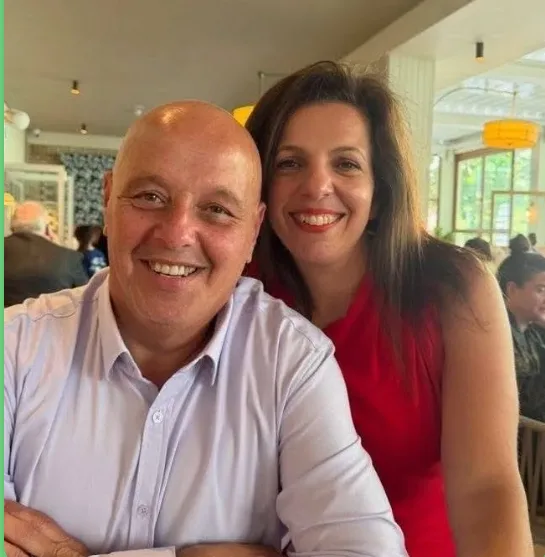
We've recently put a pool table, table tennis and an air hockey table in our office on the Central Coast. There's a PlayStation 5 on its way, too. I'd love to tell you it's because Lisa and I wanted somewhere to escape the emails and paperwork, but there's a much better reason.
We've opened a social hub for people living with disability, and we're inviting participants from other NDIS providers to use it too.
It's been one of our favourite things we've done in the business. People have started dropping in with their support workers on their way back from outings. Maybe they've been shopping or having a coffee somewhere. They stop for a quick game of air hockey, which inevitably turns into a rematch, and before long somebody's picked up a pool cue.
Occasionally, someone from our office team wanders in to see what's happening and ends up being talked into a game. The laughter carries through to the offices, which makes a pretty welcome change from the sound of telephones ringing.
It's a small thing in the scheme of running a disability support business, but I think it raises a much bigger question about how we help people build relationships and feel connected to their communities.
Loneliness is a much bigger issue than we realise
The Australian Institute of Health and Welfare's 2026 report, People with disability in Australia, includes some confronting figures. In 2021, 19% of working-age Australians with disability experienced social isolation. Among people without disability, that figure was 9.5%. Almost three in ten reported often feeling lonely.
That's a lot of people spending more time alone than they'd like.
As disability providers, we're familiar with the importance of community participation. That might involve taking someone shopping, helping them get out for a coffee or going for a drive along the coast. These are enjoyable outings, although I've been thinking about how often people have the chance to meet someone new along the way.
Making friends as an adult can be surprisingly difficult. There aren't that many occasions when somebody formally introduces you to a stranger and says, "You two should be friends." Usually, you start recognising somebody because you keep going to the same place. Eventually, one of you strikes up a conversation.
A lot of friendships happen almost by accident. You become a regular somewhere. You start recognising faces. One day, you walk in and somebody waves you over before you've even sat down.
Of course, walking into a room full of people you don't know can be intimidating. Having something to do together takes some of that awkwardness away. You can pick up a table tennis bat, challenge somebody to a game and see how things go.
That's the thinking behind our hub in Tuggerah. You can come with your support worker or on your own. You can bring another participant. There's something to eat and drink, and you can stay for a game or spend a bit longer getting to know people.
We wanted it to feel comfortable, without everybody having to follow an organised program.
Why we're welcoming participants from other providers
When Lisa and I started Elite Care, we'd already experienced disability and aged care within our own families. We knew how personal care arrangements could be and how much trust families placed in the people supporting their loved ones.
That's stayed with us as the business has grown.
We now have a team of 28 people supporting participants and older Australians across Sydney and the Central Coast. Naturally, as a business, we want to keep growing. We have staff to pay, operating costs to cover and all the usual responsibilities that come with running a company.
As we've grown, I've thought more about the relationships between providers and the communities we serve.
If someone is happy with their current support worker and provider, that's a good thing. We certainly wouldn't want somebody changing a care arrangement that works well for them just to come along and enjoy a game of pool.
We've opened the social hub to participants from other providers as well. There's a small fee for people who aren't supported by Elite Care, while those we support can attend free of charge.
It's a fairly straightforward decision from our perspective. We've already got the space and the equipment. We'd love to see people using it, meeting others and enjoying themselves.
If a participant comes in with a support worker from another organisation and has a great afternoon, I'm happy with that.
I also think there's room for disability businesses to work together more often. There will always be commercial realities to running a company, and healthy competition has its place. We share communities, referral networks and, very often, the same goal of helping people live well.
There are plenty of opportunities to make that easier for one another.
Something interesting has happened in our office, too
One of the things I hadn't fully appreciated was how much the hub would mean to our own team.
Most days, our office team is busy answering phones and juggling rosters. Somebody's availability changes, a family needs an answer, a shift has to be covered. There's always something that needs sorting out.
Our staff might know exactly which support worker is visiting someone on Thursday and what time they'll be arriving. That doesn't necessarily mean they've ever had the chance to sit down and have a relaxed conversation with that person.
Now participants are stopping in after their outings, and somebody from the office can pop out to say hello. Sometimes they get talked into a game themselves. It's nice for our staff to get to know the people they usually deal with over the phone, especially when there's no particular problem to sort out or appointment to arrange.
It's been lovely to see those relationships grow.
I think it helps our staff, too. Running a care business involves a lot of administration, compliance and problem-solving. Those responsibilities are important, and they can also consume the working day.
Hearing people laughing in the next room gives everyone a chance to see the more enjoyable side of what all that work makes possible.
Sometimes a member of our admin team gets thoroughly beaten at table tennis. That's been fairly entertaining for the rest of us.
Growing a business without losing the personal relationships
We've recently had some lovely news. Elite Care NSW & Central Coast is a finalist in the 2026 Australian Professionals Small Business Champion Awards.
Lisa and I started Elite Care in 2020, with our own family experiences of disability and aged care shaping what we wanted the business to become. We're a team of 28 now, and there's quite a bit more to manage than there was in those early days.
There are staff rosters to organise, policies to keep up to date, people to train and all sorts of things that can go wrong in the course of an ordinary working day. I think anyone who's built a care business will understand how quickly the administrative side can take over.
One thing we've always paid particular attention to is the way we match participants with support workers.
Someone might be wonderfully qualified and experienced, but whether two people will get along is another question altogether. We look at personalities, communication styles, languages and cultural backgrounds. We have bilingual workers on our team, and for some participants, being able to speak about their care in the language they're most comfortable with makes an enormous difference.
It's worth remembering how personal these arrangements are. You're asking somebody to welcome another person into their home, sometimes several times a week. Of course, they're going to care about who that person is, how they communicate and whether they feel comfortable together.
Those are the kinds of things we've tried to pay attention to as we've grown.
I suppose that's also what appealed to me about opening the social hub. We've got an opportunity to bring people together in a much more relaxed setting, where the only thing on the agenda might be a game of pool. Some people will be happy to stay for twenty minutes. Others might end up spending the afternoon.
I also think it challenges us to consider how we measure success as a care provider.
The number of people we support matters. So does having a financially healthy business that can employ good people and keep providing reliable services.
When somebody comes into our office and ends up staying for an hour because they're having a good time, that matters to me as well.
We don't have a spreadsheet that tells us how much a new friendship is worth. I'd struggle to put a dollar value on that anyway.
What's next for the hub?
We're getting ready to introduce pool and table tennis competitions, and I'm looking forward to seeing how those go. Some people are naturally competitive, while others will be happy to have a laugh and give it a try.
I don't expect a room full of games to solve the problem of social isolation. There are still challenges around transport, confidence, finding the right activities and making sure people feel comfortable enough to come back.
We'll have to keep listening to what participants enjoy and what would make the space better for them.
For now, I'm pleased that it's being used and that people are finding their own reasons to visit.
When we first set the room up, I imagined the sound of a good break on the pool table, followed by somebody calling out 'nice shot' to a person they'd only met twenty minutes earlier.
That's the sort of thing I hope we'll hear a lot more of.
If somebody leaves with a new friend and plans to come back next week, I'll consider that a pretty good result.
Elite Care's social hub is located at Unit 5/19 Reliance Drive, Tuggerah, NSW. The space is open to NDIS participants, including those supported by other providers. Bookings can be made on 02 4093 1091. A fee applies to participants from other providers.