
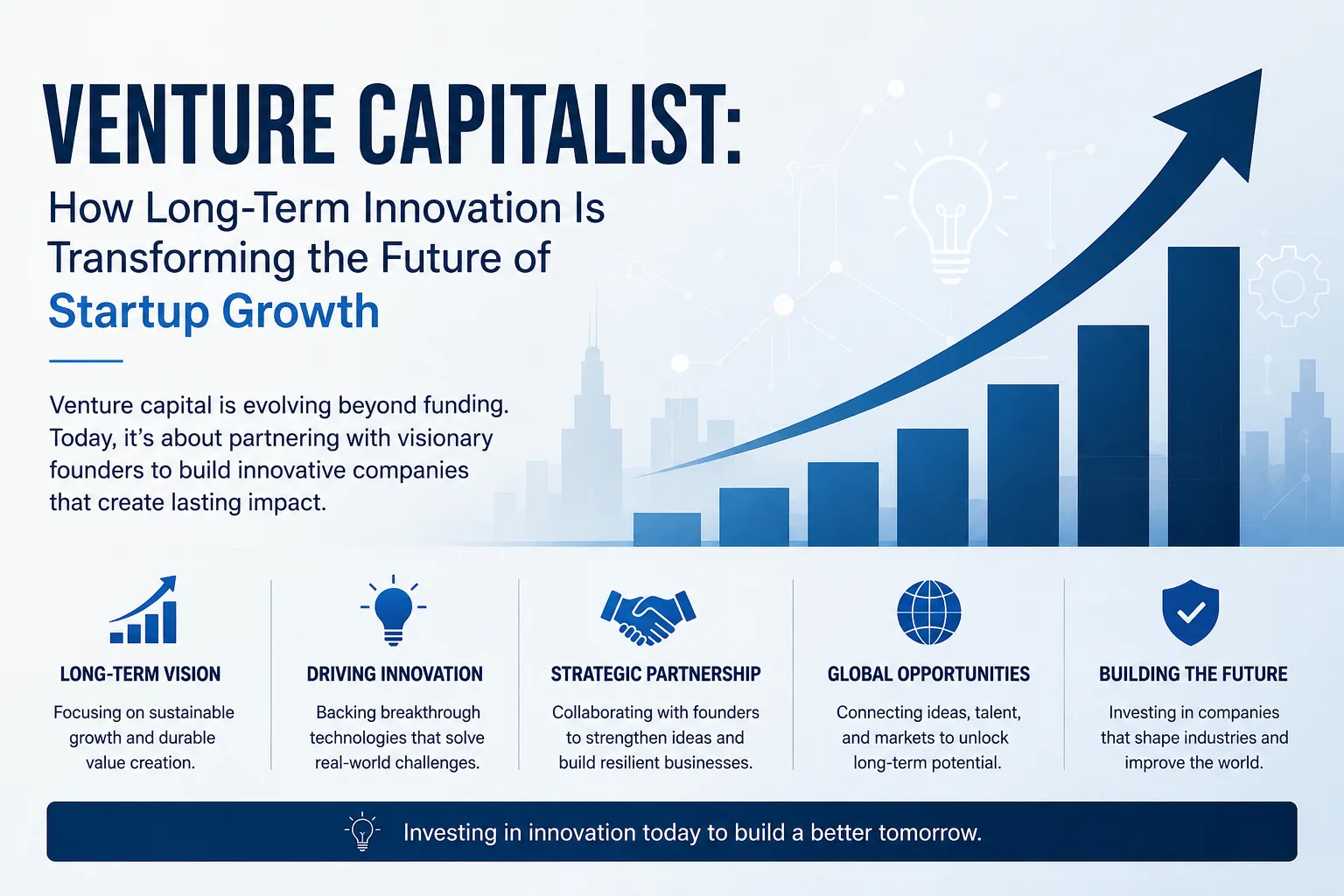
The global innovation economy is entering a new phase where the definition of successful investing is evolving alongside technological progress. For decades, venture capital was largely associated with identifying promising startups, providing early funding, and supporting rapid expansion into competitive markets. While those principles remain important, today's investment environment demands a broader perspective that combines financial discipline with an understanding of emerging technologies and long-term value creation.
The role of a venture capitalist has therefore expanded beyond funding businesses. Modern investors increasingly work with entrepreneurs to develop strategies, strengthen business models, and navigate industries that are changing at an unprecedented pace. From advanced manufacturing to artificial intelligence and next-generation industrial solutions, innovation is creating opportunities that require patience, expertise, and strategic thinking.
Across the United States and global technology hubs, this shift is influencing how startups are built and how investors evaluate future potential.
The Evolution of Venture Capital
Venture capital has always played a significant role in supporting entrepreneurship. Earlier investment cycles often focused on businesses that could scale quickly through digital platforms and consumer-driven products. Success was measured by rapid growth, expanding user bases, and the ability to enter new markets in a short period.
Today, however, innovation is becoming more complex. Many startups are developing technologies that require extensive research, engineering expertise, and long development timelines before reaching commercial success. These companies are solving industrial, scientific, and infrastructure challenges rather than simply introducing new digital services.
As a result, the responsibilities of a venture capitalist now extend beyond providing capital. Strategic guidance, industry knowledge, and long-term commitment have become equally valuable components of the investment process.
Innovation Requires Patient Capital
Every generation experiences technologies that redefine industries and create new economic opportunities. The businesses behind these breakthroughs often spend years refining their products, validating their ideas, and preparing for large-scale adoption.
Patient capital allows entrepreneurs to focus on sustainable growth instead of short-term performance targets. This approach encourages experimentation, continuous improvement, and responsible expansion, creating stronger foundations for future success.
For investors, supporting innovation over an extended period requires confidence in both the technology and the team behind it. Rather than pursuing immediate returns, long-term strategies emphasize building businesses capable of creating lasting value.
Startup Growth Beyond Traditional Models
The startup ecosystem has diversified considerably over the past decade. Earlier success stories were often centered on consumer applications and online platforms. Today, entrepreneurs are tackling challenges related to industrial automation, energy efficiency, healthcare technology, and intelligent infrastructure.
These businesses frequently operate in environments where scientific research and engineering play an essential role. Product development cycles can be longer, but the impact of successful innovation can extend across multiple industries.
This evolution has changed how investment opportunities are evaluated. Market size remains important, but equal attention is now given to technological depth, scalability, and the ability to solve meaningful real-world problems.
The United States as a Global Innovation Leader
The United States continues to be one of the world's most influential centers for venture capital and entrepreneurship. Its combination of research institutions, experienced investors, and ambitious founders creates an environment where innovative ideas can develop into globally recognized companies.
Collaboration between universities, private industry, and investment firms has strengthened this ecosystem by connecting scientific discovery with commercial opportunity. Entrepreneurs gain access to funding and mentorship, while investors gain opportunities to participate in technologies that may shape future industries.
This environment has also encouraged international collaboration, attracting talent and ideas from around the world and reinforcing the country's position as a leading destination for innovation.
Technology Is Redefining Investment Priorities
The pace of technological change continues to accelerate, influencing how investors identify opportunities and assess long-term potential. Advances in artificial intelligence, automation, advanced manufacturing, and sustainable technologies are creating entirely new categories of businesses.
Rather than focusing only on short-term market trends, investors increasingly evaluate whether a technology can remain relevant as industries evolve. Businesses that improve efficiency, strengthen infrastructure, or enable new capabilities often demonstrate long-term strategic value.
This broader perspective reflects the growing understanding that innovation is not measured solely by speed but also by durability and practical impact.
Building Sustainable Companies Instead of Temporary Success
One of the defining characteristics of modern venture capital is the emphasis on sustainable growth. Entrepreneurs and investors increasingly recognize that lasting businesses are built through disciplined execution, strong leadership, and continuous adaptation.
Rapid expansion without operational strength can create challenges that limit long-term success. In contrast, companies that invest in research, talent development, and strategic planning often build stronger competitive positions over time.
For venture capitalists, supporting this type of growth means becoming partners in a company's broader journey rather than simply financial contributors.
Global Markets and Long-Term Opportunity
Innovation has become increasingly international. Startups collaborate across borders, research institutions share expertise, and investment networks connect entrepreneurs with global markets. This interconnected environment allows new technologies to move more quickly from concept to commercialization.
As industries become more integrated, investors must understand both regional opportunities and international trends. Markets in North America, Europe, and Asia each contribute unique strengths to the global innovation ecosystem, creating opportunities for collaboration and expansion.
Long-term investment strategies benefit from this broader perspective because they recognize that technological progress often develops through global partnerships rather than isolated efforts.
Leadership in a Changing Economy
Strong leadership remains one of the most important factors in entrepreneurial success. Technology alone rarely guarantees sustainable growth. Companies also require clear vision, disciplined execution, and the ability to adapt to changing market conditions.
Investors increasingly value founders who combine technical expertise with strategic decision-making and effective organizational leadership. Building resilient businesses requires balancing innovation with operational excellence, ensuring that growth is supported by a strong foundation.
This leadership-focused approach strengthens relationships between investors and entrepreneurs while increasing the likelihood of long-term success.
Conclusion
The role of the venture capitalist continues to evolve alongside the changing innovation economy. Modern investment strategies emphasize long-term thinking, technological understanding, and meaningful collaboration with entrepreneurs who are building solutions for the future.
Startup growth is no longer defined solely by rapid expansion or digital reach. It is increasingly measured by the ability to solve complex challenges, improve industries, and create sustainable value over time.
As the United States and global innovation ecosystems continue to advance, venture capital will remain an essential catalyst for progress. By supporting ambitious ideas and encouraging responsible growth, venture capitalists help transform emerging technologies into businesses that shape the future of the global economy.