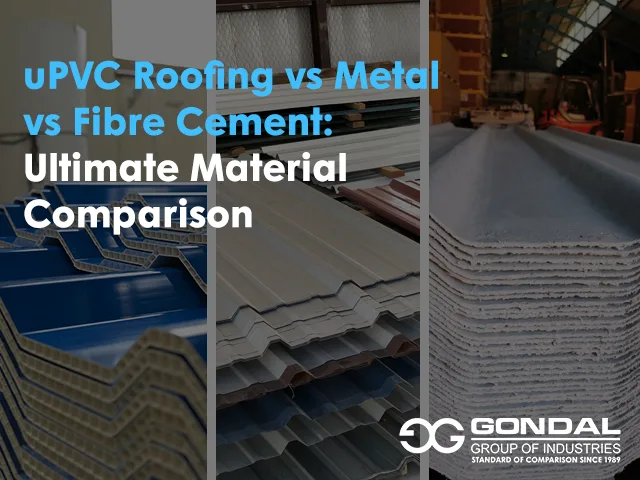
Choosing the right roofing material is one of the most important decisions in any construction project. Whether you're building a warehouse, factory, agricultural facility, or commercial structure, the roofing system directly affects durability, maintenance costs, energy efficiency, and long-term performance. Among the most popular roofing materials in Pakistan today are uPVC roofing sheets, metal roofing, and fibre cement roofing.
Each material offers distinct advantages and limitations. Understanding how they compare can help builders, architects, and property owners select the best solution for their specific requirements.
Why Roofing Material Selection Matters
A roof does much more than cover a building. It protects against weather, contributes to structural performance, influences energy consumption, and affects maintenance expenses throughout the building's lifespan.
Pakistan’s climate presents unique challenges, including extreme summer temperatures, heavy monsoon rains, humidity, and industrial pollution. As a result, choosing the right roofing material is critical for achieving long-term reliability and cost efficiency.
uPVC Roofing: The Modern Industrial Solution
uPVC roofing has become increasingly popular in industrial and commercial construction due to its excellent durability and low maintenance requirements.
Unlike traditional roofing materials, uPVC is highly resistant to corrosion, moisture, and chemical exposure. This makes it particularly suitable for factories, warehouses, fertilizer plants, food processing facilities, and coastal environments.
Key advantages of uPVC roofing include:
- Excellent corrosion resistance
- Lightweight construction
- Strong thermal insulation properties
- Low maintenance requirements
- Long service life
- Resistance to chemicals and humidity
One of the biggest benefits of uPVC roofing is its ability to maintain performance in harsh industrial conditions where metal roofs may deteriorate over time.
Metal Roofing: A Traditional Choice
Metal roofing remains one of the most widely used roofing materials across Pakistan. Its popularity stems from its strength, availability, and relatively low initial cost.
Steel and galvanized metal sheets are commonly used in industrial and commercial projects due to their structural reliability and ease of installation.
Advantages of metal roofing include:
- High structural strength
- Wide availability
- Fast installation
- Suitable for large-span structures
- Lower upfront cost
However, metal roofing also presents several challenges. Prolonged exposure to moisture can lead to corrosion, while intense sunlight can increase heat absorption. Without proper insulation and maintenance, metal roofs may contribute to higher cooling costs and more frequent repairs.
Fibre Cement Roofing: A Durable Alternative
Fibre cement roofing combines cement with reinforcing fibers to create a strong and durable roofing product. It is commonly used in industrial, agricultural, and residential applications.
Fibre cement offers good resistance to weathering and does not corrode like metal. It also provides better thermal performance than many conventional roofing materials.
Advantages of fibre cement roofing include:
- Good durability
- Corrosion resistance
- Better insulation than metal
- Fire-resistant properties
- Long service life
However, fibre cement sheets are generally heavier than both uPVC and metal roofing. This additional weight may require stronger structural support, increasing overall construction costs.
Comparing Durability
When durability is a priority, uPVC and fibre cement generally outperform standard metal roofing in environments with high humidity, chemical exposure, or heavy rainfall.
Metal roofs can provide long service life when properly maintained, but they remain vulnerable to corrosion and weather-related deterioration. uPVC roofing offers superior resistance to rust and chemical damage, while fibre cement performs well in terms of weather resistance.
For industrial environments, uPVC often provides the most reliable long-term performance with minimal maintenance.
Comparing Thermal Performance
Heat management is a major concern in Pakistan’s climate.
Metal roofing tends to absorb and transfer heat rapidly, often requiring additional insulation systems. Fibre cement provides better thermal performance than metal due to its density and composition.
uPVC roofing typically delivers the best thermal insulation among the three options, helping reduce indoor temperatures and lowering energy consumption for cooling systems.
This advantage makes uPVC particularly attractive for warehouses, manufacturing plants, and commercial buildings.
Comparing Maintenance Requirements
Maintenance costs can significantly impact the overall value of a roofing system.
Metal roofs often require periodic inspections, protective coatings, and rust treatment to maintain performance. Fibre cement generally requires less maintenance but may need occasional repairs if cracking occurs.
uPVC roofing is known for its low-maintenance nature. Its resistance to corrosion, moisture, and chemical exposure reduces the need for frequent repairs and ongoing upkeep.
Comparing Installation and Structural Requirements
Metal roofing is lightweight and relatively easy to install, making it suitable for fast-track projects.
uPVC roofing shares many of these installation advantages while offering improved environmental resistance. Fibre cement, however, is considerably heavier and may require additional structural support.
For projects where speed and efficiency are priorities, lightweight roofing materials often provide a significant advantage.
Which Roofing Material Is Best?
The ideal roofing material depends on the specific needs of the project.
- uPVC Roofing: Best for industrial facilities, warehouses, chemical plants, and projects requiring low maintenance and energy efficiency.
- Metal Roofing: Suitable for cost-sensitive projects where structural strength and availability are primary considerations.
- Fibre Cement Roofing: A good option for projects seeking durability, fire resistance, and moderate thermal insulation.
For many modern industrial applications, uPVC roofing offers the strongest combination of durability, insulation, corrosion resistance, and long-term value.
Conclusion
The choice between uPVC, metal, and fibre cement roofing should be based on performance requirements, environmental conditions, maintenance expectations, and lifecycle costs. While each material has its place in construction, modern industrial projects increasingly favor solutions that deliver long-term efficiency and minimal upkeep.
As demand grows for durable and cost-effective roofing systems in Pakistan, companies like Gondal Group of Industries continue to provide advanced roofing solutions that help builders achieve superior performance, energy efficiency, and lasting reliability.